Every hairdresser and barber sooner or later faces the same question: where to sharpen their craft. There are two paths to choose from — traditional in-person courses and online hairdressing courses. There's no single right answer here. The choice depends on your skill level, what exactly you want to learn, and what your schedule looks like. Below, we break down both formats piece by piece, no sugarcoating.
In-Person Courses — Hands-On Work Under an Educator's Eye
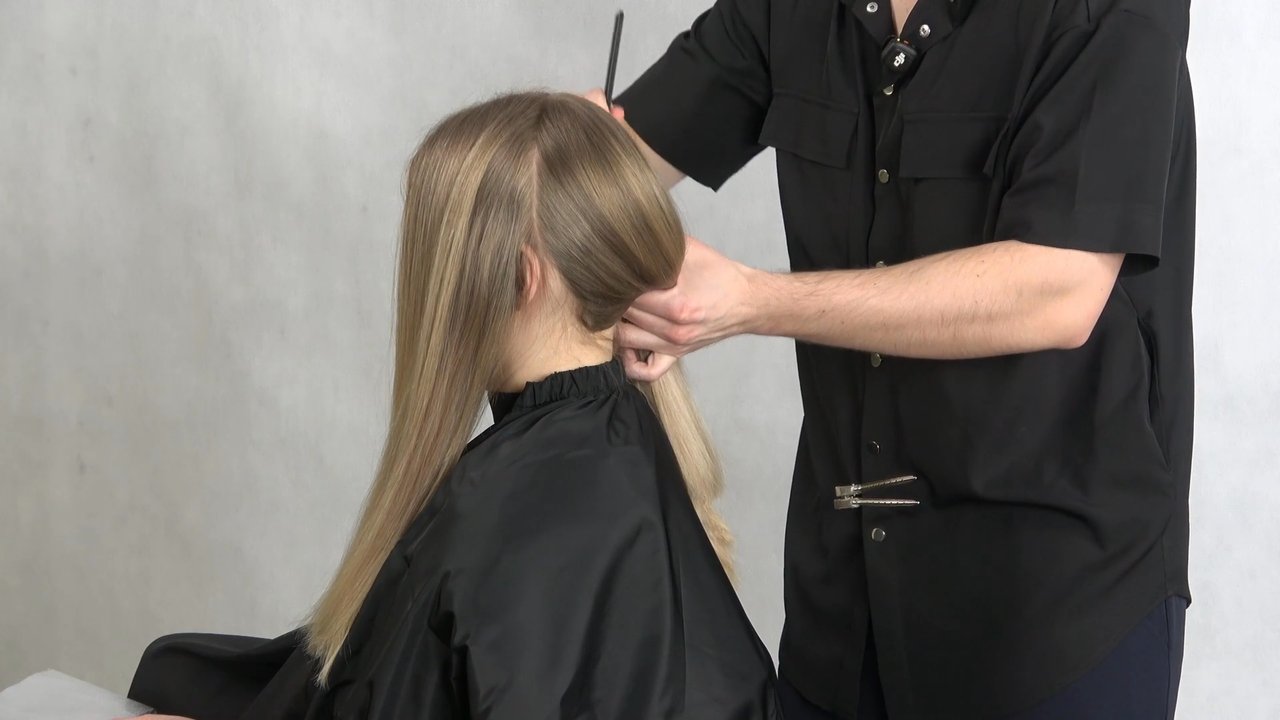
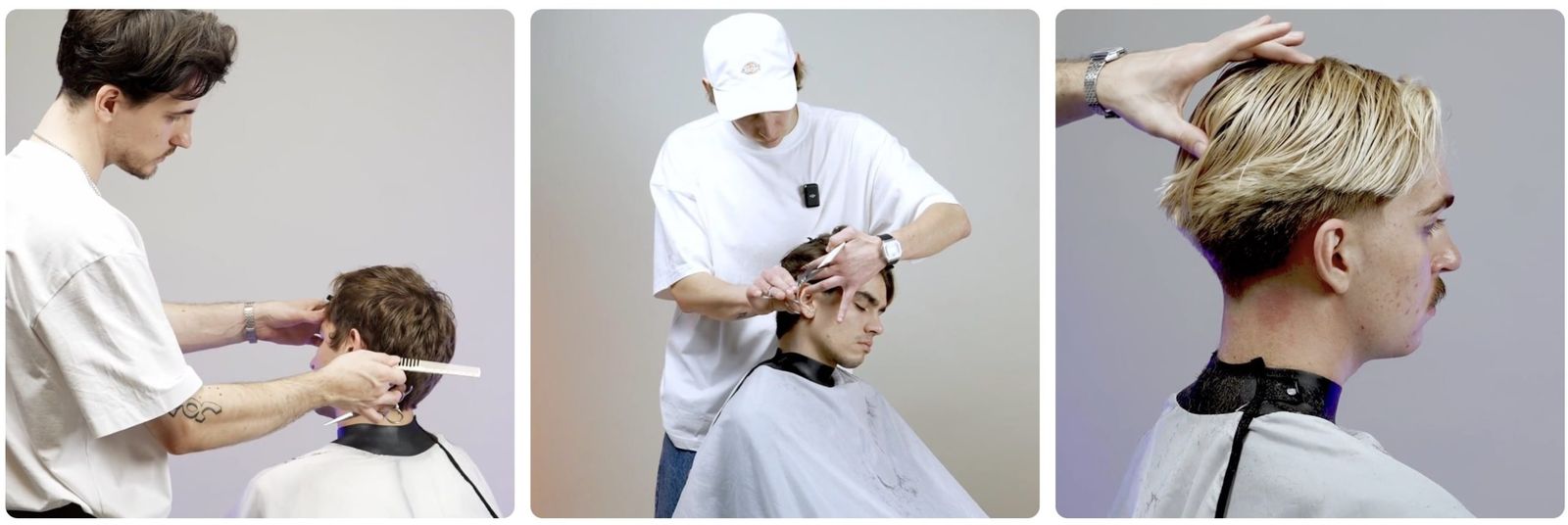
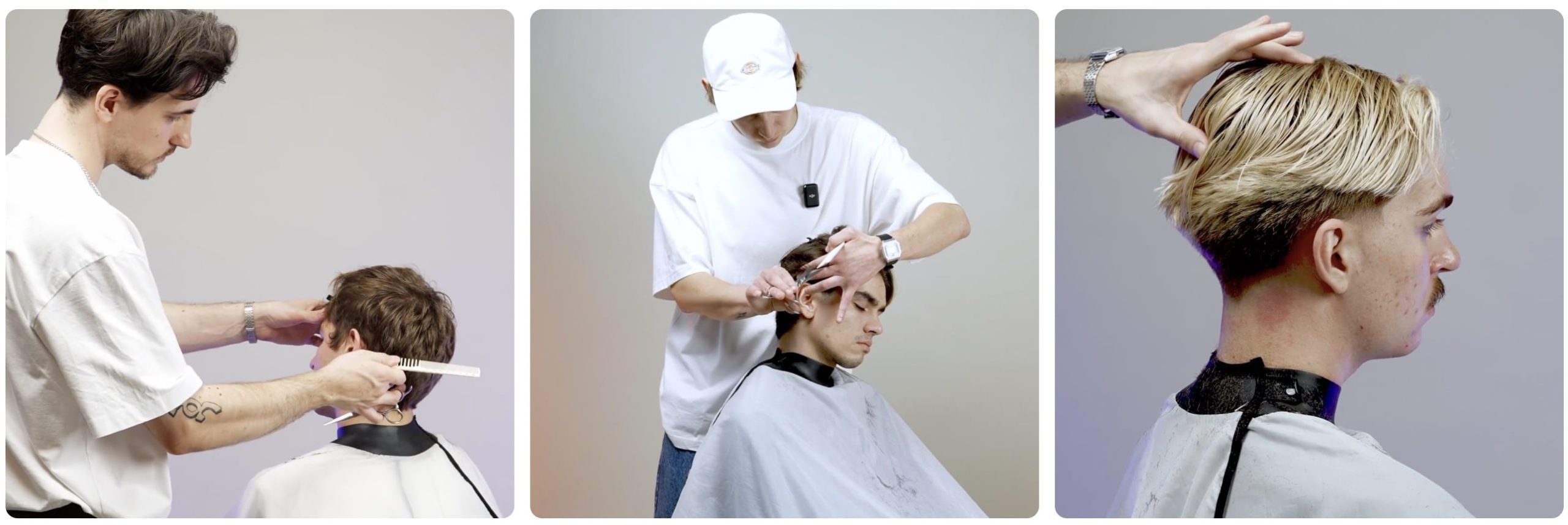
In-person courses have one advantage no video can replace: the educator sees your hands. They see that you're holding the clippers at the wrong angle, that you're moving too fast and leaving steps, that your sectioning is uneven, or that the tension of the section in your fingers is too loose, causing the cutting line to drift. You get that correction in real time, before the mistake has a chance to become a habit.
Advantages of In-Person Courses
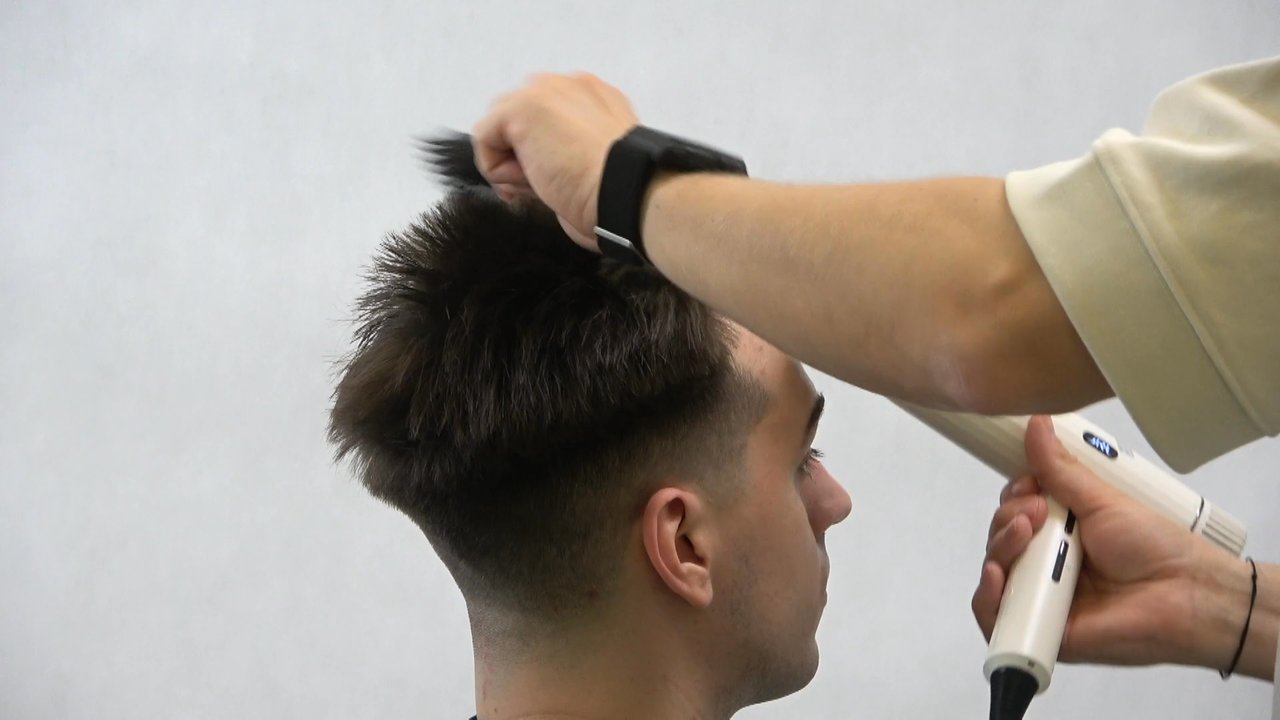
- Live technique correction: the educator corrects the angle of the clippers, how you hold the scissors and comb, and the tension of the section. This is invaluable for techniques where millimeters make the difference, like men's fade haircuts or hair coloring.
- Working on a live head: you practice on a model or training head with instant feedback. With a perm, you feel the tension of the rod and the pull on the hair under your fingers — something you can't read off a screen.
- Feel for tools and products: on-site, you can see how different guards, blades, and products behave on different hair structures. Color consistency, developer processing time, comb resistance — you learn these by touch.
- Contact and networking: exchanging experiences with other participants and the educator often opens doors to collaborations, photoshoot sessions, or referrals.
- Focus on complex techniques: a dedicated, distraction-free environment helps with advanced scissor work, like graduation and texturizing, where a clean sequence of sectioning and finishing is what matters.
What In-Person Courses Don't Solve
- Fixed date and location: you have to work around a specific date and place. For someone working full-time behind the chair, that means a day without earnings and often travel to another city.
- Higher cost: the price includes venue, models, materials, and the educator's time. This is a barrier for beginners and for those who want to develop in several areas at once.
- Group pace: one day, one program. Too fast for some, too slow for others. A difficult sequence plays out once, and afterward you can only revisit it from memory or notes.
- No replay: once you leave the room, all you have left are your notes and whatever you managed to remember. Any detail you missed is gone for good.
Online Courses — On-Demand Access to Technique
Online learning makes up for where in-person courses fall short: accessibility and repeatability. A good video course shows the technique in close-up, slow motion, and from several angles, so you see exactly how the educator moves the clippers, how they position the comb, and at what angle they cut. You can replay a difficult segment ten times and practice step by step in front of the screen.
Benefits of Online Learning
- You learn whenever you have time: in the morning before the salon opens, in a gap between clients, or in the evening. Perfect for busy professionals who want to consistently develop their skills.
- A wide range of techniques in one place: from fundamentals like square layering and graduation to advanced forms like dynamic crop and mullet hybrid.
- Repeatable material: you can replay each lesson as many times as you like. For tricky subjects like bringing out curl with circle cutting, you go back to a specific move as many times as it takes until it becomes second nature.
- Lower entry cost: with no venue, travel, or accommodation, the price is more accessible, and once you've purchased the material, it stays with you as a library you can return to.
- Your own pace: one day you work through sectioning, the next, finishing. You decide when to move forward and when to stay on a repeat.
What to Watch Out for with Remote Learning
- Self-discipline: no one sets a deadline for you. Without your own training plan, the material can sit unopened for weeks.
- No in-the-moment correction: if you're holding the clippers at the wrong angle or sectioning incorrectly, the screen won't catch it. That's why with online learning it's worth recording your own work on your phone and comparing it frame by frame with the course material — it's a substitute form of correction.
- Practicing on a model is on you: you'll absorb the theory and the movement from the screen, but you build the hand skill on a training head or a model. The screen alone isn't enough — you need repetitions on real hair.
- A stable connection: high-quality material requires a decent internet connection so that close-up detail stays clear.
Connected Hair — Online Learning That Closes the Gaps of Remote Learning
Connected Hair is a platform built around these two weak points of remote learning: the quality of technique demonstration and support. The material is filmed so you can see the detail of the work, and educators are available when something isn't working.
- Video where you can see every move: clear shots of sectioning, clipper work, and scissor work, from disconnection and graduation techniques to finished styles like the pompadour.
- Interactive elements: quizzes and practical assignments that force repetition and check whether the technique has actually sunk in, not just scrolled past your eyes.
- Educator support: when you get stuck, you can consult with experienced educators. This partly makes up for the lack of live correction that remote learning usually can't provide.
- Up-to-date techniques and styles: the library keeps growing, so you stay on top of what's currently happening behind the chair and in the industry.
- A complete learning path: from fundamentals like face and shoulder massage to advanced cuts like triangular graduation with a square back. You develop step by step, without skipping the fundamentals.
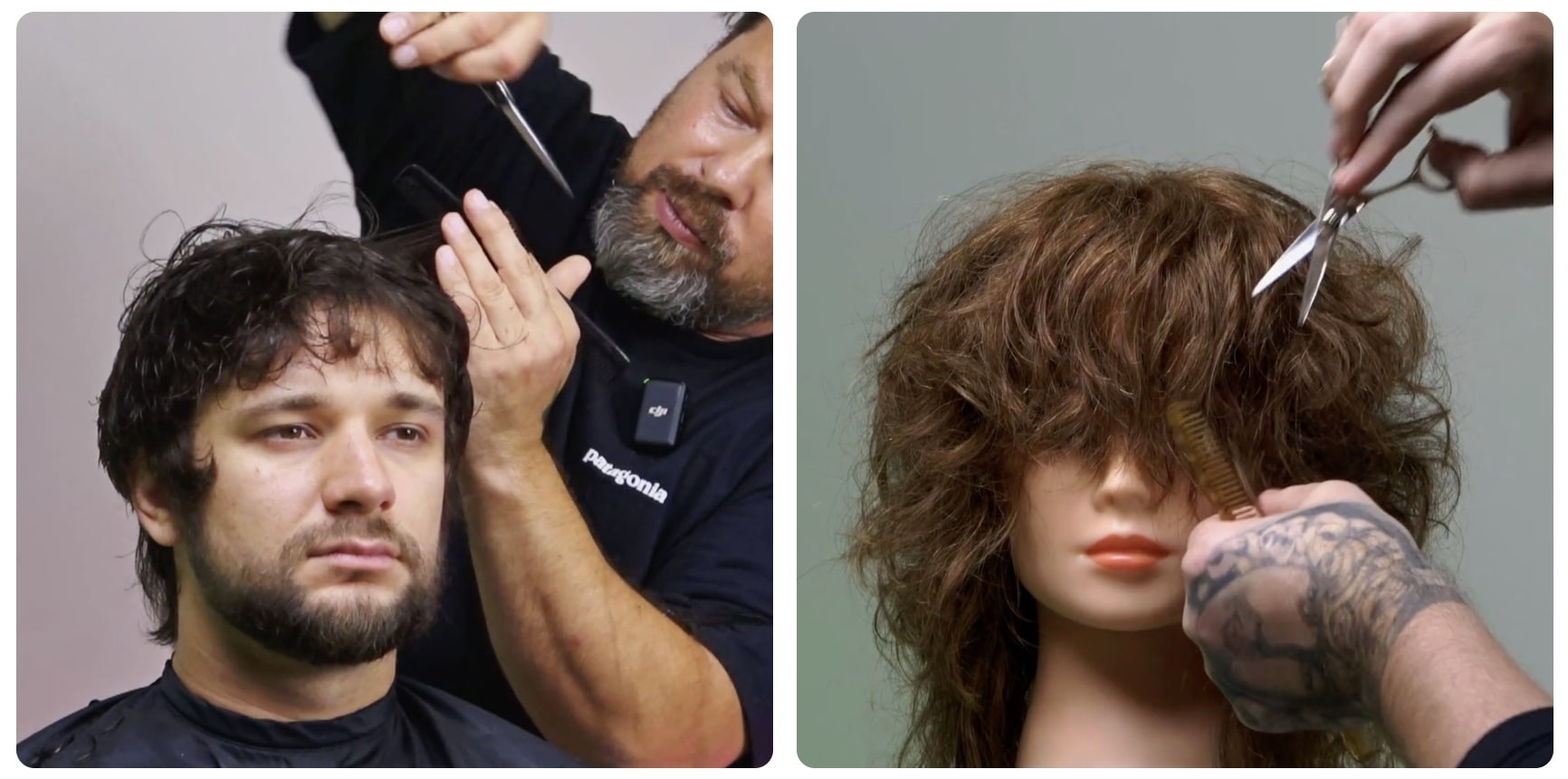
In-Person or Online — How to Choose for Yourself
Instead of looking for the format that's better overall, answer a few questions for yourself. These are what decide the choice.
- What level are you at: if you're just starting out with fades and losing the clipper angle, live correction will give you the most. If you've got the fundamentals down and want to add new forms, online flexibility wins.
- How much time do you have: with a tight schedule behind the chair, learning online in small windows is realistic to maintain, which is what the Connected Hair Academy offers. A free weekend for an intensive workshop is a different scenario altogether.
- How you learn: some need an educator standing over their shoulder, others prefer breaking a technique down at their own pace, with pauses and replays.
- What's your budget: online courses at Connected Hair give you access to a broad library of techniques for a fraction of the price of a single in-person workshop.
- What exactly do you need: do you want to nail down one difficult technique, where touch and on-the-spot correction matter, or do you want to systematically expand your skill set with more cuts and styles? The former often calls for in-person, the latter is well served by online.
Combining Both Formats Works Best
In practice, most hairdressers and barbers who genuinely progress combine both paths. Online handles the everyday work: it builds your skill set, cements sequences, and gives you access to new techniques without leaving the salon. In-person courses get added on top where you need the feel of the tool and live hand correction — for one specific, difficult technique.
This setup gives you the most for a reasonable budget: you cover the bulk of your learning remotely, and you invest in a classroom only when you genuinely need a second pair of hands — the educator's — alongside your own.
Summary
Both formats have their place. In-person wins with the feel of the tool and live technique correction; online wins with accessibility, repeatability, and price. The key is matching the method to your level, schedule, and goal, not looking for one path that fits everyone.
If you want to start with a format you can fit into your schedule today, check out the Connected Hair offer and see how much technique you can cover without leaving the salon.