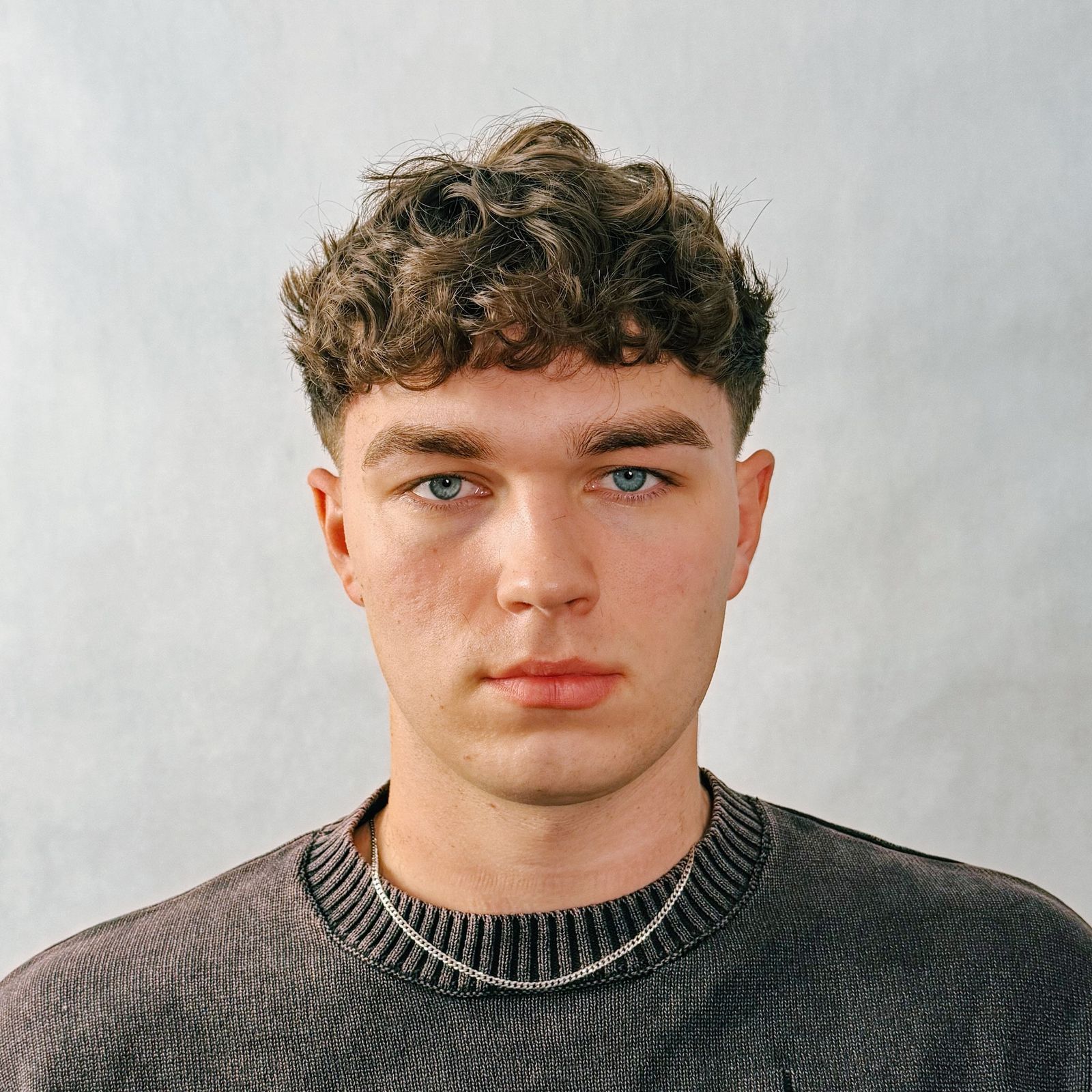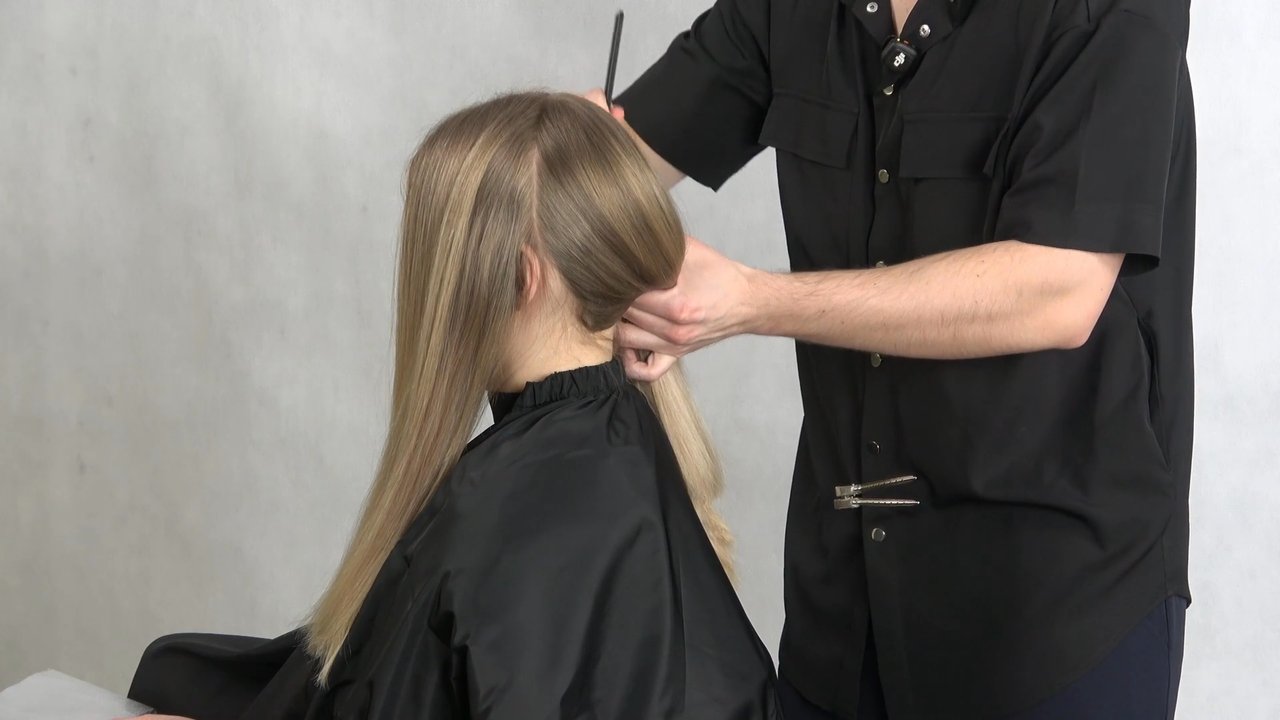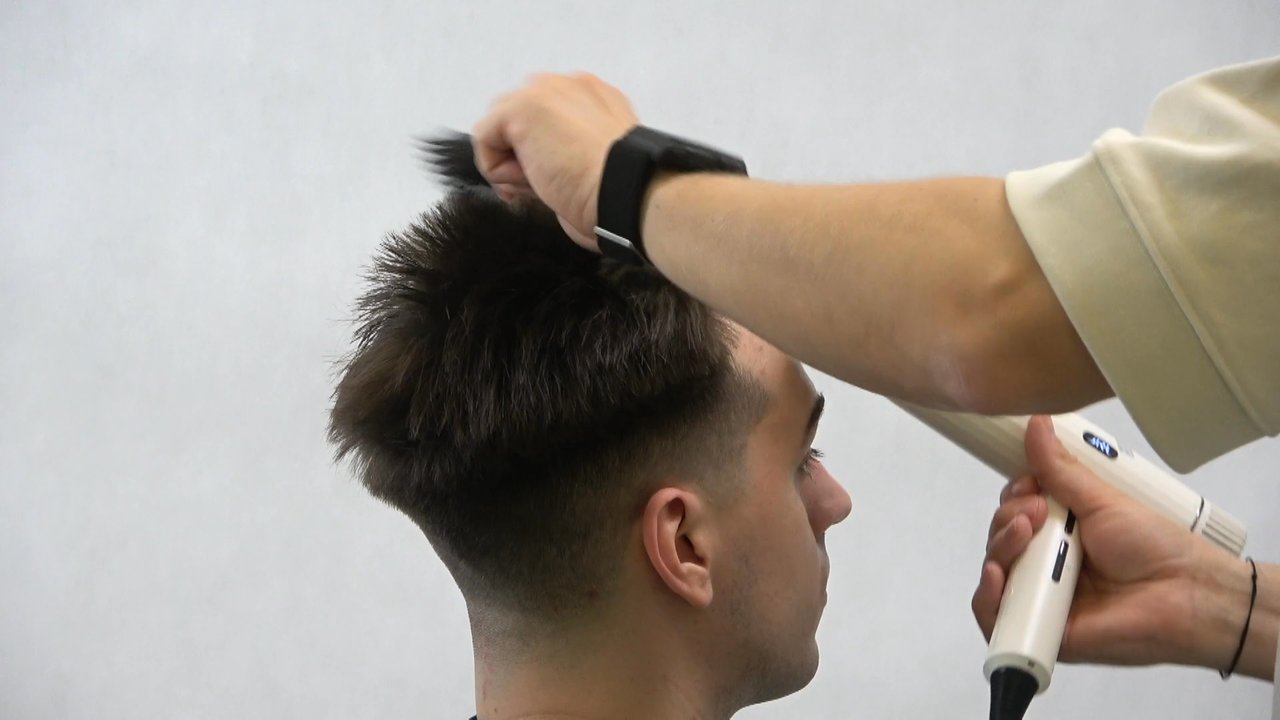
A triangular face shape presents the barber with a clear task: the forehead is wider than the jaw, so all the visual weight drifts upward. Your goal with clippers and scissors is to reverse that balance – remove volume up top and at the temples, and add it where the face narrows, around the jaw and the lower part of the head. Below is a practical breakdown of cutting, shape selection, and finishing that you can use to guide the conversation with your client and the work behind the chair.
How to Recognize a Triangular Face Shape
Before you reach for the clippers, diagnose the proportions. You'll recognize a triangular face by a layout where the upper part is noticeably heavier than the lower:
- Wide forehead – the widest point of the face
- Well-defined cheekbones
- A jaw that narrows downward
- Often a sharp, narrow chin
The easiest way to diagnose this is on dry hair, combed back, in good light. Stand behind the client, look in the mirror, and compare the width of the forehead with the width of the jaw at earlobe level. If the difference is clear and the chin comes to a point, you're dealing with a triangle (sometimes described as an inverted pear shape). It's worth distinguishing it from a heart-shaped face, where a wide forehead comes with a pronounced widow’s peak hairline – the cutting logic is similar, but you place the emphasis on the temples differently.
The Cutting Rule: Where to Remove and Where to Add Volume
The entire strategy for a triangular face comes down to shifting weight from top to bottom. That translates into specific technical decisions during the haircut:
- Control the height on top – don't build a tower on the crown. The higher the stack up top, the more you elongate an already dominant upper section. Keep the shape fairly flat or moderately raised.
- Leave weight at the temples and sides – skip aggressive, high skin fades. A skin fade breaking right above the ear narrows the lower section even further and emphasizes the triangle.
- Soften the lines – point texturizing, point cutting, and thinning the ends break up the sharp contours of the cheeks and chin, which stand out even more with a smooth, hard cut.
- Work on the lower section – longer sides at the jawline, or facial hair, visually widen the narrowest point of the face and restore balance.
These rules are a framework, not a rigid recipe. Natural hair texture, density, and the growth line at the temples can modify them, so read each of the shapes below through the lens of what you're actually working with on the client's head.
Hairstyles That Best Balance a Triangular Face
Below are shapes that work in favor of the triangle, along with what to watch for when executing them:
| Hairstyle | How to Execute It | Why It Works |
|---|---|---|
| Textured crop | Top textured with point cutting, sides at guard 1-2 with a soft taper instead of a high fade | Keeps weight at the sides and doesn't elongate the top |
| Side part | A clear but low parting, top combed with a slight sideways movement, sides medium-short | Breaks up symmetry and disperses a wide forehead |
| Undercut with a longer top | Sides shorter but not down to the skin, top longer worn with texture or to the side | Gives control over styling without narrowing the bottom |
| Messy quiff | Fringe lifted softly, with plenty of texture and an irregular front | Breaks up sharp features and draws the eye away from the angles of the face |
| Medium length with a parting | Hair down to the jawline, sides falling along the cheeks | Literally widens the narrowest, lower part of the face |
For each of these shapes, section the head in the classic way: top, temples, sides, and back as separate zones, and build the transitions between them with intention. The most common mistake with a triangle is too hard a separation between the top and sides – a sharp disconnect line combined with a heavy top draws the triangle even more sharply. A soft gradient, where weight flows gradually downward, works better.
You'll find more inspiration in our article on the most popular men's hairstyles.
What to Avoid with a Triangular Face
Some shapes work directly against what you're trying to achieve and sharpen the disproportion between top and bottom:
- Buzz cuts and very short, even cuts with a single guard – they expose the entire geometry of the face, leaving nothing to balance it out.
- High pompadours and quiffs that build a lot of height on the crown – they add volume exactly where there's already too much.
- Long, straight hair without layers – it falls flat at the sides, giving no movement or width at the jaw.
- Slicked-back, smooth sides and a high skin fade – they narrow the lower section and emphasize a sharp chin.
That doesn't mean a client with a triangular face can't have a fade or short sides. It's about proportion: if you go with a fade, keep it low and soft, and keep the top moderate so you don't amplify the inverted-triangle effect.
Styling and Finishing
The shape itself is only half the job. Finishing determines whether the cut actually works for the proportions:
- Build texture, not stiffness – matte pastes and clays give separation between strands and a soft, irregular outline. Heavily shiny pomades with strong hold flatten the top into a smooth mass that emphasizes a wide forehead.
- Go for a side part – asymmetrical movement disperses the width of the forehead better than a symmetrical back-comb.
- Make use of natural curl – with waves and curls, let them work at the sides. Natural movement at the temples is ready-made volume in the lower part of the face.
- Blow-drying sets the direction – dry the top to the side and slightly downward at the temples, without pulling everything straight up. A round brush at the sides will add a touch of width.
- Advise the client on how much product to apply – with a triangular face, less is more. Too much product mats down the sides and takes away the volume they need.
To learn more about styling techniques, check out our article on men's cutting techniques.
Care That Keeps the Shape
A cut chosen for the face shape loses its point if the hair quickly loses its shape. Give the client a simple routine suited to their hair type:
- Shampoo and conditioner matched to hair type – with fine hair, avoid heavy conditioners that weigh down the sides and take away the volume needed for a triangle shape.
- Volumizing products for fine hair – light sprays and texturizing powders at the roots on the sides help maintain width in the lower section.
- Regular trims – for a crop and undercut, a realistic cycle is roughly 3-4 weeks, otherwise the top grows out and the hairstyle starts elongating the face.
- Heat protection before blow-drying and straightening – it protects the ends, which work hardest in textured shapes.
You'll find more care tips in our complete grooming guide.

Choosing Facial Hair for a Triangular Face
Facial hair is the strongest tool for balancing a triangle, because it works exactly where the face narrows. A well-shaped beard literally builds weight at the jaw:
- Full beard – the most effective option. Build it fuller at the sides, along the jawline, not just on the chin, to widen the lower part of the face.
- Goatee – works against what a triangle needs, since it draws attention to the narrow point of the chin. Use with caution, preferably in a wider version.
- Mustache – draws attention away from a narrow jaw and shifts the face's center of gravity toward the middle.
- Light, few-days stubble – softens sharp features and gives a gentle fill at the sides without building a full beard.
When shaping the line-up, keep the cheek line natural, and set the neckline slightly higher than you would for square faces – the goal is for the beard to add width, not elongate an already long lower section.
Remember to groom facial hair regularly. You'll find more information in our article on beard care.
The Most Common Mistakes When Choosing a Hairstyle
- Ignoring the natural hair texture and forcing a shape the hair won't hold
- Choosing a hairstyle purely because it's trendy, without checking how it works on that particular face shape
- Overlooking the client's lifestyle and profession – a cut that requires 15 minutes of styling in the morning will quickly get abandoned
- Visits too far apart, letting the shape grow out and stop correcting the proportions
- Defaulting to a high fade on every head – with a triangle, that's often the wrong move
Inspiration from Celebrities with Triangular Faces
Good reference points you can show your client during the consultation:
- Ryan Gosling – textured medium-length hairstyles, weight kept at the sides
- Adam Levine – from short crops to longer, combed-back shapes, always with clear texture
- Jude Law – even with a receding hairline, he opts for shapes that add volume at the sides
A reference photo is a great starting point, but always translate it to the client's actual hair. The same hairstyle looks completely different on thick, wavy hair versus fine, straight hair.
Seasonal Hairstyle Changes for a Triangular Face
A change of season is a good excuse to suggest a modification to the client's shape without losing the favorable proportions. The direction stays the same: weight lower, light on top.
Spring
- Subtle highlighting – a few lighter accents scatter the light and visually soften a wide forehead
- Textured crop – a fresh, modern cut for warmer days, with weight kept at the sides
Summer
- Shorter sides, longer top – a classic undercut with a low, soft taper instead of a high fade, to maintain width
- Natural texture – let the hair air-dry freely for a beach-waves effect that adds movement at the sides
Fall
- Medium length with a side part – an elegant, more polished shape that falls along the cheeks
- Warmer color tones – add depth and softness without changing the cut itself
Winter
- Longer hair combed back – for a triangle, keep the pompadour lower and softer, without building much height on the crown
- Time to test products – the cooler months are a good moment to find the right paste or pomade for the client's hair type and hold
With every seasonal modification, make sure the change doesn't break the main rule. Even a push toward trend shouldn't move weight up onto the crown.
Client Consultation
A good cut starts with a conversation before the chair. With a triangular face, it's worth steering it to establish the proportions before you pick up your tools:
- Ask for reference photos and immediately weigh them against the client's hair type – say directly what can be replicated and what can't
- Explain the logic of the cut – a client who understands why you're keeping the top low and the sides fuller will accept the proposal more easily and come back for maintenance
- Recommend specific products and show them how to style at home – with textured shapes, the drying technique determines the result
- Set a realistic visit cycle for the chosen shape, so the cut doesn't lose its proportions between visits
If you want to deepen your craft in matching shape and volume to face shape, consider our online course on men's cutting techniques. This is knowledge that directly translates into more confident work behind the chair.
Summary
A triangular face is a task with one clear goal: move weight from top to bottom. Keep the top low and textured, leave the sides fuller, build soft transitions instead of hard disconnects, and use facial hair to widen the jaw. The rest is about adapting to the specific hair, the client's lifestyle, and the season.
If you want to stay up to date with techniques for matching hairstyles to face shapes and new trends in men's cutting, follow our blog and join the community with a free registration. You'll get access to tips, tutorials, and materials that directly support your everyday work behind the chair.