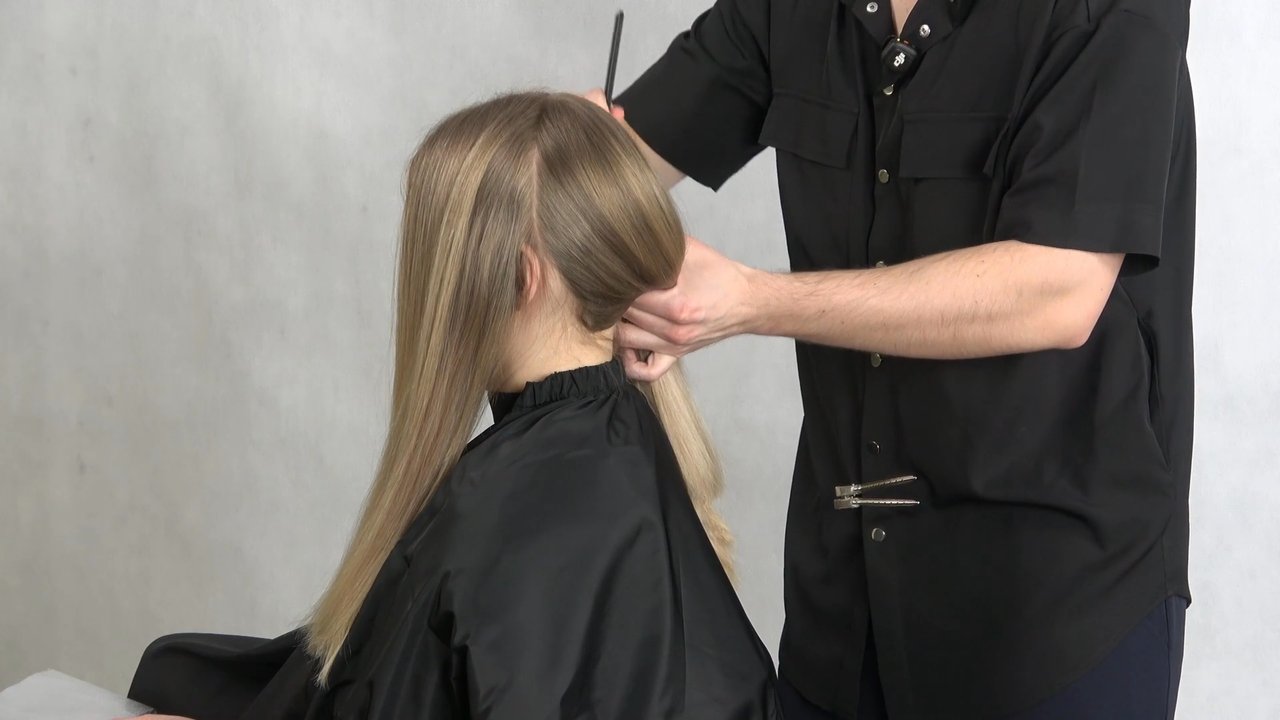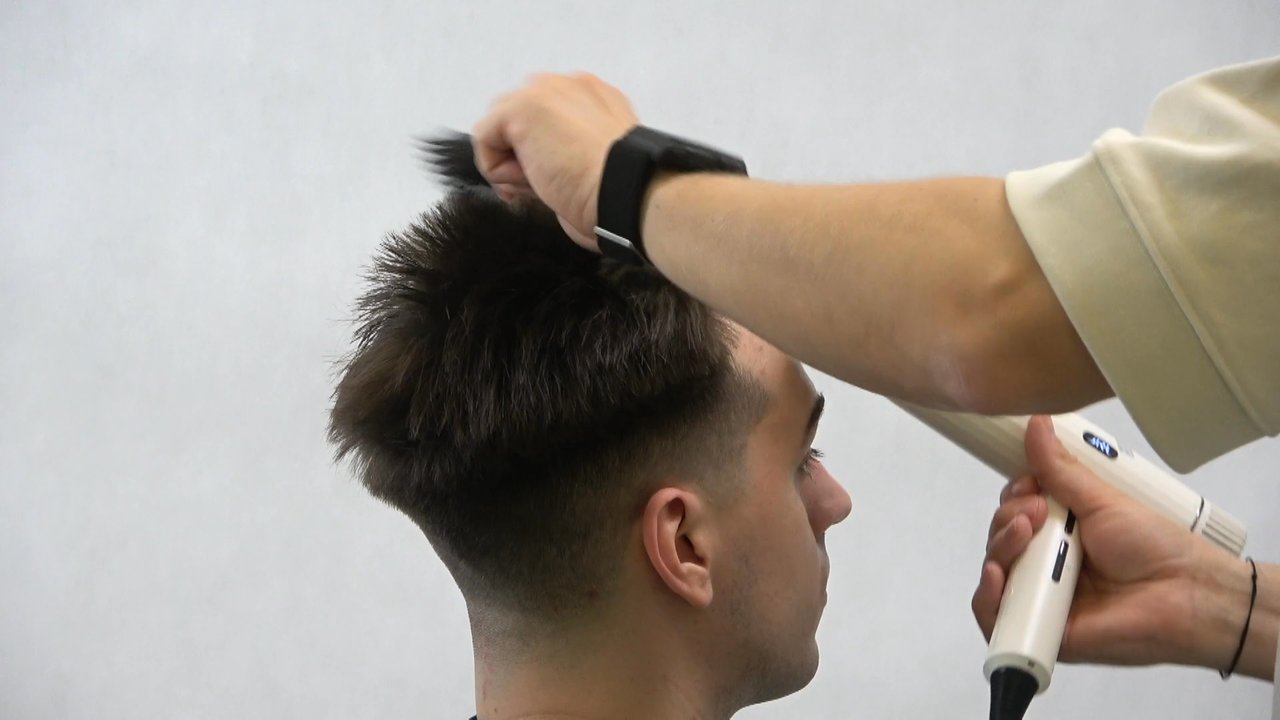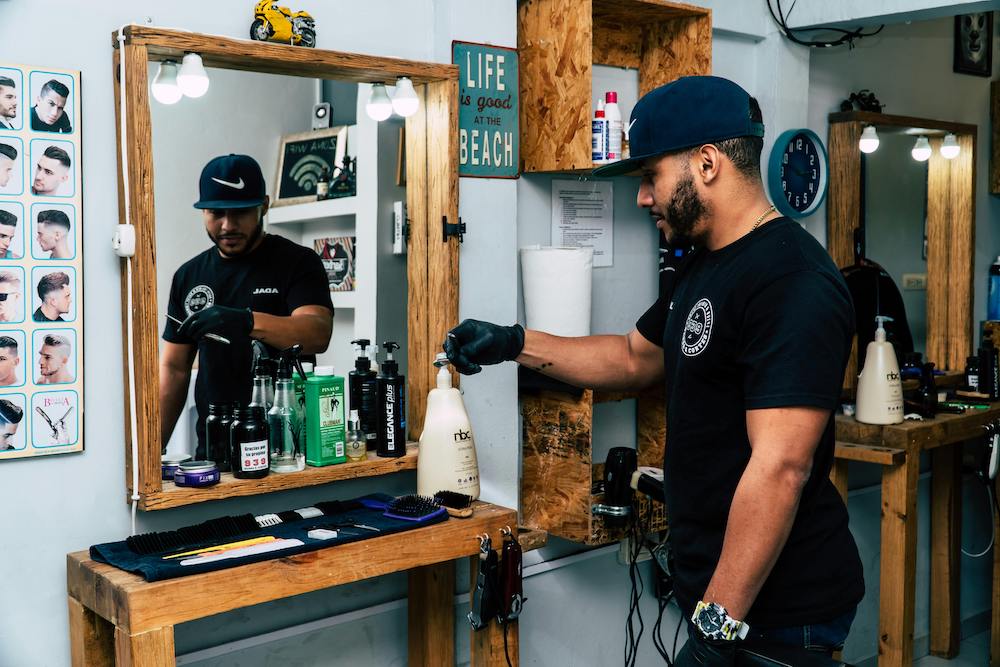
Every fade, every pompadour, and every layer you cut behind the chair today has a lineage. Styles don't come from nowhere — they return in cycles, mutate, and borrow techniques that are centuries old. A hairdresser who knows this lineage reads a request differently: they know where the shape they're recreating comes from, and they can modify it with intention instead of just copying it from Instagram. Below, we go through the history of men's hairdressing era by era, focusing on what's survived from each period into the craft today.
Ancient Roots of Hairdressing
Egypt: The Origins of the Hairdressing Art
In ancient Egypt, hairdressing was an art reserved for the elite. Hair and facial hair were groomed not for fashion, but for status, hygiene, and religious ritual, and attention to one's hairstyle set the ruling class apart from the rest of society.
For today's hairdresser, what matters is what survived from this era in terms of shape: clean, geometric lines and a strong, defined line-up. Egyptian aesthetics were built on symmetry and a hard edge — exactly what anyone creating a sharp line-up around the temples and nape is working with today. This is the first proof that a precise line-up has never gone out of style, it's just changed tools.
In practice behind the chair: the geometry of that era lives on today in techniques built on clean sectioning and sharp edge finishing. If you want to refine controlled, square shapes, check out the course Square Layer Technique, which teaches how to build a hairstyle on a geometric structure.
Greece and Rome: Hairstyle as an Expression of Philosophy
The Greeks and Romans placed great importance on hairstyles, which often reflected their status and beliefs. In Greece, carefully styled curls and a well-groomed beard were the mark of a mature, dignified man. In Rome, a different direction eventually won out: short, neatly cut hair and a cleanly shaved face became the mark of the Roman citizen and of discipline.
This distinction has a real bearing on the craft. The Greek ideal is about working with texture and volume, close to what we do today when styling natural hair movement. The Roman ideal is the discipline of a short shape and a clean line-up — the foundation of the classic men's haircut. Both schools still operate behind the chair today, often for the same client on different days.
Fun fact: in ancient Rome there was a profession called the “tonsor” — a hairdresser who was also responsible for shaving and basic grooming treatments. This is one of the earliest records of combining cutting and shaving into a single service – exactly the combination classic barbering is built on today.
The Middle Ages: An Era of Contrasts
Tonsures and Long Hair
The Middle Ages were an era of contrasts in men's hairstyles. On one side, the monastic tonsure: a deliberately shaved circle on the crown, ringed by a band of hair, marking membership in the clergy. On the other, the long, loosely flowing hair of knights and noblemen, signaling free status and membership in the warrior class.
In both cases, the hairstyle carried information that was legible at a glance. It's a lesson that still holds true today: the shape on a client's head always communicates something, whether we intend it to or not. A good hairdresser designs that message with intention, matching the shape to how the client wants to be perceived.
In practice behind the chair: the contrast between a shaved section and one left long is nothing other than a precursor to how we think about length transitions today. Where the Middle Ages drew a hard line between shaved and long, we build a smooth gradient. If you want to master a controlled transition from short to a longer top, check out the course Crop with a Taper.
Renaissance and Baroque: An Era of Extravagance
Wigs and Powdered Hairstyles
The Renaissance and Baroque periods were when men's hairstyles reached the peak of extravagance. Voluminous wigs, cascades of curls, and powdered shapes appeared, all designed to display wealth and status. The more hair and the more elaborate the construction, the higher the wearer's status.
From today's perspective, what's most interesting is that this entire era was a lesson in working with volume and texture. Curl, wave, root lift, the play of light on a built-up shape — this is the same set of issues we deal with in modern, more textured haircuts. All that's changed is the products, and the fact that we now build the shape from the client's own hair instead of an attached wig.
Fun fact: in the 17th and 18th centuries, wigs were so popular among the aristocracy that a special tax was introduced on wearing them. Hair on your head was, quite literally, an indicator of wealth back then.
In practice behind the chair: today we build volume and movement through cutting texture, styling, and product, without powdered wigs. If you're curious about how to work with shape and expression in a modern hairstyle, including color as a tool for highlighting structure, check out the article The Latest Trends in Men's Hair Coloring.
The 19th Century: The Birth of Modern Hairdressing
The Rise of the Barbershop
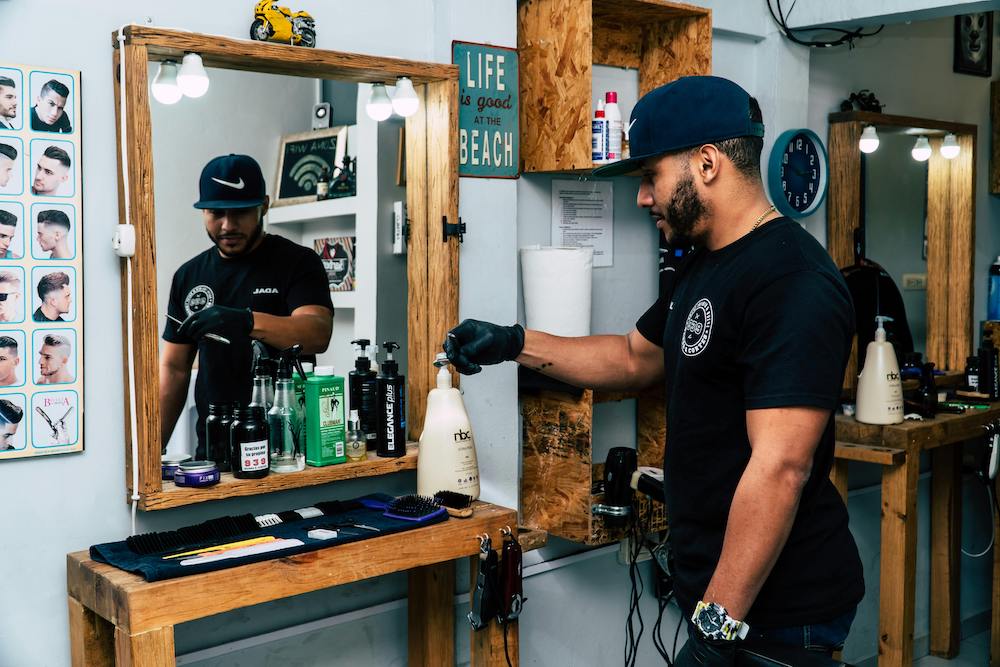
The 19th century brought a revolution in men's hairdressing. The first modern shops and salons began to appear, where cutting and shaving became an organized, repeatable service rather than a one-off treatment at court. Hairdressing started to look like a craft with a workplace, a station, and a client returning on a regular cycle.
This is the moment when the foundations of the profession, in its present-day form, were born: a fixed location, a chair, a relationship with the client, and a repeatable service standard. The classic barbershop we return to aesthetically today has its roots right here.
For salon owners: retro aesthetics are a real selling point today, but there's a business behind it, not just the decor. If you're building your shop's brand in a classic spirit, listen to the The Business of Barbering podcast.
The 20th Century: An Era of Rapid Change
From Cropped Heads to Long Hair
The 20th century brought an unprecedented diversity of men's hairstyles. The short, disciplined cuts of the first half of the century gradually gave way to increasingly bold shapes, and the pace of change accelerated decade by decade. This was the century in which men's hairstyles stopped being fixed and became fashion, shifting alongside music, film, and youth culture.
For a hairdresser, this is the richest reference library there is. Practically every classic men's shape we recreate today has a reference point in one of the decades of the 20th century.
Fun fact: the “pompadour,” popular in the '50s, owes its name to the Marquise de Pompadour, the mistress of King Louis XV. So a shape associated with mid-20th-century men's classics carries a name from the 18th-century French court – a good example of how styles circulate between eras.
The pompadour is also a purely technical hairstyle: the whole difficulty lies in building height and volume at the root and in a smooth back-comb without losing structure. Without control over the root and proper styling, a pompadour turns into a shapeless mass.
Want to master this shape: check out the course Pompadour led by Paweł Pollheimer, where the technique for building height and finishing is broken down step by step.
The Revolution of the '60s and '70s
The '60s and '70s brought a real revolution in men's hairstyles. Short, tidy cuts gave way to long, loose hair, and hairstyles became an element of rebellion and self-statement. For the first time on this scale, men moved away en masse from the discipline of a short shape in favor of length and natural, relaxed texture.
For the craft, this was a shift in approach: instead of cutting based purely on a short, clean line, layering and working with the movement of longer hair gained importance. The same challenges — distributing the weight of long strands and controlling how the hair falls — return today in textured, longer haircuts.
This era's aesthetic is back: longer, layered, deliberately “tousled” shapes are one of the strongest trends today. If you want to master a haircut that combines retro looseness with modern texture, check out the Wolf Cut course.
The 21st Century: The Era of Individualism
A Return to Classics and Experimentation
The 21st century is a time when classic men's hairstyles are enjoying a renaissance, while at the same time there's huge room for experimentation. On one hand, classic barbering is back: the fade, a sharp line-up, clean transitions, and careful finishing. On the other, there's a growing appetite for individualized shapes, tailored to a specific head, hair type, and the client's character.
For the hairdresser, this is the most challenging and most interesting moment in this entire history. Clients no longer want a single hairstyle from a catalogue — they want a shape built for them specifically. That requires, on one hand, a solid command of classic techniques, and on the other, the ability to combine and modify them with intention.
To keep up with where things are heading: it's worth following where men's cutting is trending. A good place to start is the article Top 10 Men's Cutting Techniques.
The Impact of Social Media
Social media has changed how clients choose hairstyles and how hairdressers win clients. Today, a client comes to the chair with a photo of a specific look and expects it to be recreated. This puts two tasks on the hairdresser at once: technically executing the shape from the reference, and at the same time managing expectations, because not every hairstyle from a photo will work on a given hair type and head shape.
The other side of this same shift is client acquisition. A social media profile has become the shop's portfolio and business card today, and for many hairdressers, the main channel for winning new clients.
If you want to turn this channel into real clients: check out the article Social Media for Hairdressers: How to Build a Personal Brand Online.
What History Gives the Hairdresser Behind the Chair
A few constants repeat throughout this entire timeline. A clean line-up from Egypt, the discipline of a short shape from Rome, working with volume and texture from the Baroque era, intentional length transitions already foreshadowed in medieval contrasts, layering and movement from the '70s. These aren't museum trivia — they're ingredients of the craft you use on every shift.
Three concrete takeaways for your work:
- Styles come back in cycles. Knowing this history lets you recognize where a trend comes from and offer the client a shape with context, not just a copy from a photo.
- Every shape communicates something. From the Egyptian line-up to the long hair of the '70s, a hairstyle has always carried a message. Design that message with intention for the specific client.
- Technique matters more than the name. A pompadour, a crop, or a wolf cut ultimately comes down to control over sectioning, length transitions, volume, and finishing. Master these fundamentals, and you'll be able to recreate any shape from any era.
If you want to turn this knowledge into concrete techniques behind the chair, check out our course offering and our blog, where we break down each shape step by step.