In the world of professional hairdressing, clippers are like an extension of the hairdresser's hand – a tool that must be reliable, precise, and tailored to individual needs. Choosing the right clipper can have a huge impact on the quality of your work, comfort, and efficiency. In this comprehensive guide, we will share with you everything you need to know to make the best choice.
1. Understanding the types of hair clippers
Corded vs. cordless shavers
The first decision you need to make is whether to choose a corded or cordless shaver.
"The choice between a corded or cordless clipper is not only a matter of convenience, but also of working style and the type of services you offer." – Kamil Cesarski, men's hairstyling specialist and Connected Hair educator
Advantages of corded machines:
- Constant power
- No need to charge
- Usually lighter
Advantages of cordless shavers:
- Greater freedom of movement
- Ability to work in places without access to electricity
- Often quieter operation
Tip: If you frequently perform precise fades or work on photo shoots, consider a corded clipper for stable power. Check out our "Burst Fade"course, where we discuss techniques that require a reliable clipper.
Types of engines
The type of motor in a machine has a significant impact on its performance and durability.
- Magnetic motors – the most popular, offering good value for money
- Rotary engines – powerful and durable, ideal for heavy-duty work
- Pivot motors – quiet and efficient, often used in cordless machines
"Choosing the right motor is the key to long-term satisfaction with your clipper. The motor is the heart of the clipper—it must be suited to your working style."—Maks Łukaszewicz, hairdressing tool expert
Interesting fact: Did you know that some of the latest razor models use brushless motor technology, which significantly extends their service life?
2. Key technical parameters
Power and speed of blades
The power and speed of the blades are crucial for effective cutting.
- For thick and coarse hair, look for clippers with a power rating of at least 5 watts.
- The speed of the blades should be at least 5000 movements per minute.
Tip: If you often work with different hair types, consider a clipper with adjustable speed settings. Learn more about techniques for cutting different hair types in our article "Men's haircutting techniques: from classic to modern."
Material and quality of blades
Blades are a key component of any razor.
- Stainless steel blades – durable and corrosion resistant
- Ceramic blades – stay cool even during prolonged use
- Titanium blades – lightweight and extremely sharp
“The quality of blades is not only a matter of durability, but also customer comfort. Sharp, high-quality blades ensure a smooth cut without pulling the hair.” – Michał Lewiński, trichologist and educator at Connected Hair
Tip: Regardless of the material you choose, sharpen and maintain the blades regularly. Check out our article"Secrets to keeping hairdressing scissors sharp"– similar rules also apply to clippers.
3. Ergonomics and ease of use
Weight and shape
The weight and shape of the clipper have a huge impact on comfort, especially during long cutting sessions.
- Search for machines weighing less than 300 grams
- Note the ergonomic shape that fits your hand
Interesting fact: Some manufacturers offer razors with interchangeable handles, allowing you to customize the shape to your individual preferences.
Noise and vibration levels
Low noise and vibration levels are key factors affecting the comfort of both the hairdresser and the customer.
- Look for machines with a noise level below 60 dB.
- Pay attention to vibration-reducing technologies
“A quiet clipper not only makes work more comfortable, but also helps create a pleasant atmosphere in the salon. It’s a detail that customers really appreciate.” – Aneta Dąbrowska, hair salon management expert
4. Versatility and accessories
Cutting length adjustment
The ability to easily adjust the cutting length is crucial for the versatility of the clipper.
- Look for clippers with precise length adjustment (0.1 mm increments).
- Pay attention to the adjustment range – the wider it is, the better.
Tip: To learn how to use the full potential of length adjustment, sign up for our course "Modeling volume and shape in men's haircuts."
Set of caps and accessories
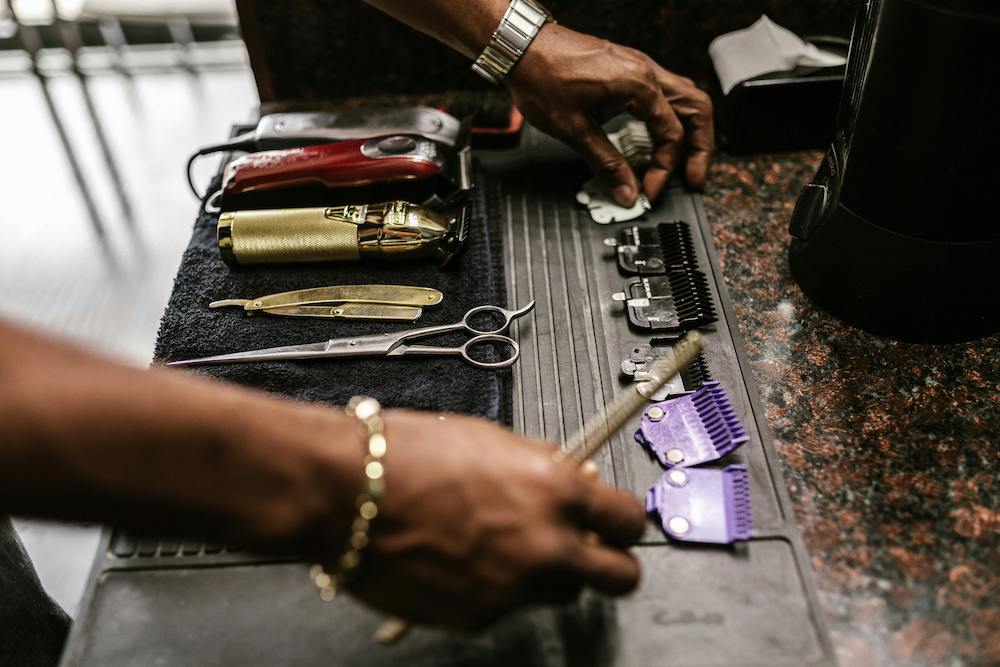
A wide range of attachments and accessories significantly increases the capabilities of the machine.
- A standard set should include sockets ranging from 1.5 mm to 25 mm.
- Pay attention to additional accessories, such as a cleaning brush or maintenance oil.
Interesting fact: Some professional clippers offer specialized attachments for creating texturing or shading effects.
5. Durability and reliability
Construction materials
The durability of a machine largely depends on the materials from which it is made.
- Body made of high-quality plastic or aluminum
- Rubber elements for increased traction
“Investing in a high-quality clipper is an investment in your career. A good clipper will serve you for years, allowing you to focus on what matters most—creating beautiful hairstyles.” – Paweł Pollheimer, international hairdressing educator
Warranty and service
Pay attention to the warranty terms and service availability.
- Look for machines with a minimum 2-year warranty.
- Check the availability of authorized service centers in your area.
Tip: Regular servicing and maintenance can significantly extend the life of your clippers. Learn more about professional maintenance of hairdressing tools in our podcast "About things forgotten and pushed into the background."
6. Price and value
Value for money
When choosing a razor, remember that the cheapest option is not always the most economical in the long run.
- Consider the machine as a long-term investment.
- Compare features and specifications across different price ranges
Tip: If you are just starting your adventure with hairdressing, check out our article "How to start a career as a barber: A complete guide,"where you will find advice on investing in equipment.
Professional brands vs. consumer brands
There are brands on the market dedicated to professionals as well as brands aimed at a wider audience.
- Professional brands often offer better durability and technical support.
- Some consumer brands offer advanced features at an affordable price.
“Choosing between a professional and consumer brand is not only a matter of budget, but also your work style and career development plans.” – Mateusz Banaszek
7. Latest trends and innovations
The razors of the future with AI technology
The latest models of clippers will reportedly start using artificial intelligence to optimize haircuts.
- Automatic power adjustment to hair type
- Blade condition monitoring and maintenance reminders
Interesting fact: Some advanced clippers will even suggest cutting techniques based on an analysis of your hair structure!
Eco-friendly razors
Growing environmental awareness is also influencing the production of hair clippers.
- Models made from recycled materials
- Energy-efficient solutions in cordless machines
Tip: If you are interested in an eco-friendly approach to hairdressing, check out our article "The rise of gender-neutral hairdressing: How to create an inclusive space in your salon,"where we also discuss sustainability issues in the industry.
Summary
Choosing the right hair clipper is a decision that can significantly affect the quality of your work and customer satisfaction. Remember that the best clipper is the one that best suits your individual needs and work style.
"A hair clipper is more than just a tool—it's an extension of your creativity and skill. Choose wisely, and it will become your most loyal ally in creating hairstyling masterpieces." – The Connected Hair Team
When choosing a machine, consider all the aspects discussed: type, technical parameters, ergonomics, versatility, durability, and innovation. Don't be afraid to invest in high-quality equipment—it's an investment in your career and professionalism.
Remember that technology in the world of hairdressing is constantly evolving. Stay up to date with the latest trends and innovations by regularly visiting our blog and taking advantage of our course offerings.
Choosing the right machine is just the beginning—how you use it depends entirely on your creativity and skill. Develop your craft, experiment with new techniques, and remember that the best tool is the one that allows you to fully express your artistic vision!