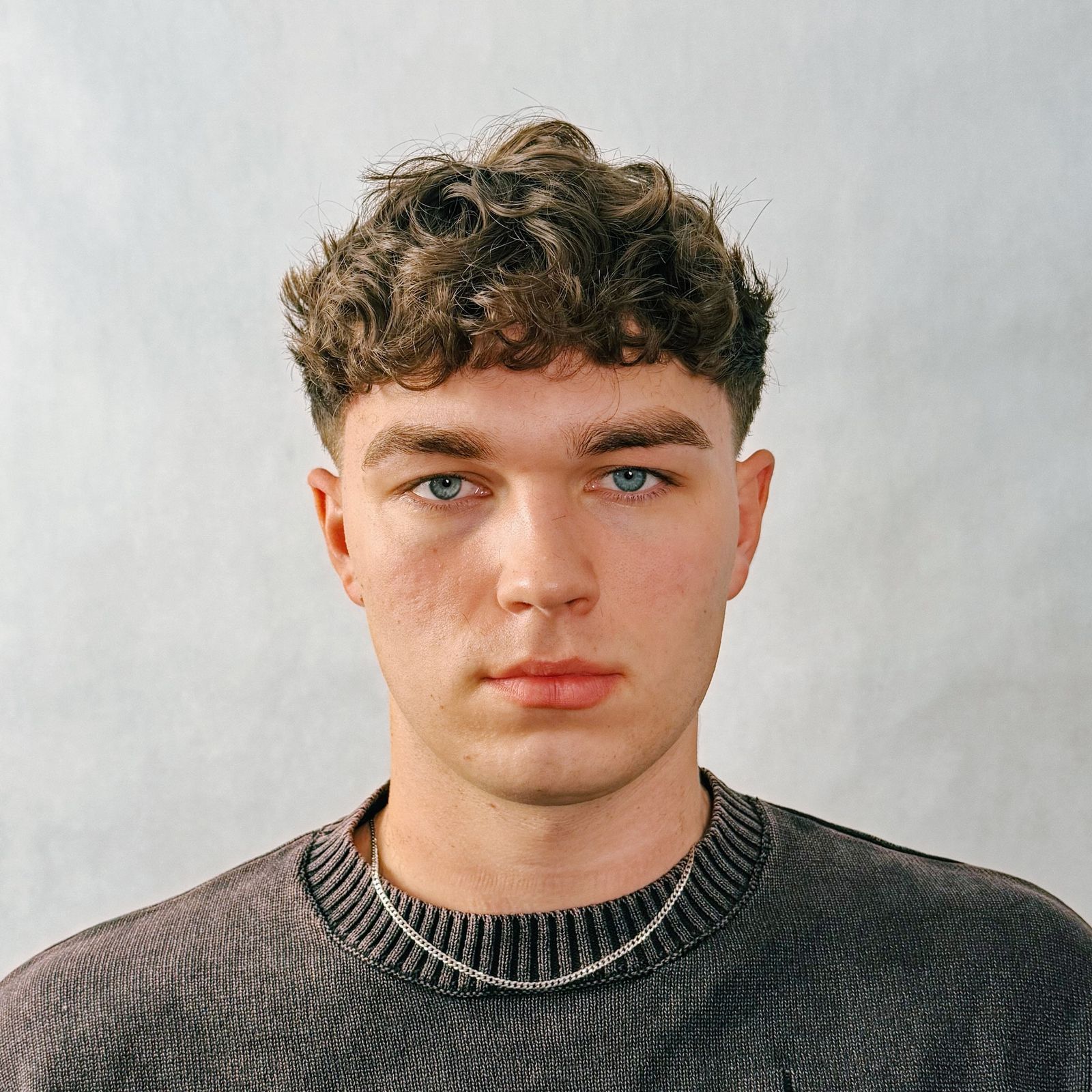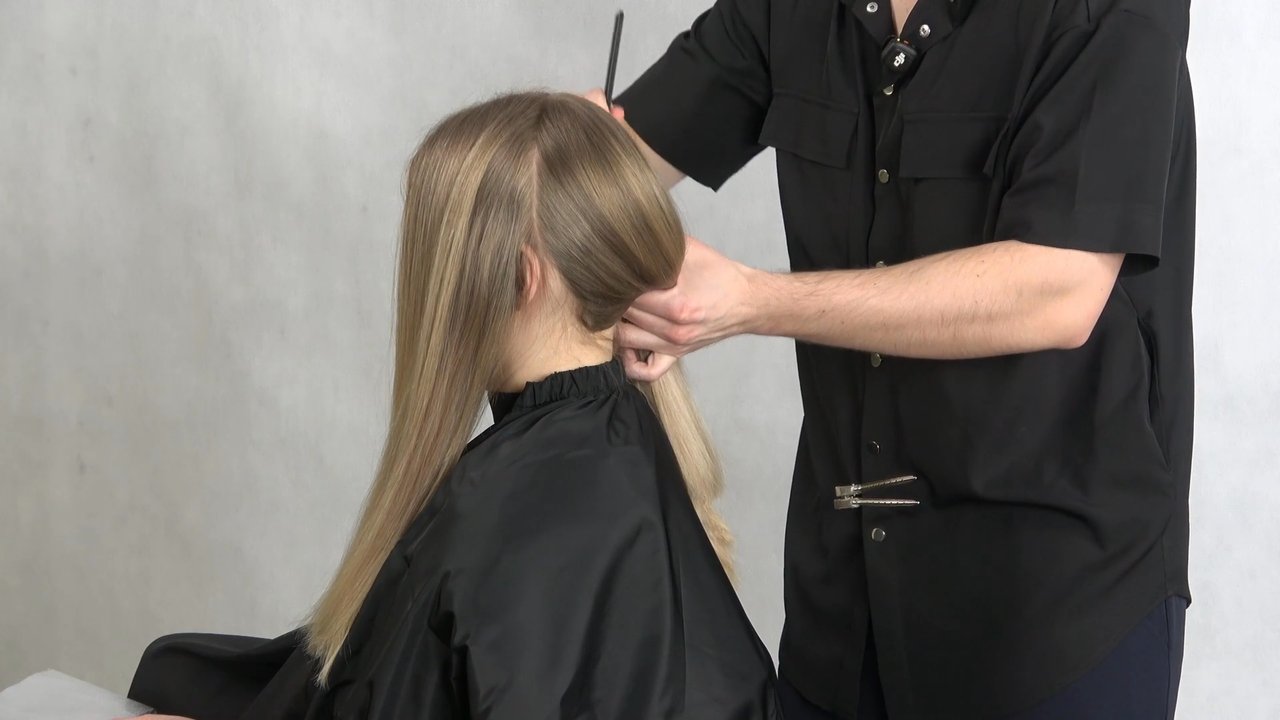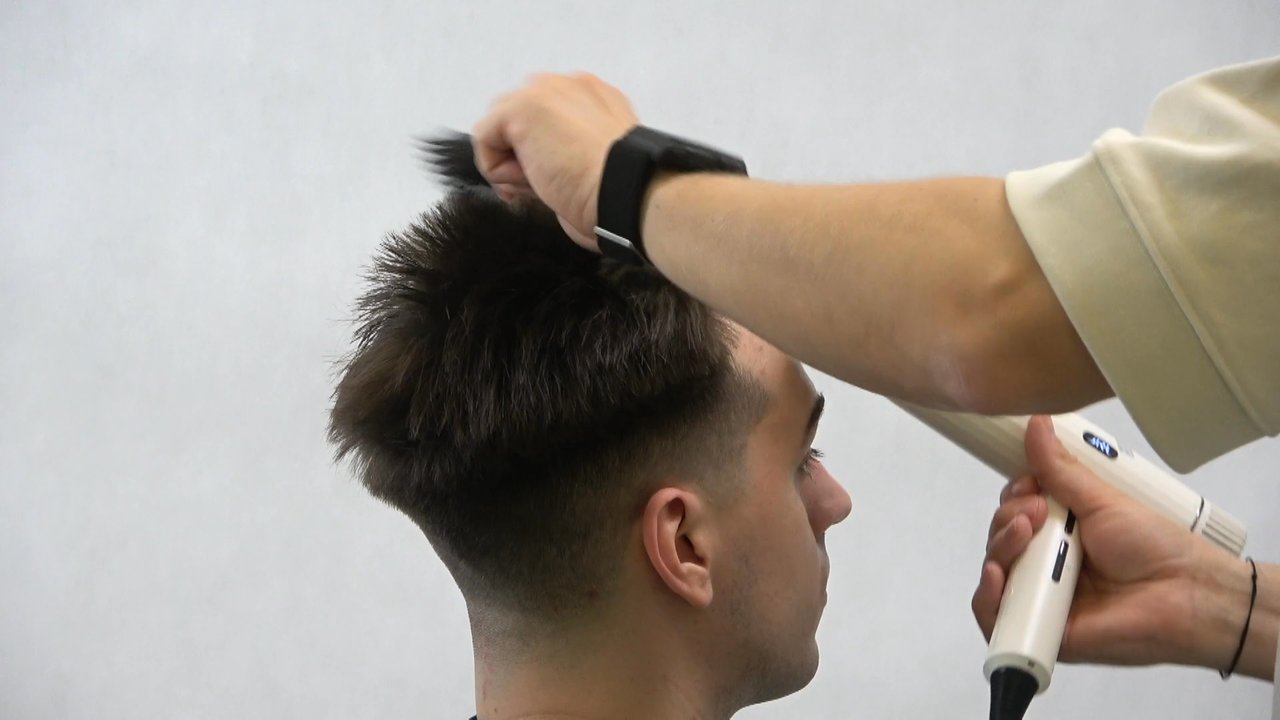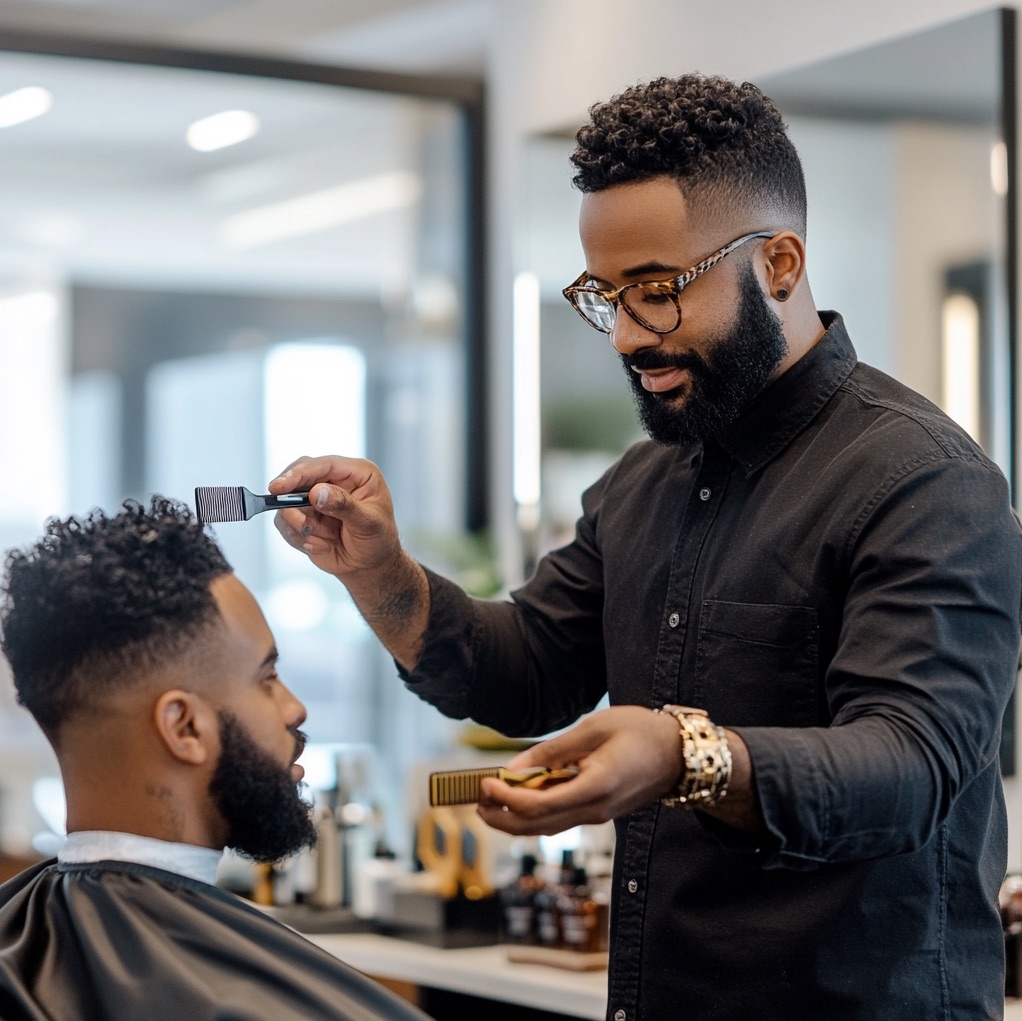
Men's hair styling comes down to two moments: behind the chair, where the cut's structure is built, and at the client's home, where that structure needs to be recreated in three minutes. A haircut the client can't style themselves comes back as a complaint. Below, we've gathered what actually determines a repeatable result: choosing the right product for the hair type, directional blow-drying technique, sectioning during styling, and the most common mistakes that show up after just an hour of wear.
Diagnosing the Hair Before You Reach for Product
Styling starts with assessing the hair, not with the product. The same amount of product and the same technique give completely different results on fine hair versus thick hair. You diagnose the hair both dry and wet, since some traits only reveal themselves once it's wet — curl pattern, porosity, tendency to frizz.
- Straight – falls flat easily under product weight and holds little volume at the root. Needs lightweight bases and blow-drying against the direction of growth.
- Wavy – the most rewarding for textured cuts, but frizzes if over-combed. Work with your fingers, not a brush.
- Curly – define the curl instead of breaking it up. Apply product to damp hair using the scrunch method and dry with a diffuser on low airflow.
- Fine – root volume is key, and you need to avoid weighing it down. Pomade and heavy wax clump it together and expose the scalp.
- Thick – holds any shape but can be unruly. Stronger hold products and longer directional blow-drying work well here.
- Oily and dry – this is less about hair type and more about scalp condition. Oily hair loses shape faster; dry hair is harder to style and frizzes more.
In practice, most clients have mixed traits — straight and fine hair together, for example, or thick hair with a slight wave. In that case, style for the dominant problem trait: with straight, fine hair, volume is the priority; with thick, frizz-prone hair, it's control and smoothing.
Also assess hair density and growth direction, especially at the crown and hairline. A cowlick at the top of the head or a fringe that falls forward will determine which way the top can actually be styled. This is information you gather at the cutting stage, not just at the finishing stage.
Tools and What They Actually Do
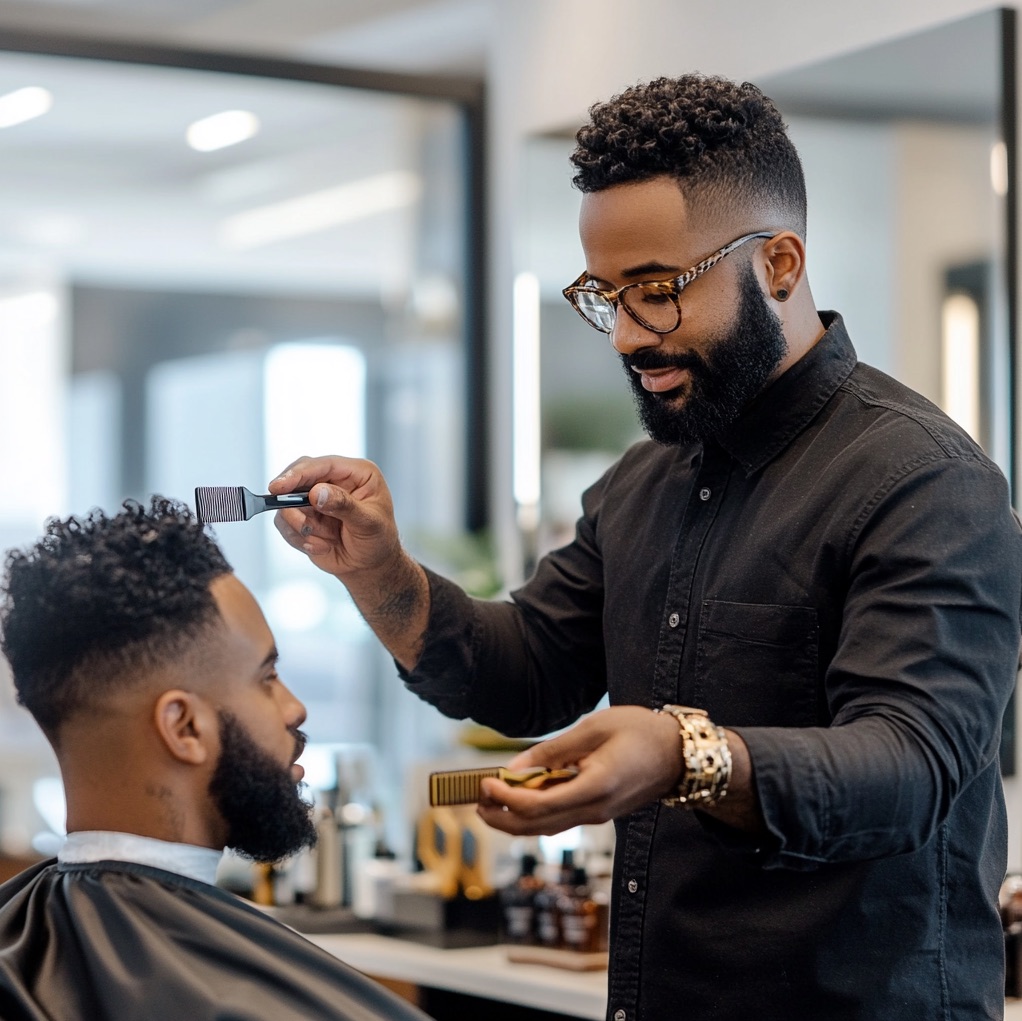
There isn't much gear needed for men's styling, but each piece has a specific role. What matters isn't owning everything — it's using what suits the length and structure of the hair with intention.
- Comb – detangling, creating a parting, and precise combing. A wide-tooth comb for detangling, a fine-tooth comb for a smooth finish and working with pomade.
- Round brush – a tool for volume and direction. Wrap a section around it at the root and blow-dry to lift the hair and shape it into a roll, for example under a quiff.
- Blow-dryer with a nozzle – the most important tool in styling, not just drying. The nozzle concentrates the airflow for directional drying, while a diffuser spreads it out and protects the curl on curly hair.
- Flat iron – for smoothing individual unruly sections and controlling frizz, not straightening the whole head. In men's styling, it's used selectively.
- Curling iron – for defining waves in longer cuts and adding movement to the fringe. Used sparingly to keep the effect natural.
- Trimmer – for the line-up, beard line, and detailing around the temples. It's a finishing tool that closes off the haircut's silhouette.
The blow-dryer is the most underrated tool here. Most of a hairstyle's staying power comes from directional blow-drying, and the product only locks in the shape you've already created with hot air and then cooled. Skip that step, and wax or paste will just leave the hair flat and lifeless.
Styling Products: Hold, Finish, Base
Describe a product to your client using three parameters: hold, finish (shine or matte), and base (water- or oil-based). A water-based product washes out in one shampoo; an oil-based one needs a proper shampoo to remove. This distinction saves clients from a greasy-looking result the day after styling.
| Product | Use | Hair Type |
|---|---|---|
| Gel | Strong hold, wet-look effect, stiff finish | All types |
| Wax | Medium hold, matte finish, good control | Short to medium |
| Pomade | Medium to strong hold, glossy finish, smoothness | Medium to long |
| Paste | Light to medium hold, natural matte finish | Short to medium |
| Mousse | Adds volume, light hold, applied to damp hair | Fine, delicate |
| Spray | Strong hold, finishes the look without changing its shape | All types |
The choice follows the goal. Fine hair that needs volume: mousse on damp hair before blow-drying, plus maybe a light texturizing powder at the root. A tousled, bed-head texture: matte paste or wax worked between your hands and pressed in with your fingertips. A smooth, glossy comb-back: water-based pomade distributed with a comb.
The most common mistake is the wrong order and too much product. Start with a pea-sized amount, rub it between your palms until it turns clear, and apply from the back of the head forward, adding more only if needed. It's easier to add more than to wash out the excess.
Styling Techniques for Different Hair Lengths
Short Hair
Short cuts style up fast, but they're the least forgiving, since every uneven strand shows. The foundation is well-dried hair and a minimal amount of product.
- Texturizing – paste or matte wax pressed in with the fingertips, using a random motion to separate strands and create separation instead of a solid block.
- Comb-back – on hair blow-dried to about 80 percent, combing from the hairline toward the back, ideal for a classic pompadour.
- Spiky crew style – lift the hair up by blow-drying from the root first, then use strong wax or gel to lock in the direction. Product alone, without blow-drying, won't make the hair stand up.
Medium-Length Hair
Medium length gives you the most options, since the hair is long enough to actually direct, yet short enough to hold its shape.
- Side part – mark the natural parting line with a comb on damp hair, comb both sides in opposite directions, and set. The parting line should follow the hair's natural fall, not fight it.
- Comb-back – with a slight lift at the root, good for more formal occasions. Water-based pomade gives smoothness and all-day control.
- Messy look – paste pressed in with the fingers on partially dried hair, moving in different directions. The goal is controlled disorder, not an accident.
Long Hair
Long hair gives you plenty of room to style, but it needs more care, since every split end and dry patch shows up along the length.
- Loose waves – mousse on damp hair, blow-dry with a diffuser on low airflow, lifting sections toward the scalp. The diffuser protects the curl pattern and reduces frizz.
- Ponytail or bun – an elegant, practical option for formal occasions, and also good for keeping hair in check throughout the day.
- Worn loose – serum or oil on the ends for shine and frizz control, applied only along the length, never at the root, to avoid weighing the hair down.
Styling and Face Shape
Face shape tells you where to add volume and where to reduce it. There's one rule: aim for a visually oval shape — so where the face is wider, the hairstyle should sit close to the head, and where it's shorter, add height.
- Round face – volume and height on top lengthen the proportions, with the sides kept short and close to the head. A pompadour or quiff works well.
- Square face – soft lines and texture on top soften strong features and the jaw angle. Avoid sharp, geometric outlines.
- Oval face – the most versatile, it can carry most hairstyles. Just watch out for too much hair on the forehead, which shortens the proportions.
- Long face – avoid tall hairstyles that stretch it out further. Go for a side part and volume at the sides instead of on top.
For more on choosing hairstyles for face shape, check out our article Men's Hairstyles for a Round Face: Tricks and Tips.
Popular Men's Hairstyles and How to Achieve Them
Undercut
The undercut is a contrast between short sides and back and a noticeably longer top, usually without a smooth blend (disconnected). The cut:
- Clip the sides and back to one length with clippers, usually guard #1 to #3, working against the direction of growth.
- Leave the top noticeably longer, keeping a sharp dividing line at the temple if going for the disconnected version.
- Styling depends on the look: a pomade comb-back, a side comb-over, or standing the top up with wax after directional blow-drying.
Quiff
The quiff is volume and movement in the front section, combed up and back. The whole challenge is in the blow-drying, not the product:
- Apply mousse to damp hair, spreading it evenly to build a volume base.
- Blow-dry with a round brush, wrapping the front sections around it at the root and lifting them upward, with the nozzle directed from root to ends. A blast of cool air at the end locks in the lift.
- Use paste or wax to shape and separate, working with your fingertips. A finishing spray locks in the shape without making it stiff.
Crew Cut
The crew cut is a short, low-maintenance style with a slightly longer section up front and shorter toward the back. Styling is minimal:
- Rub a small amount of paste between your palms until it turns clear.
- Press it into slightly damp hair, spreading it evenly from the root.
- Shape the top with your fingers, lifting the front section slightly to define direction. Keep it matte — shine usually ruins the effect here.
For more inspiration, check out our article on the most popular men's hairstyles inspired by celebrities.
Hair Care as the Foundation of Styling
Damaged, over-dried, or greasy hair won't hold its shape no matter the technique. Styling is only as good as the base you're working with, which is why hair care isn't an extra step — it's the first one.
- Choose shampoo and conditioner based on hair type and scalp condition, not scent. A different product suits an oily scalp than a dry one.
- Don't wash hair every day. For most people, 2 to 3 times a week is enough — washing too often strips away the natural protective film and makes oiliness worse.
- Use heat protection before blow-drying and flat-ironing. High heat without protection weakens the hair shaft and increases frizz.
- Trim the ends regularly to stop split ends. A consistent cut line also holds the haircut's silhouette over longer stretches between visits.
- Keep in mind that hair condition also depends on hydration and diet — a factor the client can influence outside the salon.
For more on hair care, check out our article on hair care techniques for men.
Common Mistakes in Men's Hair Styling
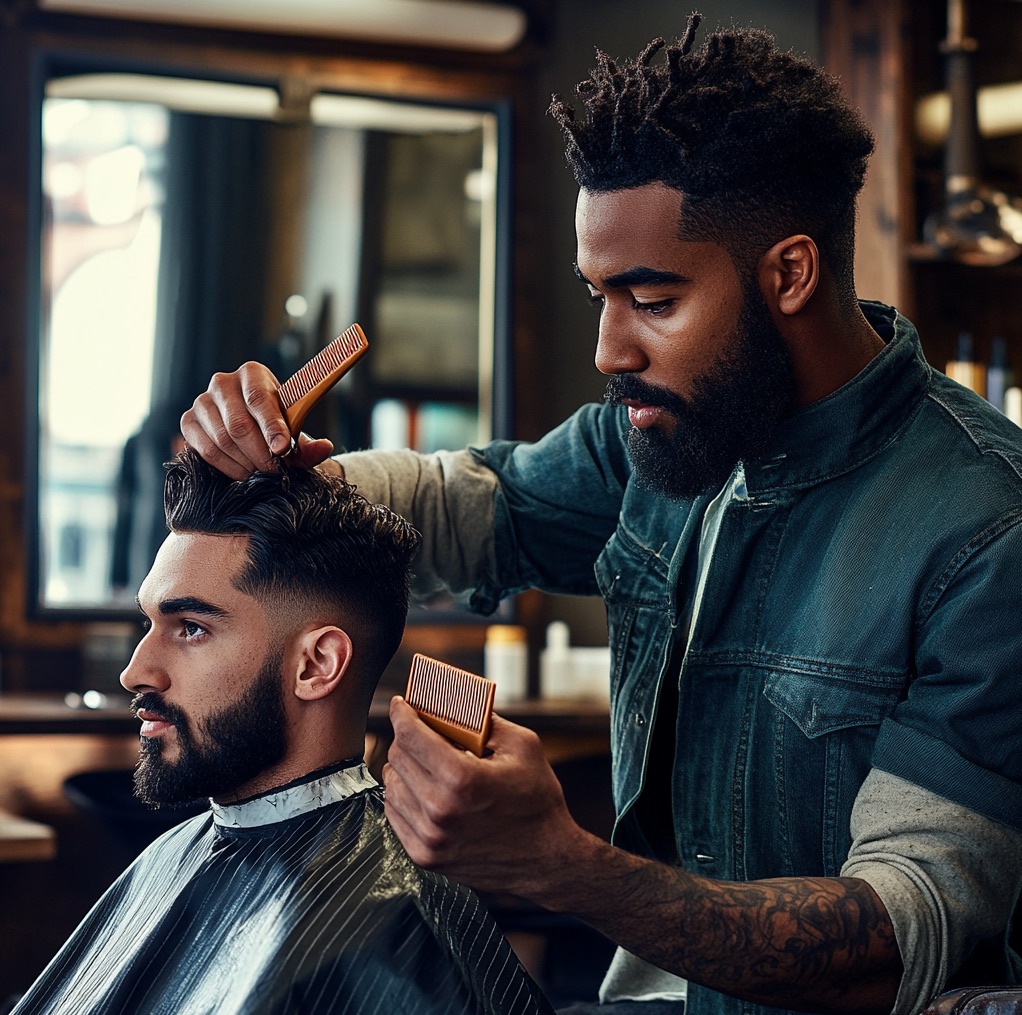
- Too much product – weighs the hair down, clumps strands together, and exposes the scalp, giving a greasy look. Start with a minimal amount and add more as needed.
- Skipping directional blow-drying – product applied to flat-dried hair won't recreate the volume created with a brush and airflow. The shape comes from the blow-dryer; the product only locks it in.
- Ignoring hair type and curl pattern – not every technique and not every hairstyle works on every structure. Match the styling to the diagnosis, not the trend.
- Too much heat and no heat protection – an overheated blow-dryer or flat iron damages the hair shaft and increases frizz. Work on medium heat and keep some distance from the scalp.
- Applying care products at the root – serum and oil belong only on the length and ends. At the root, they weigh the hair down and speed up greasiness.
- Not trimming regularly – without maintaining the cut line, every hairstyle loses its shape, and styling can no longer save it.
Inspiration and Trends in Men's Hairstyles
The direction in men's hairdressing is moving from rigid, geometric shapes toward natural texture and working with what the hair does on its own. Right now, we're seeing a lot of:
- Textured crops – short cuts with plenty of movement on top and a clean taper on the sides.
- Longer hair – a return of '90s shapes and more freedom in the length on top.
- Modernized classics – a fresh take on traditional shapes, like a pompadour done in a lighter, more natural way.
- Natural textures – cuts that highlight the hair's natural curl pattern instead of fighting it.
Follow our blog to stay up to date with the latest trends in men's hairdressing.
Styling the Client Can Recreate at Home
The best way to judge your styling isn't the result behind the chair — it's whether the client can recreate it themselves. That's why, when you hand off the finished haircut, show them how much product you're using, which direction you're blow-drying, and which section you're lifting. Three remembered moves are worth more than a perfect finish nobody can reproduce.
If you want to deepen your craft — from cutting to styling — check out our online courses. You'll find courses taught by practitioners, from basic cutting techniques to advanced methods for working with texture and finishing.