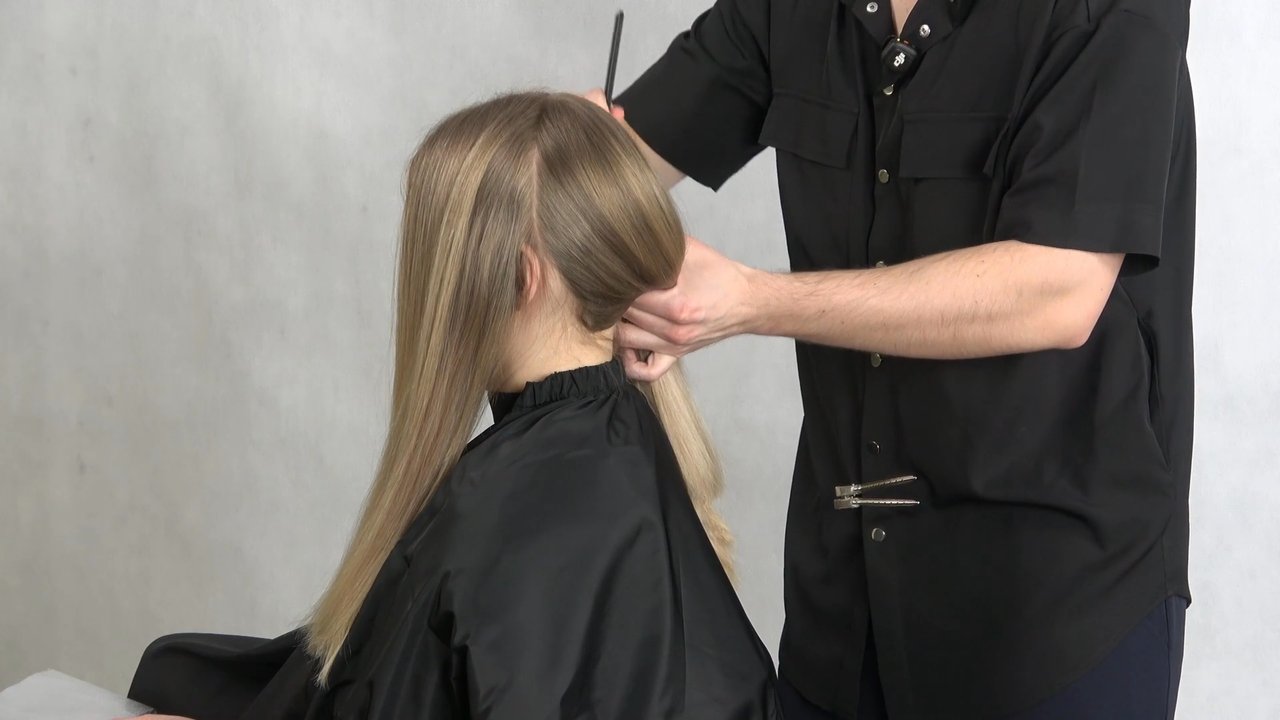
The mullet is back from the ’80s as one of the most requested haircuts in the barbershop. A client asking for “short in the front, long in the back” isn’t asking for a Czech hockey player look anymore. They want a balanced haircut with a clean transition, controlled texture, and a shape tailored to their head. The difference between a successful mullet and an accidental one lies in the sectioning, the choice of techniques, and the finishing — not in the idea itself.
What Is the Modern Mullet?
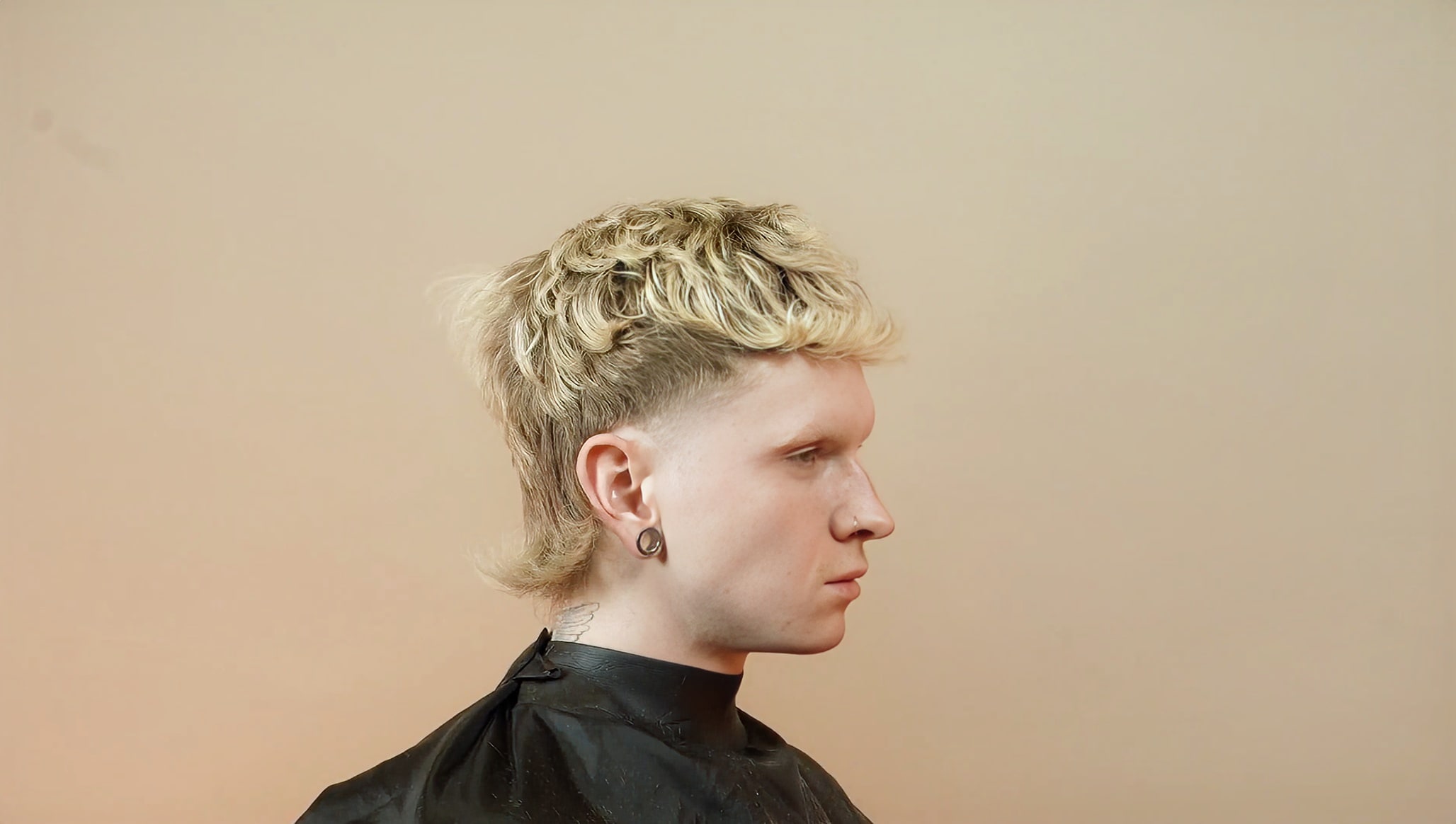
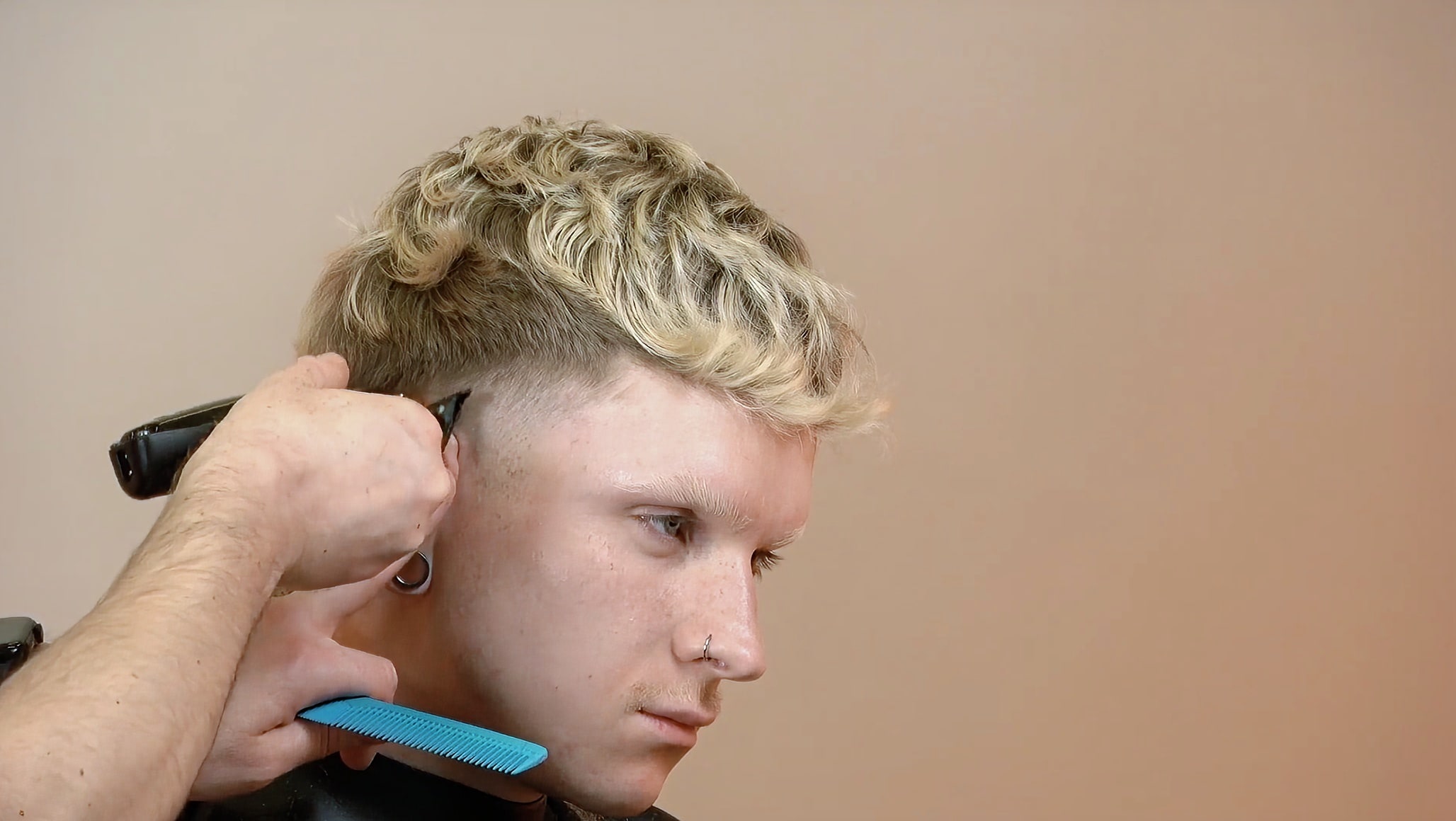
The modern mullet keeps the foundation of the original: shorter hair on the front and sides, longer at the back. What sets it apart is a smooth transition instead of one sharp dividing line, along with a heavily textured finish. The sides and back can be graduated with clippers, cut classically with scissor-over-comb, or left longer and layered. The longer section at the back is no longer a simple, heavy “tail” — it’s a layered section that falls naturally and can be styled.
This cut responds to hair structure. On straight hair, the mullet looks more graphic and needs stronger texturizing so it doesn’t fall flat. On wavy and curly hair, the length at the back settles on its own, so the barber’s role is to control volume and make sure the hair’s natural bounce doesn’t shorten the cut beyond the intended design.
Why Is the Mullet Making a Comeback?
- Versatility – the modern mullet can be adapted to different hair lengths and textures, much like the Middle Part hairstyle. The same base looks different on straight hair versus curly hair, and the degree of shortening on the sides changes the entire feel of the cut.
- Individual expression – the shape of the sides, length at the back, and level of texture can be tailored to the specific client, which is key in modern men's hairdressing.
- Balance between classic and modern – it combines traditional scissor-over-comb work with modern dry texturizing, much like the Pompadour.
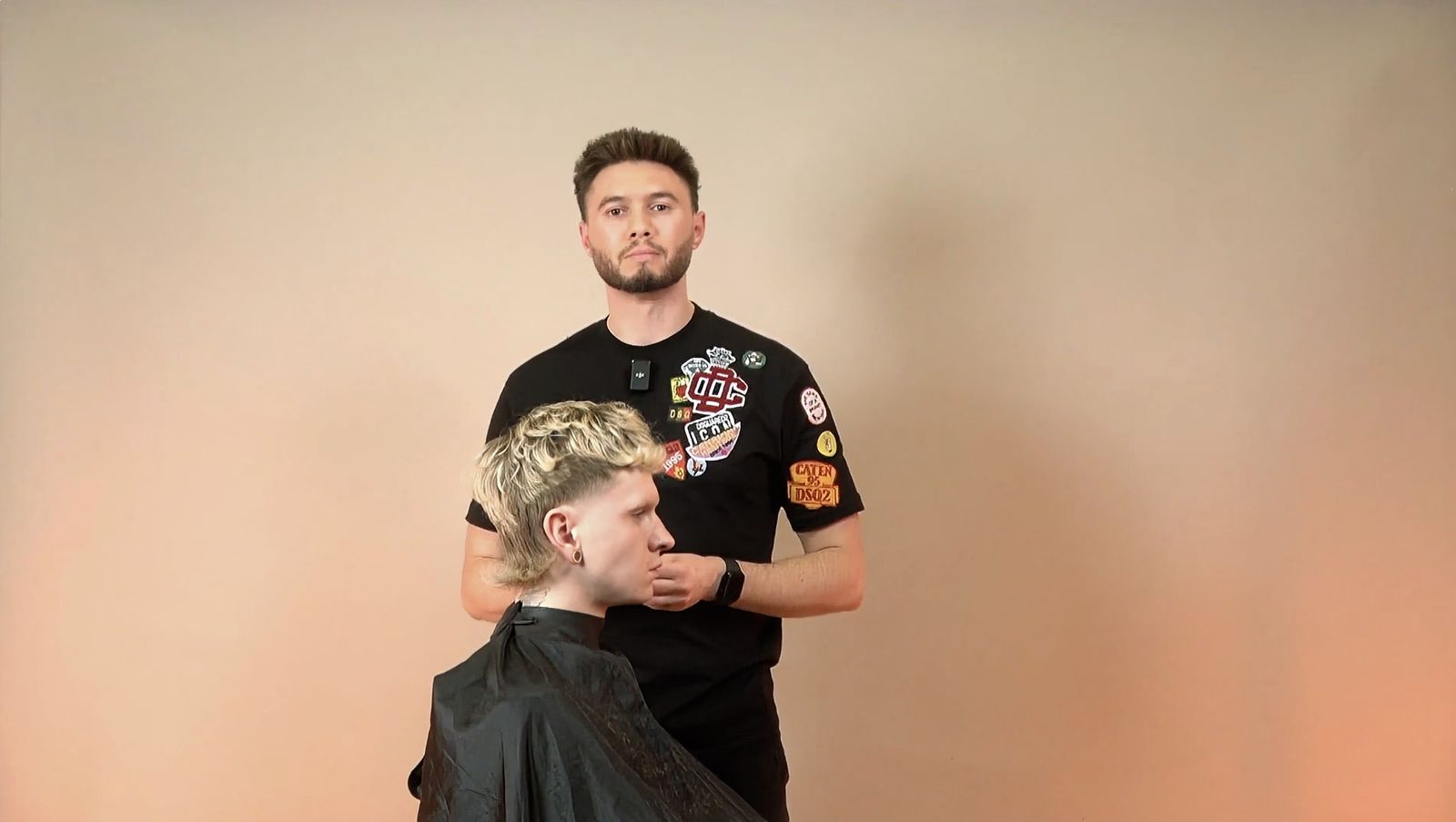
Paweł Pollheimer: Master of the Modern Mullet
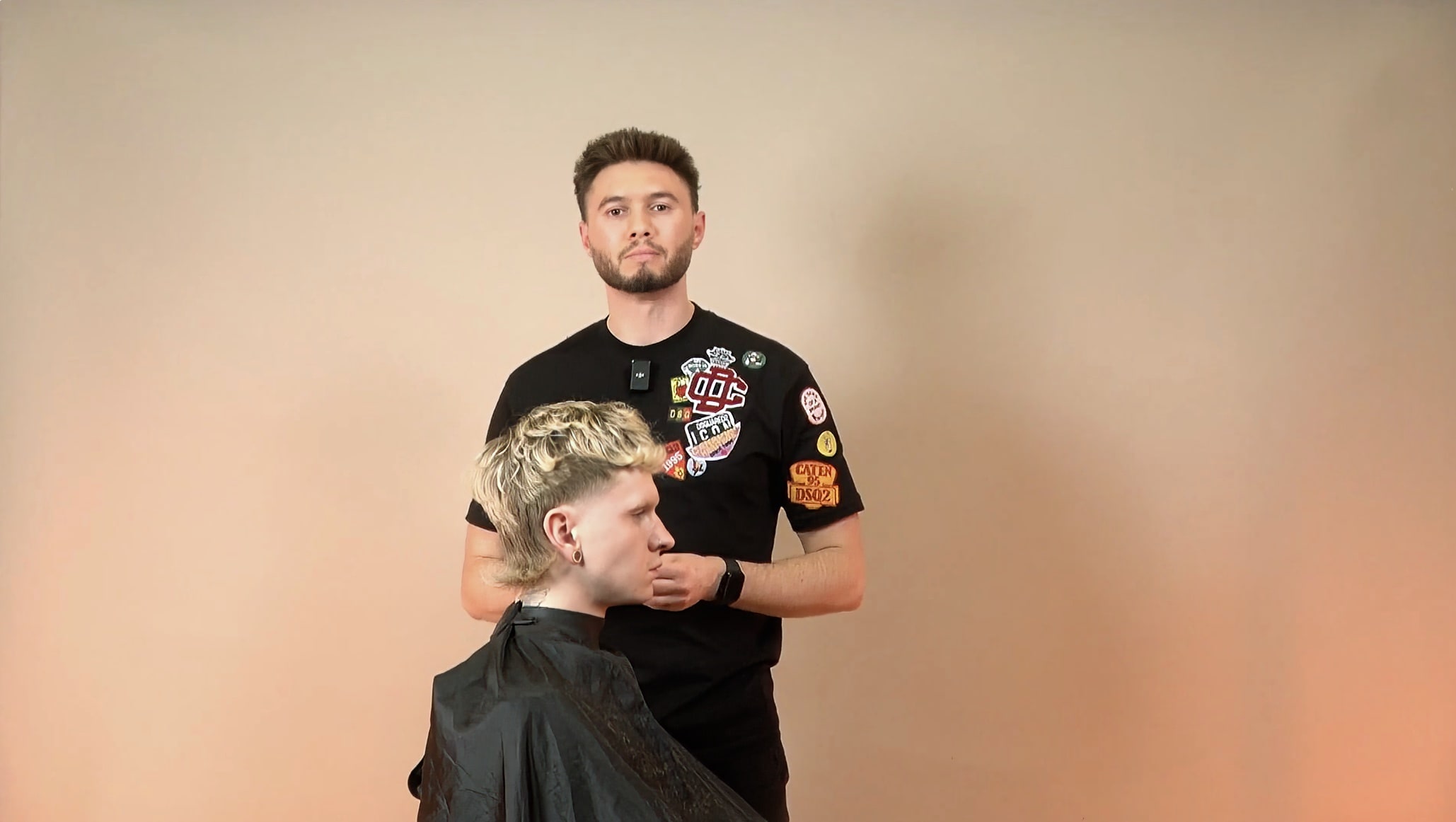
Paweł Pollheimer, a renowned hairdressing educator, specializes in modern interpretations of classic men’s haircuts. In his course on the mullet, he explains how to think about this cut in terms of shapes rather than individual strokes. His starting point is distinguishing between horizontal and vertical lines, and working with intention to design the hairstyle’s silhouette from every angle of the head:
“I’ll pay special attention to both horizontal and vertical shapes. Starting from the back — since that’s where I’ll begin cutting — I want to create a flatter, more square shape to preserve length and volume at the corners of the head. As for the sides, the shape will be more progressive, more triangular.”
This distinction between shapes has practical consequences with clippers and scissors. Working the back “square” means maintaining weight and volume at the corners of the head instead of rounding them off to zero. Working the sides “triangular,” meaning progressively, means gradually shortening from top to bottom, which builds a clean transition without a hard line. These two principles determine whether the mullet has structure — or dissolves into a shapeless mass.
Key Elements of Creating a Modern Mullet
1. Hair Structure and Face Shape Analysis
Before the first cut, assess the hair’s growth direction, density, texture, and cowlick placement, as well as head shape and jawline. On curly hair, plan for extra length, since hair bounces up after drying and appears shorter. Paweł points this out directly:
“Considering that my model has curly hair, I know that after drying it will bounce up slightly, so I’ll want to keep the length as much as possible.”
Practical takeaway: on textured hair, it’s better to leave a margin and check the cut while dry than to measure length wet and discover after styling that the back is too short. The consultation at this stage also establishes how high the transition on the sides should sit and how long the back section should be.
2. Building the Basic Shape and Sectioning
Clean sectioning is the foundation. Start by establishing the horseshoe section — the line separating the top from the sides and back — following the natural direction of hair growth rather than a rigid template. Paweł emphasizes that he starts the work from the cowlick and directing the hair:
“I’ll create the horseshoe naturally, following how the hair falls and grows — so I find the cowlick. To make the work easier and cleaner from the start, I can direct the hair in the direction I’ll be taking each section and parting.”
In practice, this gives a predictable workflow:
- Mark the horseshoe line and clip up the top so you can work on the sides and back without pulling in hair from the top.
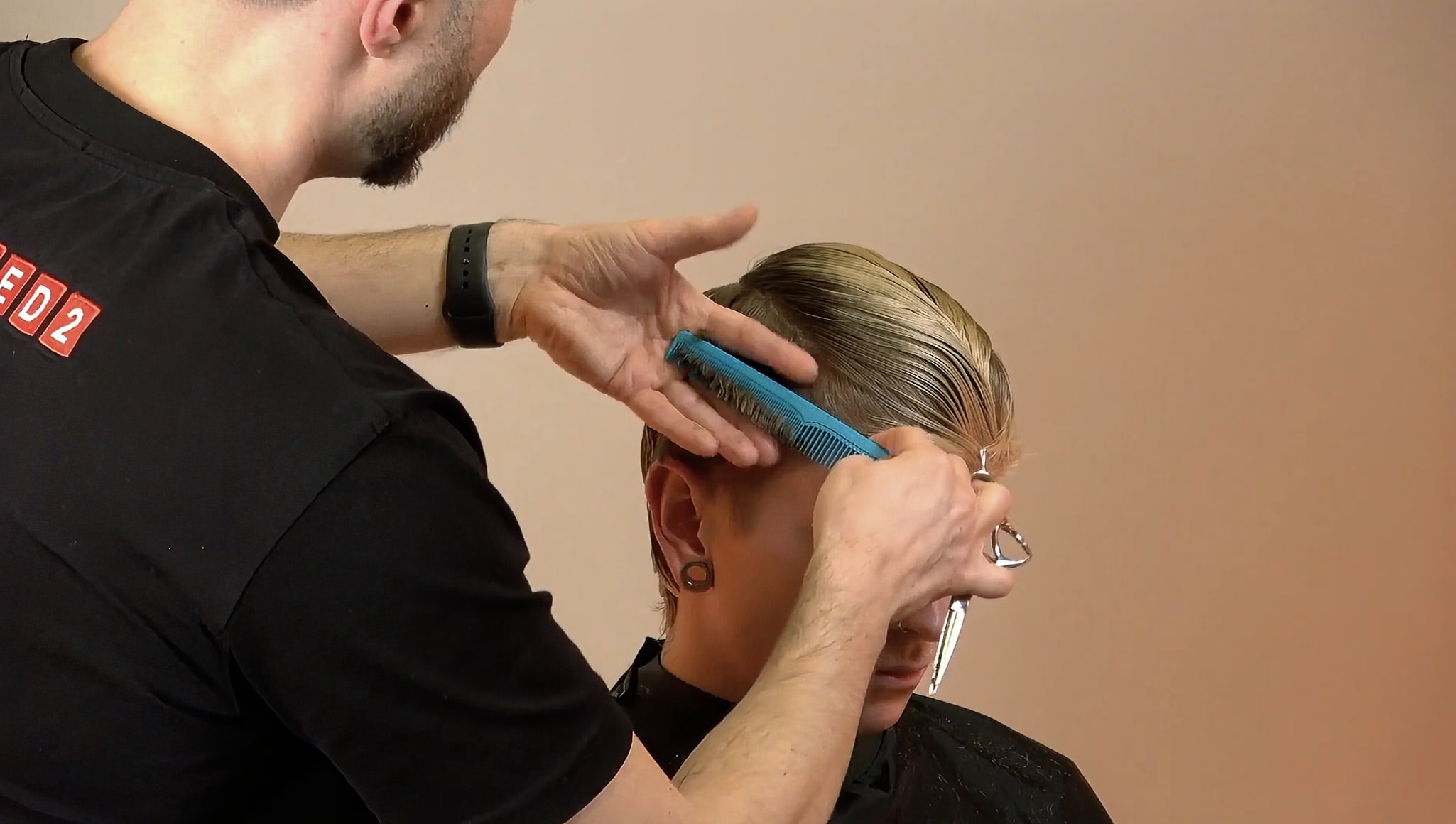
- Work in vertical sections when graduating the sides and back, controlling the elevation of the section off the head. The more you elevate the section, the longer the resulting layer.
- Take the sides progressively (in a triangle) to achieve a clean transition, and keep the back flat (in a square), preserving weight at the corners.
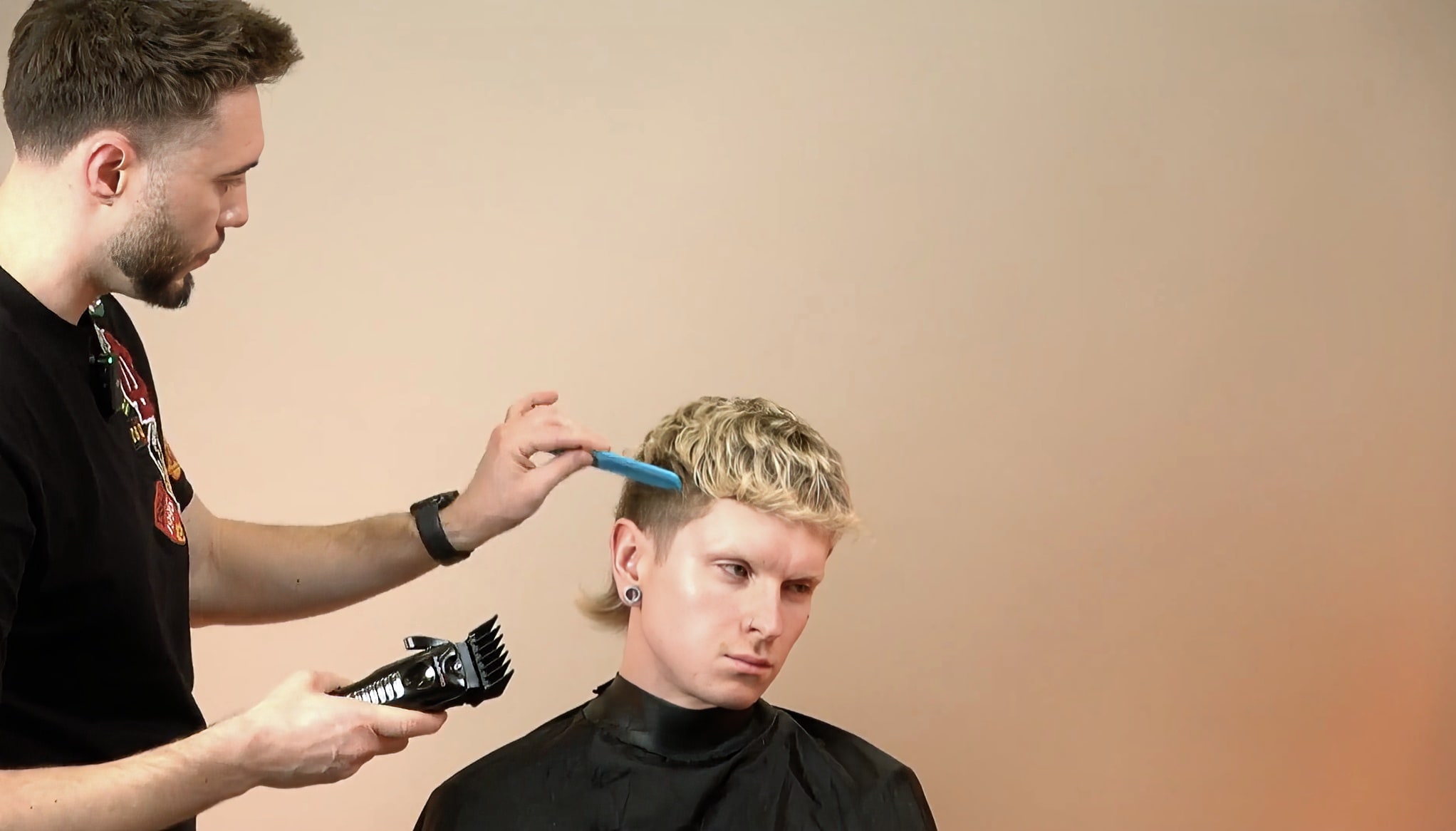
- Blend the transition zone using clippers with a guard or the scissor-over-comb technique, choosing the length according to how high the shortening should reach.
3. Adding Texture and Volume
Texture is what sets the modern mullet apart from its flat original. Once the shape is built, you work on the hair’s structure — using thinning and texturizing techniques, among others — to break up the weight and give the ends an irregular pattern without losing the established shape:
“This time we’ll work with the tempera technique to build up as much texture as possible in the hair while keeping the shape.”
The rule stays constant: texturize within the designed silhouette, not beyond it. Overly aggressive thinning at the root will flatten the haircut and strip volume from the corners — exactly what you want to preserve in a mullet.
4. Styling and Finishing
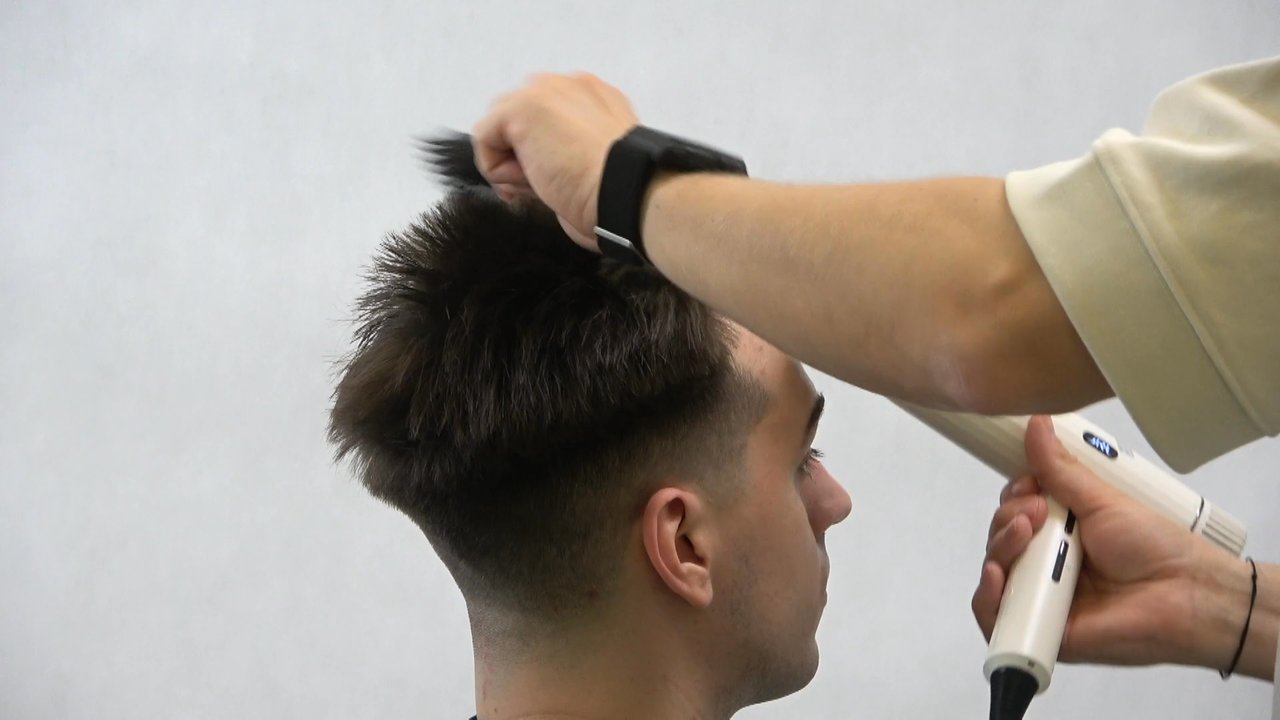
In the end, it’s about bringing the built shape to the surface: lifting the crown and loosening the outer hair so the haircut has movement and an irregular, raw character:
“When it comes to the styling itself, what I want to do above all is bring out the shape I’ve built so far — lifting the crown area more, and making the outer hair a bit more ‘Messi’ as well.”
Lifting the crown while blow-drying and choosing a matte, texturizing product locks in volume without any stiff, clumped effect. This is the moment that reveals whether the earlier sectioning and texturizing were clean, because styling exposes the shape — it doesn’t fix its mistakes.
The Mullet in Salon Practice
Adding the mullet to your salon’s menu translates into concrete business benefits:
- Expanding your portfolio – it shows clients you work with current shapes, much like the Wolf Cut, with which the mullet shares the same logic of layering and texture.
- A technical challenge – it sharpens precision in sectioning, transitions, and texturizing, which also carries over to other advanced haircuts.
- Attracting new clientele – especially younger clients looking for bold hairstyles, which fits into the trend of gender-neutral hairdressing.
How to Approach Creating a Modern Mullet?
- Start with a consultation – establish the height of the transition on the sides, the length at the back, and the level of texture, tailoring the version to the hair structure and face shape. Guidance on choosing a hairstyle can help here.
- Take care of proportions – the key is balance between short sides and a long back, and maintaining weight at the corners of the head, much like in the square-layer technique.
- Focus on texture – break up the weight and give the ends movement with texturizing techniques, taking care not to flatten the shape, using graduation techniques.
- Teach the client how to style it – show them how to blow-dry and which product to use so the haircut holds its shape at home, which matters for everyday hair care.
The Mullet Is More Than Just a Hairstyle
For a barber, the mullet is a test of craft: sectioning, controlling elevation, a clean transition, and texturizing within the designed shape. Once these elements are mastered, the same base yields dozens of variations, from subtle and salon-polished to bold and raw.
If you want to see the entire process step by step, on a live model with technical commentary, check out the online courses at Akademia Pro and learn to create mullets that will set you apart from the competition.
See it in practice: in the Mullet course with Paweł Pollheimer, you’ll follow the entire process step by step on a model, with commentary from the instructor.