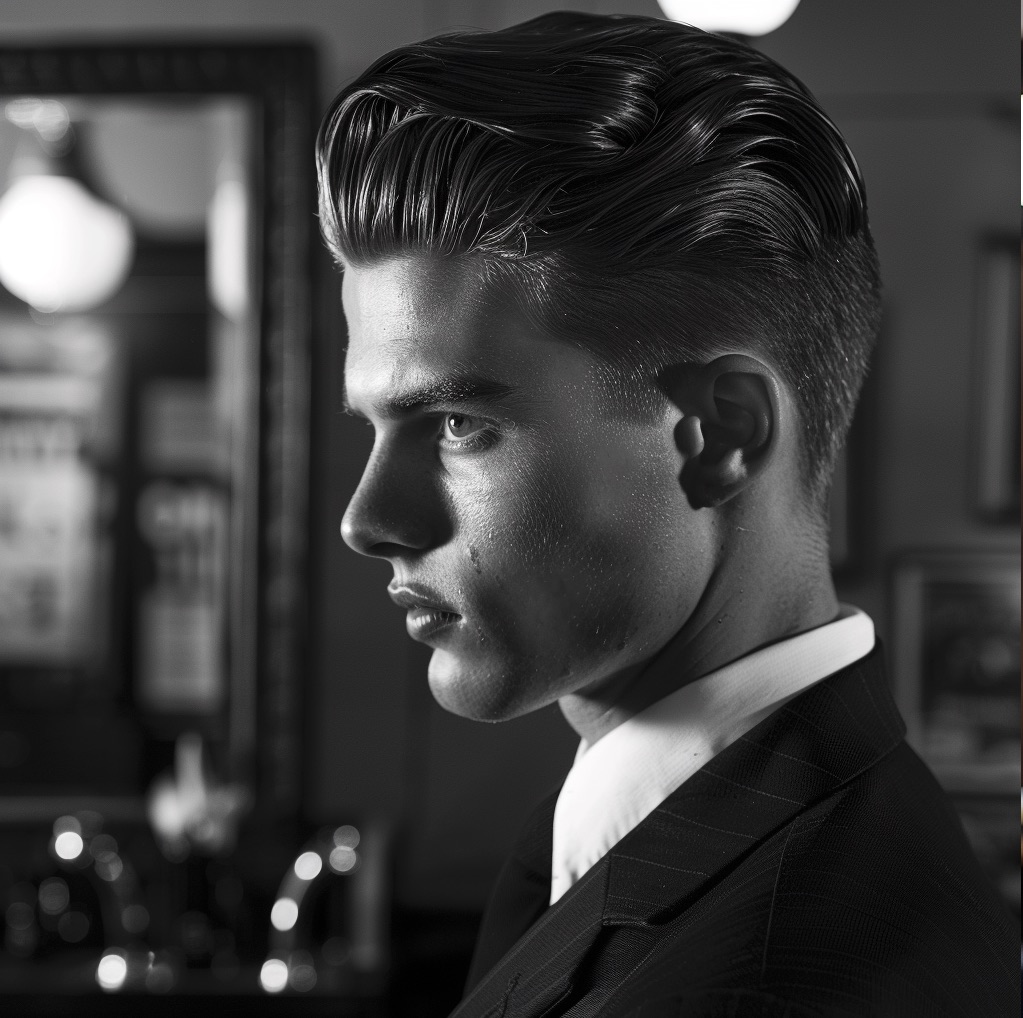
Okrągła twarz to jeden z najczęstszych kształtów, z jakimi spotkasz się przy fotelu. Klient nie powie wprost, że ma pełne policzki i niewyraźną linię szczęki, ale to Ty masz za zadanie tak poprowadzić cięcie, żeby twarz wydłużyć i nadać jej strukturę. Poniżej konkretny warsztat: po czym poznać okrągłą twarz, jak zaplanować strzyżenie, które fryzury sprawdzają się najlepiej i jakimi technikami je wykonać.
Jak rozpoznać okrągłą twarz
Diagnozę robisz na sucho, na czystych włosach zaczesanych do tyłu, patrząc na klienta od frontu. Charakterystyczne cechy okrągłej twarzy:
- Szerokość i długość twarzy są zbliżone, proporcje dążą do koła, a nie do owalu
- Pełne policzki, najszerszy punkt twarzy wypada na ich wysokości
- Zaokrąglona, miękka linia szczęki bez wyraźnego kąta
- Brak wyraźnie zarysowanych kości policzkowych i niska, szeroka linia czoła
Sprawdź też profil. Jeśli twarz jest jednocześnie okrągła i szeroka u podstawy, tym bardziej będziesz budować wysokość na górze, a nie objętość po bokach. Ocenę kształtu rób przed konsultacją, bo to ona decyduje o całej geometrii cięcia.
Zasady strzyżenia okrągłej twarzy
Cel jest jeden: optycznie wydłużyć twarz i odwrócić uwagę od jej szerokości. Wszystkie decyzje techniczne podporządkuj pięciu zasadom:
- Buduj wysokość na górze głowy. Pion przy strefie czołowej ciągnie spojrzenie w górę i wydłuża sylwetkę twarzy. To najważniejszy ruch przy okrągłym kształcie.
- Wydłużaj twarz, nie poszerzaj. Każda objętość na wysokości skroni i policzków pracuje przeciwko Tobie, dlatego boki trzymaj blisko głowy.
- Minimalizuj objętość po bokach. Krótkie, ścieśnione skronie i tył zawężają twarz i tworzą kontrast z pełną górą.
- Wprowadzaj asymetrię. Przedziałek z boku i nierówny ciężar włosów na górze rozbijają symetrię koła i dodają twarzy charakteru.
- Graj kontrastem długości. Wyraźna różnica między krótkimi bokami a dłuższą górą buduje strukturę tam, gdzie natura jej nie dała.
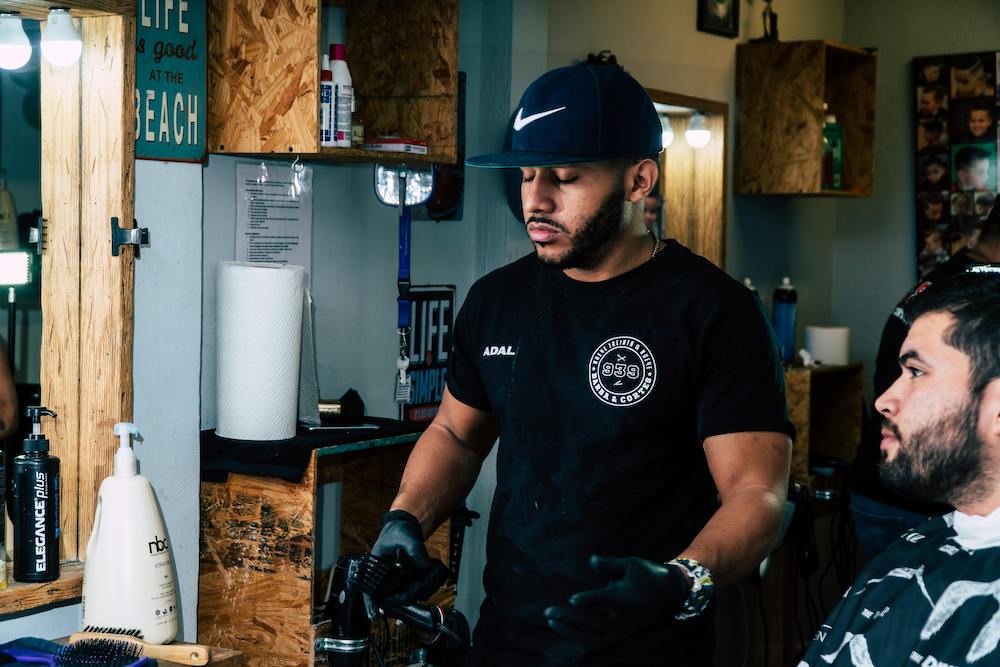
Recommended hairstyles
Każda z poniższych fryzur realizuje te same zasady: wysoka góra, ścieśnione boki, kontrast. Różnią się stopniem trudności i typem włosów, do którego pasują najlepiej.
Quiff
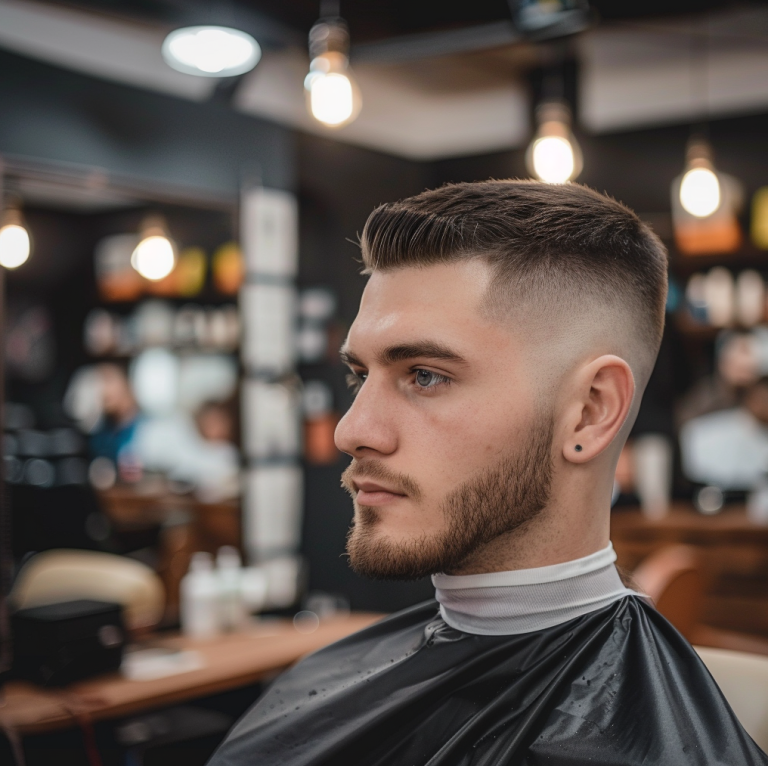
Dodaje najwięcej wysokości i najmocniej wydłuża twarz. Boki i tył zfade lub krótkie cieniowanie nasadką 0,5-2, góra zostawiona na tyle długa, żeby dało się ją unieść do przodu i w górę. Strefę czołową przerzedź nożyczkami, aby nie tworzyła zbitej masy. Sama stylizacja buduje pion, więc to bezpieczny wybór dla większości klientów z okrągłą twarzą.
Pompadour
Klasyka, która działa, bo z definicji opiera się na objętości i wysokości na górze. Trzymaj wyraźny kontrast z bokami, inaczej fryzura doda twarzy szerokości zamiast jej ująć. Więcej o samej technice w artykule o fryzurze pompadour.
Textured crop top
Nowoczesny wybór, ale wbrew pozorom wymagający. Grzywka i góra muszą mieć teksturę i ruch, a nie leżeć płasko, bo płaska góra przy okrągłej twarzy uwydatnia jej szerokość. Boki ścieśnione, najczęściej na fade, góra cięta na zgrubnie i wykończona point cuttingiem. Stylizacja matowa, bez połysku, żeby tekstura była czytelna.
Fryzura na bok z przedziałkiem
Wyraźny przedziałek z boku to gotowe źródło asymetrii. Przy okrągłej twarzy poprowadź go nieco bliżej środka, żeby zostawić więcej miejsca na objętość po stronie cięższej. Linię przedziałka możesz podkreślić maszynką, ale rób to subtelnie, bez zbyt twardej kreski.
Undercut with a long top
Najmocniejszy kontrast długości, jaki możesz dać. Krótkie, niemal ogolone boki przy zachowanej długiej górze maksymalnie zawężają twarz. Klucz to płynne lub świadomie ostre cieniowanie na granicy stref, bo to ono decyduje, czy fryzura wygląda na dopracowaną, czy na niedokończoną.
Haircutting and styling techniques
To narzędzia, którymi realizujesz powyższe fryzury. Przy okrągłej twarzy każda z nich służy temu samemu: zawężaniu boków i budowaniu pionu na górze.
Cieniowanie boków i tyłu
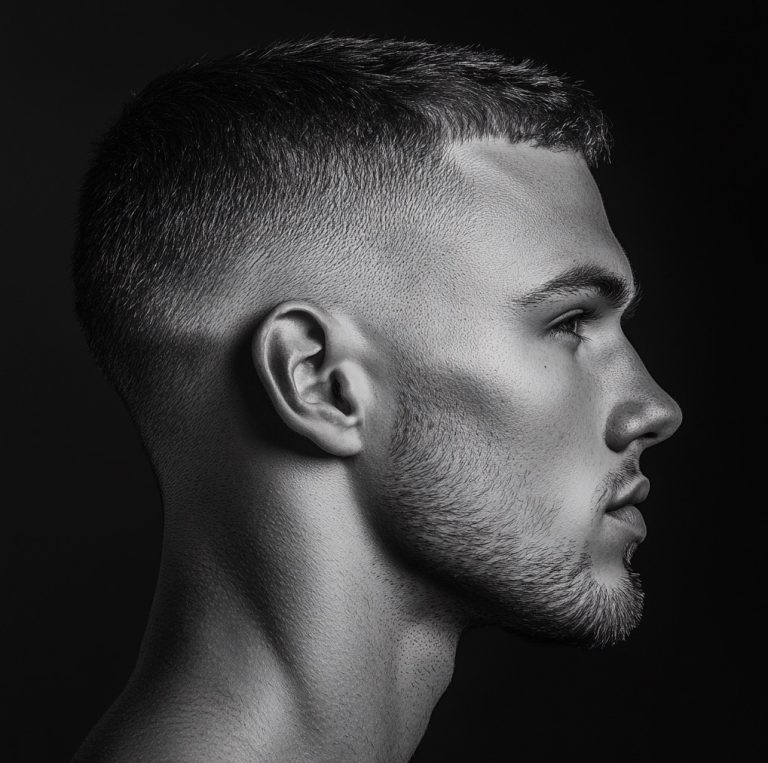
Najpierw zaplanuj linię załamania (gdzie krótkie boki przechodzą w dłuższą górę). Przy okrągłej twarzy prowadź ją wyżej niż przy owalnej, żeby strefa krótkich włosów była większa i mocniej zawężała twarz. Pracuj nasadkami w kolejności rosnącej, zbieraj przejścia maszynką metodą open fade (otwierając grzebień), a granice między długościami zmiękczaj końcówką maszynki lub trymerem. Ostatnie przejścia kontroluj na grzebieniu i nożyczkach.
Teksturowanie góry
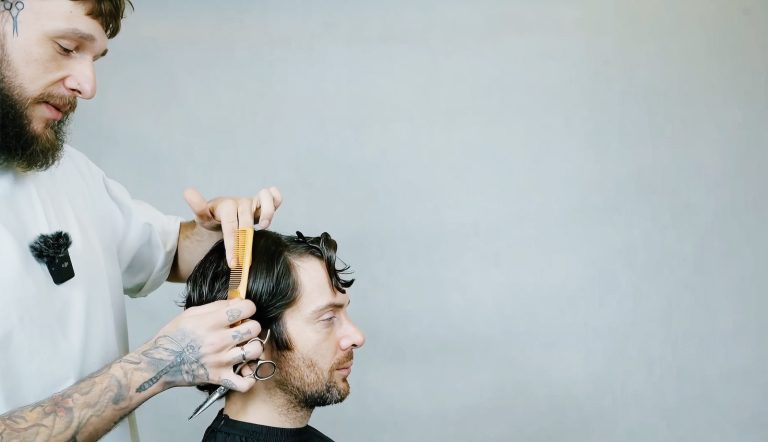
Tekstura na górze daje ruch i pion bez dokładania szerokości. Stosuj point cutting (cięcie końcówkami nożyczek pionowo w głąb pasma), slicing (ślizganie nożyczek wzdłuż pasma) lub razor cutting brzytwą, jeśli włosy są dość gęste. Trzymaj pasmo pionowo i tnij od góry, żeby usuwać masę ze środka długości, a nie z końcówek. Włosy cienkie teksturuj oszczędnie, bo łatwo je przerzedzić za bardzo.
Asymmetrical cuts
Zostaw nieco więcej ciężaru po jednej stronie góry i pracuj z przedziałkiem zamiast strzyc twarz idealnie symetrycznie. Nożyczkami możesz delikatnie skrócić jedną skroń mocniej od drugiej. Subtelna asymetria rozbija okrągły kontur, ale rób to świadomie, nie przypadkiem.
Gradacja i łączenie stref
Newralgiczne miejsce to przejście boku w górę. Tu często powstaje widoczny stopień. Pracuj nożyczkami na grzebieniu (scissor over comb) i wyciągaj pasma z dwóch sąsiednich stref pod tym samym kątem, żeby je połączyć. Płynna gradacja sprawia, że oko czyta sylwetkę jako jedną wydłużoną formę, a nie zlepek długości.
Hairstyles to avoid
Te warianty działają dokładnie odwrotnie do tego, co chcesz osiągnąć. Odradź je już na konsultacji:
- Bowl cut: równa, okrągła linia obrysowuje kontur twarzy i podkreśla jej okrągłość.
- Bardzo krótkie fryzury bez kontrastu: jednolita długość na całej głowie odsłania i uwydatnia pełne policzki.
- Długie, proste włosy bez warstw: opadająca po bokach masa optycznie poszerza twarz i zaokrągla ją jeszcze bardziej.
Choosing styling products
Produkt ma utrzymać objętość i pion na górze oraz kontrolować boki. Postaw na matowe wykończenie, bo połysk spłaszcza fryzurę i ujawnia każdy płaski fragment góry:
- Pasty matujące: do teksturyzacji i rozdzielenia pasm na górze, ze średnim chwytem i bez połysku.
- Pudry zwiększające objętość: wcierane u nasady, podnoszą włosy i utrwalają pion przy strefie czołowej.
- Lakiery o średnim chwycie: do utrwalenia całości bez usztywniania, tak aby fryzura zachowała ruch.
Adjusting your hairstyle to your hair type
- Włosy proste: idealne do klasyk jak pompadour. Pion bywa trudniejszy do utrzymania, więc wesprzyj go teksturyzacją u nasady i pudrem objętościowym.
- Włosy kręcone: naturalna tekstura sama daje wysokość, wykorzystaj ją na górze, a objętość po bokach trzymaj w ryzach krótszym cięciem.
- Włosy cienkie: stawiaj na objętość przez cieniowanie i delikatne teksturowanie, unikaj długich form, które opadają i odsłaniają skórę.
- Włosy grube: przerzedzaj i teksturuj, żeby zdjąć nadmiar masy, szczególnie po bokach, gdzie gruby włos szybko poszerza twarz.
Communication with the customer
Konsultacja decyduje, czy klient wyjdzie zadowolony, nawet przy idealnie wykonanym cięciu. Trzy rzeczy, które warto przeprowadzić za każdym razem:
- Wyjaśnij, dlaczego dana fryzura zadziała na jego twarz: wysoka góra wydłuża, krótkie boki zawężają. Klient łatwiej zaakceptuje krótsze boki, gdy rozumie po co.
- Pokaż przykłady, zdjęcia lub gotowe realizacje, żeby uzgodnić efekt jeszcze przed pierwszym cięciem i uniknąć rozbieżności oczekiwań.
- Powiedz wprost, ile pracy fryzura wymaga w domu. Quiff czy pompadour nie ułożą się same, a klient powinien o tym wiedzieć zawczasu.
Hair care and maintenance
Fryzura z mocnym kontrastem długości żyje krótko bez regularnego odświeżania. Przekaż klientowi konkrety:
- Dobierz szampon i odżywkę do typu włosów, przy cienkich włosach lekkie formuły dające objętość, przy grubych nawilżające, które ułatwią ułożenie.
- Wyznacz rytm wizyt. Fade i krótkie boki rozmywają się po kilku tygodniach, więc kontrast wymaga częstszego podcinania niż dłuższa góra.
- Pokaż, jak suszyć i układać górę: suszarką od nasady, unosząc pasma w górę i do przodu, żeby zbudować ten sam pion, który dajesz przy fotelu.
Okrągła twarz nie jest ograniczeniem, tylko punktem wyjścia. Cała sztuka sprowadza się do dwóch ruchów: pion na górze, zawężenie po bokach. Resztę dobierasz pod typ włosów i tryb życia klienta. Im swobodniej operujesz cieniowaniem, teksturowaniem i łączeniem stref, tym pewniej dobierzesz fryzurę do każdej twarzy. Jeśli chcesz dopracować te techniki w praktyce, sprawdź nasze szkolenia fryzjerskie online.
You can find more grooming tips in our men's hair care guide.