Tępe nożyczki ciągną włos zamiast go ciąć, a zaolejone, źle ustawione ostrza maszynki zostawiają drabinki w fade’zie. Sprzęt po prostu przestaje robić to, czego od niego wymagasz, a klient widzi efekt na własnej głowie. Pielęgnacja narzędzi to nie dodatek do rzemiosła, tylko jego warunek wstępny. Poniżej masz konkretny system: jak czyścić, dezynfekować, oliwić, ostrzyć i przechowywać każdy typ sprzętu, żeby trzymał formę przez lata.
Dlaczego stan narzędzi przekłada się na cięcie
Ostre, dobrze ustawione nożyczki tną włos jednym, czystym ruchem, bez zgniatania i rozdwajania końcówek. Tępe ostrze zostawia poszarpaną linię, którą widać dopiero po wysuszeniu, kiedy klient już siedzi z gotowym strzyżeniem. Z maszynką jest podobnie: poluzowane lub źle wyrównane ostrze tnie nierówno, zostawia linie i grzeje się szybciej, co czuć na skórze klienta.
Do tego dochodzi higiena. Resztki włosa, sebum i pozostałości produktów na grzebieniach czy szczotkach przenoszą się między klientami. Zadbany, wydezynfekowany sprzęt to nie tylko wymóg sanepidu, ale też element, który klient widzi na stanowisku i ocenia. Czyste etui, naoliwiona maszynka i grzebień bez nalotu budują wiarygodność szybciej niż jakikolwiek certyfikat na ścianie.
Czyszczenie po każdym kliencie
Czyszczenie to baza, od której wszystko się zaczyna. Włos i produkt nie odpuszczą same z siebie, a zaschnięte resztki najtrudniej usunąć. Wyrób sobie nawyk czyszczenia sprzętu od razu po kliencie, zanim wszystko zwiąże się w lakier i zaschnie na ostrzu.
Każdy typ narzędzia obsługuje się inaczej:
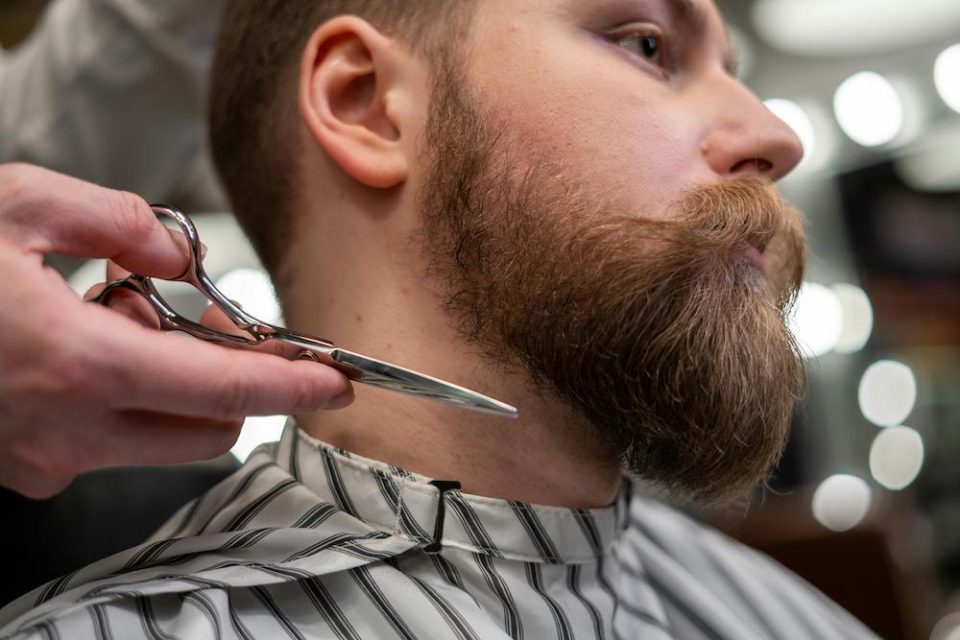
- Nożyczki fryzjerskie: przetrzyj ostrza miękką ściereczką z mikrofibry wzdłuż krawędzi tnącej, od śruby ku czubkowi, nigdy w poprzek. Resztki przy zawiasie usuń szczoteczką. Na koniec przejedź ostrza wacikiem z alkoholem izopropylowym, żeby je odtłuścić i zdezynfekować, ale nie zostawiaj nożyczek mokrych.
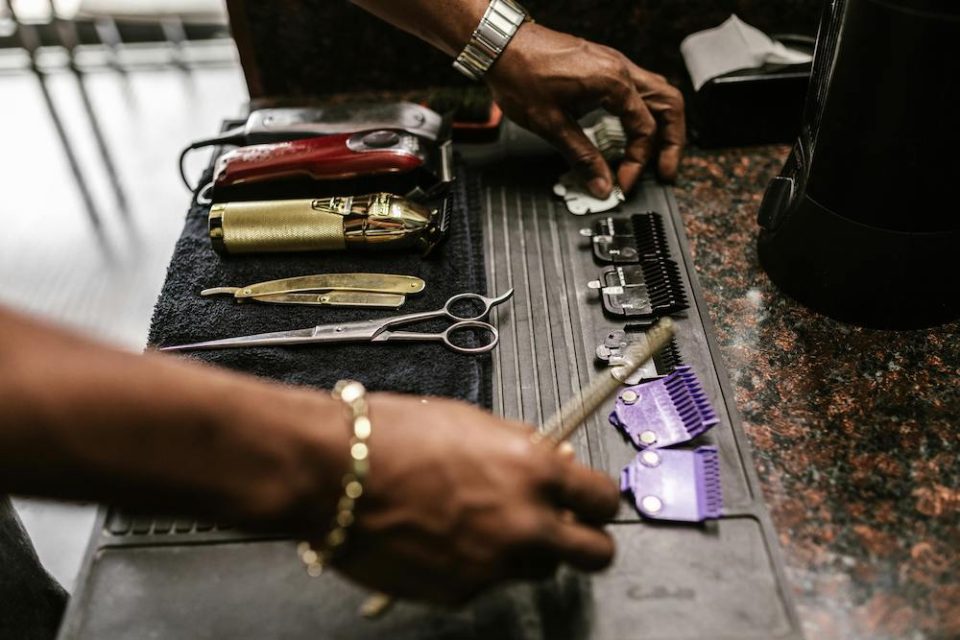
- Maszynki do strzyżenia: zdejmij ostrze, wytrzep luźny włos i wyczyść szczoteczką resztki spomiędzy zębów. Spryskaj sprayem czyszczącym do ostrzy, który rozpuszcza brud i jednocześnie chłodzi. Po wyschnięciu nanieś olej (kilka kropel wzdłuż zębów) i puść maszynkę na chwilę, żeby rozprowadzić.
- Trymery i konturówki: identycznie jak maszynki, ale tu szczególnie pilnuj wąskich zębów. Drobny włos zapycha je najszybciej i od razu psuje precyzję linii.
- Grzebienie i szczotki: usuń włos, potem namocz w ciepłej wodzie z łagodnym detergentem, dokładnie wypłucz i wysusz przed odłożeniem. Mokra szczotka odłożona do szuflady to wylęgarnia bakterii.
Dezynfekcja zgodna z wymogami
Czyszczenie usuwa brud, dezynfekcja eliminuje drobnoustroje, to dwa różne etapy i jeden nie zastępuje drugiego. Narzędzia, które miały kontakt ze skórą głowy, szyją czy zarostem, dezynfekuj po każdym kliencie, używając preparatów przeznaczonych do sprzętu fryzjerskiego, zgodnie z czasem działania podanym przez producenta.
Sterylizator UV to wygodne uzupełnienie do drobnych narzędzi: nożyczek, grzebieni, brzytwy. Pamiętaj jednak, że UV działa tylko na powierzchnie, do których dociera światło, więc przedmiot trzeba najpierw umyć i odwrócić tak, by ostrza były odsłonięte. Sterylizator nie wyręczy cię z mycia, on je domyka.
Sharpening and blade maintenance
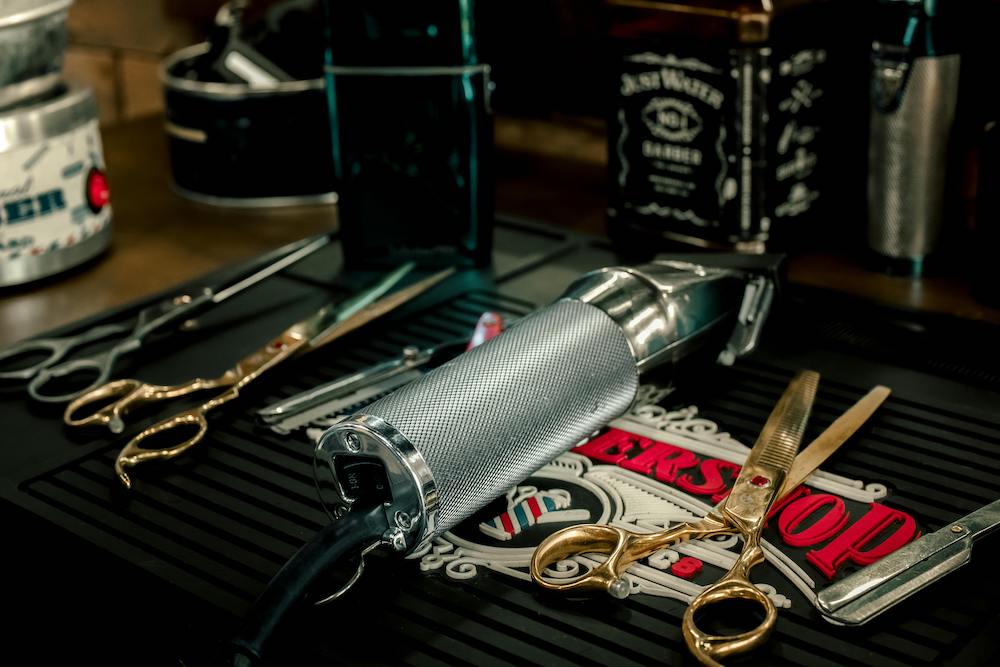
Regularne ostrzenie nożyczek i maszynek to warunek powtarzalnego cięcia. Sekrety utrzymania ostrości nożyczek fryzjerskich to temat, który każdy profesjonalista powinien zgłębić. Co do zasady nożyczki ostrz u specjalisty co 6-12 miesięcy, w zależności od intensywności pracy, materiału ostrza i tego, czy nie spadły na podłogę. Nie próbuj ostrzyć dobrych nożyczek samodzielnie na zwykłej osełce, bo zniszczysz kąt szlifu.
Sygnały, że ostrze straciło formę: włos ucieka spod ostrza zamiast się ciąć, czujesz zgrzytanie albo musisz dociskać. Sam wyczujesz to wcześniej niż klient zobaczy efekt. Reaguj zanim dojdzie do tego drugiego.
W maszynkach kluczowe jest oliwienie. Nanoś kilka kropel oleju przeznaczonego do maszynek wzdłuż zębów ostrza przed pracą i po niej, potem uruchom urządzenie na kilka sekund, żeby olej rozszedł się równomiernie. Sucho pracujące ostrze grzeje się, tępi i ciągnie włos. Pilnuj też wyrównania ostrza: górny i dolny rząd zębów powinny być ustawione tak, by zęby górne nie wystawały ponad dolne (ryzyko zacięcia skóry), zwykle cofnięte o ułamek milimetra.
Przechowywanie, które chroni ostrza
Większość uszkodzeń ostrzy powstaje nie w trakcie pracy, tylko między klientami: rzucone na blat nożyczki, maszynka turlająca się po szufladzie, grzebienie zgniecione pod sprzętem. Dobre przechowywanie kosztuje sekundy, a oszczędza serwisu.
- Nożyczki trzymaj w etui lub w pochewce, ostrzami złożonymi, nigdy luzem na blacie obok metalowych narzędzi.
- Maszynki i trymery w dedykowanych futerałach lub na stojaku, z dala od wody i kurzu. Ostrza w trakcie dnia chroń nasadką ochronną.
- Grzebienie i szczotki w czystym, suchym miejscu, najlepiej w organizerze, który trzyma porządek i daje szybki dostęp podczas pracy.
Comiesięczny przegląd sprzętu
Raz w miesiącu zrób systematyczny przegląd całego zestawu. Wczesne wykrycie zużycia pozwala zareagować zanim wadliwe narzędzie odbije się na strzyżeniu. Sprawdź:
- Ostrość nożyczek i ostrzy maszynek (test na pasemku, nie na sucho).
- Wyrównanie i luz ostrzy maszynki, dokręcenie śrub.
- Stan włosia szczotek i sprężystość poduszki.
- Integralność zębów grzebieni (ułamane zęby zostawiają smugi w sekcjonowaniu).
- Przewody elektryczne i zasilacze pod kątem przetarć i pęknięć.
- Napięcie nożyczek przy śrubie: otwarte na pełną długość ostrze powinno domykać się powoli, własnym ciężarem, nie opadać swobodnie.
Inwestycja w jakość się zwraca
Wybierając sprzęt, stawiaj na jakość ostrza i ergonomię. Dobre narzędzie kosztuje więcej na wejściu, ale dłużej trzyma ostrość, rzadziej wymaga serwisu i mniej męczy nadgarstek przez cały dzień pracy. W dłuższej perspektywie wychodzi taniej niż seria tanich zamienników wymienianych co kilka miesięcy.
Do precyzyjnych fryzur męskich, takich jak pompadour czy textured crop, dobrej klasy maszynka, trymer i nożyczki realnie podnoszą poziom wykończenia. Sprzęt nie zrobi roboty za ciebie, ale dobry sprzęt nie stanie ci na drodze.
Harmonogram pielęgnacji narzędzi fryzjerskich
| Tool | Daily activities | Weekly activities | Monthly activities | Annual activities |
|---|---|---|---|---|
| Scissors | Cleaning, disinfection | Oliwienie zawiasu | Sprawdzenie ostrości i napięcia | Professional sharpening |
| Razors | Cleaning, oiling | Thorough cleaning of blades | Sprawdzenie stanu i wyrównania ostrzy | Technical service |
| Combs | Cleaning | Disinfection | Checking the condition of your teeth | Replacement (if necessary) |
| Brushes | Hair removal | Washing | Checking the condition of the bristles | Replacement (if necessary) |
Specjalistyczny sprzęt wymaga osobnej rutyny
Poza podstawowym zestawem masz w salonie sprzęt, który łatwo przeoczyć w codziennej rutynie, a który psuje się najczęściej właśnie z zaniedbania.
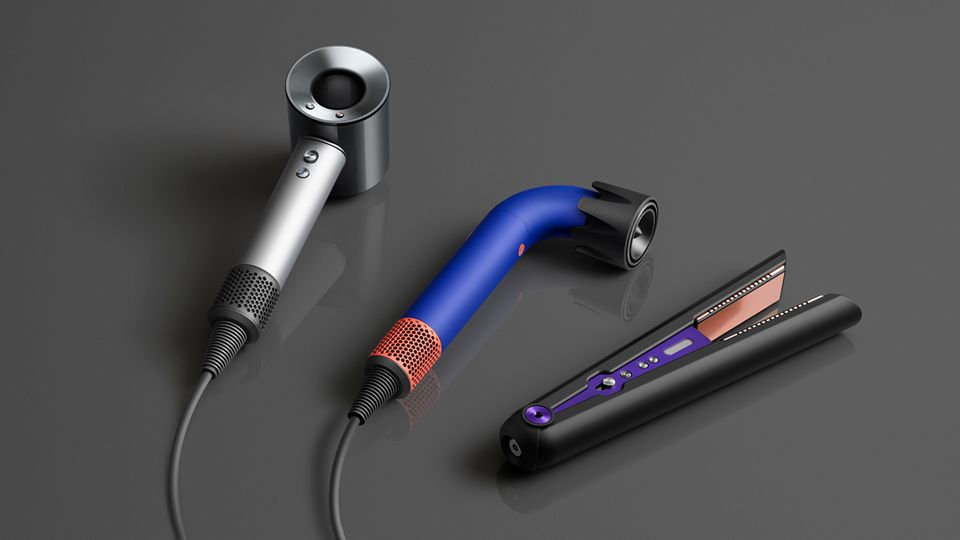
Hair straighteners and curling irons
Narzędzia termiczne pracują w wysokiej temperaturze, więc osad ze stylizatorów dosłownie się na nich zapieka:
- Czyść płytki lub bęben po każdym użyciu, dopiero gdy urządzenie ostygnie, miękką ściereczką. Zapieczony osad zdejmiesz wilgotną ściereczką z odrobiną alkoholu, nigdy ostrym narzędziem, które porysuje powłokę.
- Regularnie sprawdzaj przewód, zwłaszcza przy obrotowym połączeniu, gdzie najczęściej się przeciera.
- Przechowuj w termoodpornym pokrowcu, żeby uniknąć zarysowań powłoki płytek.
- Jeśli urządzenie pozwala, co kilka miesięcy weryfikuj precyzję ustawień temperatury, bo zawyżona temperatura przepala włos klienta.
Hair dryers
Najczęściej pomijane w rutynie, a brudny filtr to główna przyczyna przegrzewania i spadku mocy:
- Czyść filtr powietrza co tydzień. Zapchany filtr zmusza silnik do cięższej pracy i skraca jego żywotność.
- Sprawdzaj przewód pod kątem pęknięć i przetarć, bo suszarka pracuje codziennie i kabel zużywa się szybko.
- Okresowo czyść wlot powietrza z kurzu i włosów, które zbierają się od strony silnika.
Trymery i konturówki
Te precyzyjne narzędzia decydują o czystości linii w fryzurach takich jak low fade, gdzie liczy się każdy ułamek milimetra:
- Czyść i oliw ostrza po każdym użyciu. Wąskie zęby konturówki zapychają się włosem najszybciej z całego sprzętu.
- Regularnie sprawdzaj wyrównanie ostrza, bo nawet drobne przesunięcie psuje linię konturu.
- Przechowuj w etui z nasadką ochronną, bo delikatne ostrze konturówki łatwo wyszczerbić o twardą powierzchnię.
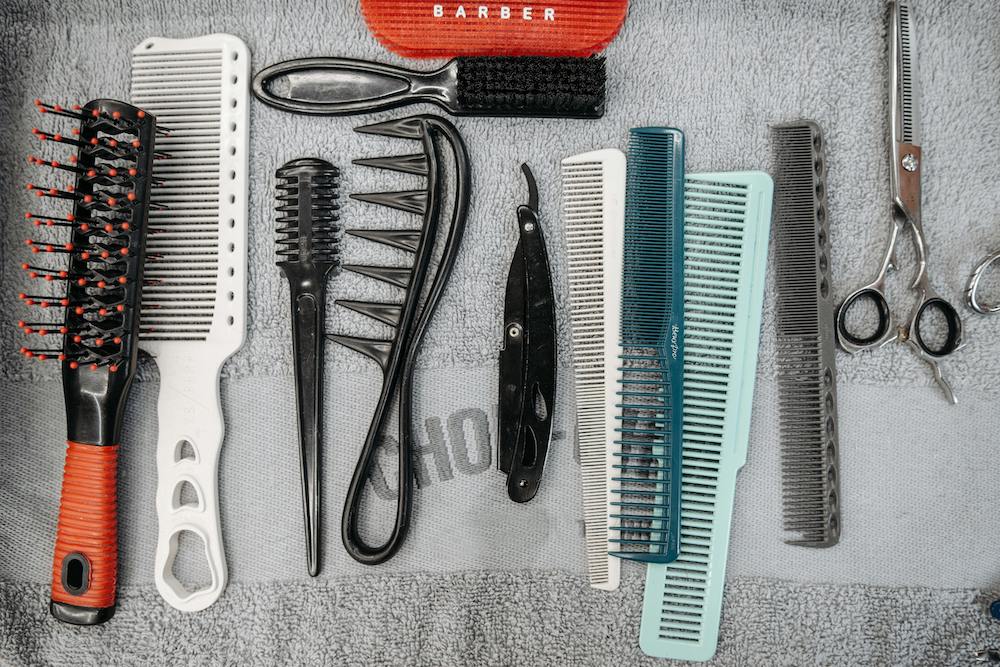
Ekologiczne podejście do pielęgnacji
Ekologia coraz mocniej liczy się w branży fryzjerskiej i wielu klientów zwraca na nią uwagę przy wyborze salonu. Kilka prostych zmian ogranicza wpływ rutyny pielęgnacyjnej na środowisko:
- Choose biodegradable cleaning products.
- Stosuj ręczniki wielokrotnego użytku zamiast jednorazowych.
- Invest in energy-efficient disinfection equipment.
- Wybieraj sprzęt z dłuższą gwarancją i dostępnym serwisem, zamiast wymieniać tanie narzędzia w całości.
Jak stan narzędzi widać w pracy
Zadbany sprzęt przekłada się bezpośrednio na jakość strzyżenia:
- Ostre nożyczki dają czyste, precyzyjne cięcie, co jest kluczowe przy teksturowaniu w fryzurach takich jak textured crop, gdzie poszarpana końcówka od razu psuje efekt.
- Naoliwiona, wyrównana maszynka pozwala na płynne przejścia w cieniowaniu, bez linii i drabinek między długościami.
- Czyste szczotki i grzebienie nie przenoszą produktu między klientami i dają czystą bazę pod stylizację.
Pielęgnacja jako pozycja w budżecie
Konserwacja sprzętu wygląda na koszt, ale w praktyce ogranicza wydatki, bo dobrze utrzymane narzędzia dłużej zostają w służbie:
- Zaplanuj stały budżet na serwis, ostrzenie i wymianę narzędzi, zamiast łatać sprzęt dopiero, gdy się zepsuje.
- Kupuj zestawy do pielęgnacji (olej, spray, środki dezynfekcyjne), które wychodzą taniej niż produkty osobno.
- Przeszkol zespół z prawidłowej obsługi sprzętu, bo większość uszkodzeń bierze się z błędów w codziennym użytkowaniu.
Narzędzia, które ułatwiają konserwację
Warto znać sprzęt pomocniczy, który skraca i porządkuje rutynę pielęgnacyjną:
- Myjki ultradźwiękowe do drobnych narzędzi, które usuwają osad z trudno dostępnych zakamarków.
- Sterylizatory UV jako uzupełnienie mycia drobnego sprzętu.
- Prosty harmonogram konserwacji (kalendarz lub aplikacja), żeby nie przegapić terminów ostrzenia i serwisu.
Gotowość na kontrolę sanitarną
Prawidłowa pielęgnacja narzędzi to także spełnienie wymogów sanitarnych. Kilka rzeczy warto mieć poukładane na stałe:
- Prowadź dokumentację procesów czyszczenia i dezynfekcji.
- Spisz procedury pielęgnacji narzędzi dla całego zespołu, żeby każdy pracował tak samo.
- Regularnie rób wewnętrzne audyty czystości i stanu sprzętu, zanim zrobi to ktoś z zewnątrz.
Higiena jako argument przy kliencie
Standardy higieny, których klient nie widzi, nie budują zaufania. Pokaż je, a wzmocnisz lojalność:
- Dezynfekuj narzędzia na oczach klienta, na stanowisku, a nie gdzieś na zapleczu.
- Podczas konsultacji w dwóch zdaniach wspomnij o swoich standardach czystości sprzętu.
- Trzymaj stanowisko w porządku, bo czyste etui i naoliwiona maszynka mówią o profesjonalizmie więcej niż słowa.
Rutyna, która się opłaca
Cała pielęgnacja sprowadza się do kilku stałych nawyków: czyszczenie i dezynfekcja po każdym kliencie, oliwienie i kontrola ostrzy w cyklu tygodniowym, comiesięczny przegląd i ostrzenie u specjalisty w cyklu rocznym. Wpisz to w grafik, tak jak wpisujesz wizyty, a sprzęt nigdy nie zaskoczy cię w trakcie pracy.
Jeśli chcesz pójść głębiej w technikę i obsługę sprzętu, nasze szkolenia fryzjerskie online obejmują też moduły poświęcone pielęgnacji i konserwacji narzędzi. Dobrze utrzymany sprzęt to nie koszt, tylko fundament, na którym stoi każde precyzyjne strzyżenie.
Chcesz rozwinąć warsztat krok po kroku? Zobacz Akademia fryzjerska online Connected Hair w Akademii Connected Hair.