Trudny klient nie zawsze jest niegrzeczny. Najczęściej jest niepewny, spięty albo nie umie nazwać tego, czego chce. Twoja reakcja w pierwszych dwóch minutach przy fotelu decyduje, czy wyjdzie usatysfakcjonowany, czy z reklamacją. Poniżej masz konkretne procedury: jak prowadzić konsultację, jak reagować na typowe sytuacje i jak ustawić w salonie zasady, które zdejmują presję z Ciebie i z zespołu.
Typy trudnych klientów i co za nimi stoi
Zanim dobierzesz strategię, nazwij problem. Za każdym z tych zachowań stoi inna potrzeba, a Twoja reakcja powinna trafiać w potrzebę, nie w objaw.
- Niezdecydowany: ciągle zmienia zdanie, bo boi się złej decyzji. Potrzebuje, żebyś zawęził wybór i wziął część odpowiedzialności na siebie.
- Wymagający: ma bardzo konkretne, czasem nierealne oczekiwania. Potrzebuje jasnej granicy między tym, co wykonalne na jego włosach, a tym, co nie.
- Niezadowolony: zawsze znajdzie się do czego przyczepić. Często testuje, czy go słuchasz. Potrzebuje poczucia kontroli i realnej reakcji, nie zbywania.
- Gadatliwy: mówi bez przerwy i rozprasza pracę. Potrzebuje uwagi, ale Ty potrzebujesz skupienia w precyzyjnych momentach (linia cięcia, kontur).
- Niecierpliwy: spieszy się i pilnuje zegarka. Potrzebuje przewidywalności, czyli wie, ile to potrwa i na jakim etapie jesteście.
- Agresywny: podnosi głos lub jest opryskliwy. Potrzebuje rozładowania emocji, ale nie kosztem Twojego bezpieczeństwa i godności.
- Milczący: trudno wyciągnąć z niego informacje. Potrzebuje, żebyś przejął prowadzenie i dał mu konkretne punkty zaczepienia, nie otwarte “to jak ma być?”.
Konsultacja, która zapobiega 80 procentom problemów
Większość reklamacji nie bierze się z błędu technicznego, tylko z rozjazdu między tym, co klient miał w głowie, a tym, co Ty zrozumiałeś. Dobra konsultacja zamyka ten rozjazd, zanim sięgniesz po maszynkę czy nożyczki.
- Pracuj na obrazie, nie na słowach. “Krótko po bokach” znaczy co innego dla każdego. Poproś o zdjęcie referencyjne albo pokaż własne, dotykaj głowy klienta i wskazuj realną wysokość, na jakiej skończy się przejście.
- Czytaj włosy i głowę, nie tylko referencję. Powiedz wprost, jeśli gęstość, skręt, linia wzrostu albo kształt czaszki sprawią, że efekt będzie inny niż na zdjęciu. Lepiej urealnić oczekiwania teraz niż tłumaczyć się po wszystkim.
- Ustal konkrety, nie ogólniki. Domknij długość na górze, wysokość przejścia, kształt konturu i wykończenie linii zarostu, zanim zaczniesz. Te cztery rzeczy decydują, czy fryzura trafi w oczekiwania.
- Powtórz ustalenia własnymi słowami. “Czyli zostawiamy na górze tyle, żeby dało się zaczesać, boki schodzą do skóry, kontur naturalny bez ostrej linii, tak?” Klient potwierdza, a Ty masz punkt odniesienia na koniec.
- Pokaż etap pośredni. Przy większej zmianie zatrzymaj się w połowie, pokaż w lustrze i daj szansę na korektę, póki masz jeszcze materiał do pracy. Z włosów ściętego skrócić nie da się dłuższych.
Rozbudowany schemat samej rozmowy doradczej znajdziesz w artykule o doradzaniu klientom w wyborze fryzury.
Kluczowe umiejętności w obsłudze trudnego klienta
- Aktywne słuchanie: nie przerywaj, dopytuj i parafrazuj. Klient, który czuje się wysłuchany, rzadko eskaluje.
- Empatia bez uległości: rozumiesz emocję klienta, ale to Ty odpowiadasz za efekt techniczny i nie obiecujesz rzeczy niewykonalnych.
- Cierpliwość: ton i tempo trzymasz Ty, niezależnie od tego, jak nakręcony jest klient.
- Asertywność: potrafisz powiedzieć “tego nie zrobię, bo zniszczy Pana włosy, ale proponuję to” bez tłumaczenia się i bez agresji.
- Elastyczność: w granicach technicznych dopasowujesz się do klienta, zamiast forsować jeden schemat na siłę.
- Profesjonalizm: stanowisko, narzędzia i język trzymasz na poziomie nawet wtedy, gdy klient go nie trzyma.
Strategie na konkretne sytuacje
Krótka ściąga przy fotelu: typ klienta i reakcja, która najczęściej rozładowuje sytuację.
| Customer type | Strategy |
|---|---|
| Undecided | Zawęź do dwóch opcji, pokaż zdjęcia, zarekomenduj jedną i uzasadnij dlaczego |
| Demanding | Jasno oddziel to, co wykonalne na jego włosach, od tego, co nie, i podaj alternatywę |
| Dissatisfied | Słuchaj do końca, przeproś za konkret, zaproponuj realną poprawkę, nie ogólniki |
| Talkative | Buduj relację między cięciami, ale przy konturze poproś o moment skupienia |
| Impatient | Podaj przewidywany czas na starcie i informuj o etapie, na którym jesteście |
| Aggressive | Spokojny ton, krótkie zdania, w razie potrzeby zaangażuj managera lub przerwij usługę |
| Silent | Przejmij prowadzenie, pytaj o wybór z konkretnych opcji, potwierdzaj kierunek na bieżąco |
Jak rozmawiać, żeby nie eskalować
Język robi różnicę. Te same informacje można podać tak, że klient się spina, albo tak, że czuje się prowadzony.
- Mów, co możesz, a nie czego nie. Zamiast “tego się nie da”, powiedz “na Pana włosach lepiej zadziała to, i pokażę dlaczego”.
- Parafrazuj przed cięciem. Powtórz ustalenia własnymi słowami, żeby wychwycić rozjazd, zanim będzie nieodwracalny.
- Pytaj precyzyjnie. Przy niezdecydowanym dawaj pytania zamknięte (“krócej czy zostawiamy?”), przy milczącym otwarte i konkretne (“wolisz kontur naturalny czy wyraźną linię?”).
- Bądź szczery od razu. Jeśli czegoś nie da się zrobić bez szkody dla włosów, powiedz to na konsultacji, nie po fakcie.
- Trzymaj ton niżej niż klient. Im głośniej on, tym spokojniej i wolniej Ty. To rozbraja napięcie szybciej niż jakikolwiek argument.
Preventing difficult situations
Najłatwiej rozwiązać problem, który nigdy nie powstał. Te nawyki ograniczają liczbę spięć przy fotelu do minimum.
- Solidna konsultacja przed każdą usługą, nawet przy stałym kliencie, bo oczekiwania zmieniają się z wizyty na wizytę.
- Realne oczekiwania: jasno mów, co osiągniecie dziś, a co dopiero po odrośnięciu albo kolejnej wizycie.
- Edukacja przy fotelu: krótko tłumacz, dlaczego robisz to tak, a nie inaczej, i jak utrzymać efekt w domu. Klient, który rozumie, rzadziej narzeka.
- Komunikacja na bieżąco: informuj o etapie pracy i o tym, że efekt dopiero się układa. Cisza w trakcie zmiany rodzi niepokój.
Dealing with stress
Trudny klient kosztuje Cię nie tylko czas, ale i nerwy. Żeby napięcie nie przeszło na kolejnego klienta, warto je rozładowywać na bieżąco.
- Oddech. Wolny wdech i dłuższy wydech w napiętym momencie obniżają tętno i pomagają utrzymać równą rękę.
- Reset między klientami. Krótka przerwa, woda, uporządkowanie stanowiska, zanim posadzisz kolejną osobę, odcinają emocje od poprzedniej wizyty.
- Rozdzielaj fakty od emocji. Krytyka efektu to informacja techniczna, nie atak na Ciebie. To rozróżnienie chroni przed wypaleniem.
- Wsparcie zespołu. Omawiajcie trudne wizyty na koniec dnia. To, co przerobił jeden, przygotowuje resztę.
Team training
Jeśli prowadzisz salon, obsługa trudnego klienta nie może opierać się na intuicji każdego z osobna. Powtarzalna jakość bierze się z ustalonych zasad i wspólnego treningu.
- Trenujcie konsultację i trudne rozmowy w parach, na konkretnych scenariuszach, nie tylko teoretycznie.
- Omawiajcie realne sytuacje z minionego tygodnia na krótkich spotkaniach zespołu.
- Zachęcajcie do dzielenia się tym, co zadziałało, żeby dobre reakcje stały się standardem salonu.
- Dołóżcie blok o zarządzaniu stresem, bo wypalony zespół eskaluje sytuacje, które dało się rozbroić.
Polityka salonu wobec trudnych klientów
Jasne zasady zdejmują z fryzjera ciężar podejmowania decyzji w stresie. Gdy wiesz, gdzie jest granica, łatwiej przy niej stanąć.
- Ustal ścieżkę eskalacji: kiedy fryzjer woła managera i kto podejmuje decyzję o reklamacji.
- Określ wprost, w jakich sytuacjach można odmówić usługi, na przykład przy agresji lub zachowaniu zagrażającym bezpieczeństwu.
- Wprowadź jeden sposób zbierania opinii i poprawek, żeby reklamacje nie ginęły między pracownikami.
- Przeglądajcie zasady okresowo i aktualizujcie je na bazie realnych zdarzeń.
Learning from mistakes
Każda trudna wizyta to dane. Wyciągnięty wniosek sprawia, że ta sama sytuacja drugi raz Cię nie zaskoczy.
- Po trudnej wizycie odtwórz przebieg na spokojnie: w którym momencie zaczęło iść nie tak.
- Wskaż konkret do zmiany: za krótka konsultacja, niedoprecyzowana długość, brak etapu kontrolnego.
- Wprowadź poprawkę do swojego schematu pracy, żeby wniosek nie został tylko w głowie.
- Podziel się nim z zespołem, bo lekcja jednego oszczędza reklamację innym.
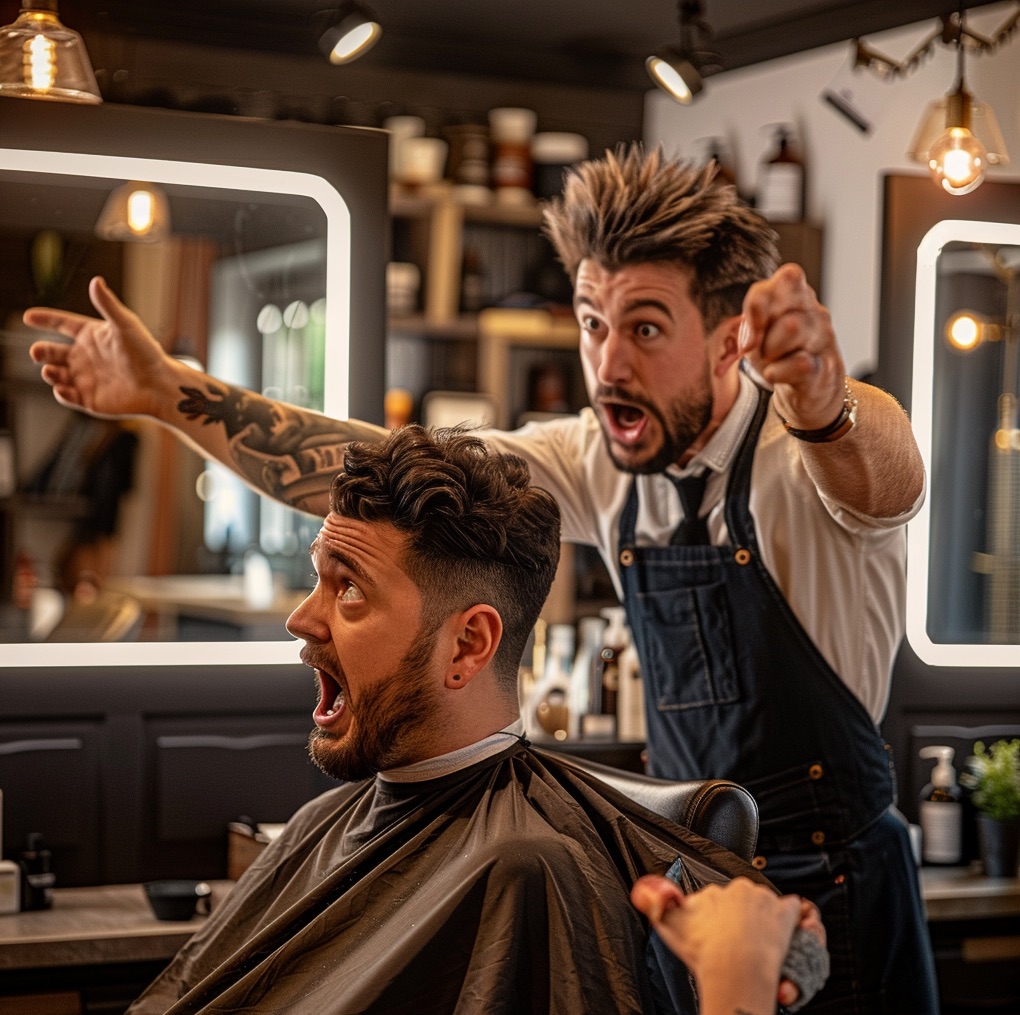
Fryzjerski humor: gdy życie daje Ci trudnych klientów, zrób z nich anegdoty!
Czasem najlepszą reakcją na napięcie jest odrobina dystansu. Oto kilka scenariuszy, które potrafią rozluźnić atmosferę przy fotelu:
- The chameleon client:
"I want to look like Brad Pitt... no, wait, like Jason Statham... or maybe like Thor?"
Solution: "How about the 'International Spy with Many Faces' hairstyle? You'll be able to take on any of their looks, depending on your mood!" - Mistrz precyzji:
“Proszę obciąć dokładnie 3,7 milimetra z lewej strony i 4,2 milimetra z prawej.”
Rozwiązanie: Wyciągnij linijkę i powiedz z kamienną twarzą: “Oczywiście! Czy chce Pan, żebym użył linijki metrycznej czy imperialnej?” - Sleeping Prince:
A customer who falls asleep during a haircut and wakes up terrified by every movement of the scissors.
Solution: "Don't worry, we have a special 'Haircut While You Sleep' service. You'll wake up with a new hairstyle and feeling refreshed!" - Vintage lover:
"I want a hairstyle that is both modern and classic, like something from the 50s, 60s, 70s, 80s, and 90s."
Solution: "Ah, I see! You're looking for a 'Time Machine' hairstyle. I'll prepare something that will make you look like you've just returned from a tour of all the decades!" - Ninja stylu:
Klient, który chce radykalnej zmiany, ale tak, żeby nikt tego nie zauważył.
Rozwiązanie: “Polecam naszą specjalną usługę ‘Metamorfoza Ninja’. Zmiana będzie tak subtelna, że nawet Ty jej nie zauważysz!”
Humor stosuj z wyczuciem. Celem jest rozluźnienie atmosfery, nie ośmieszenie klienta. Żart z trudnej sytuacji, a nie z osoby, buduje relację i obniża Twój własny poziom stresu.
Summary
Obsługa trudnego klienta opiera się na trzech filarach: rzetelnej konsultacji, która zamyka rozjazd oczekiwań, języku, który prowadzi zamiast spinać, i jasnych zasadach salonu, które zdejmują z Ciebie presję decyzji. Najbardziej wymagający klient potrafi zostać stałym bywalcem, jeśli poczuje się wysłuchany i zobaczy, że panujesz nad sytuacją.
Jeśli chcesz pogłębić zarówno technikę, jak i kompetencje miękkie w pracy z klientem, sprawdź nasze szkolenia fryzjerskie online. Znajdziesz tam kursy, które rozwijają nie tylko warsztat przy fotelu, ale też umiejętności niezbędne w codziennej obsłudze klienta.
Chcesz zbudować markę i warsztat? Zobacz Akademia fryzjerska online w Akademii Connected Hair.