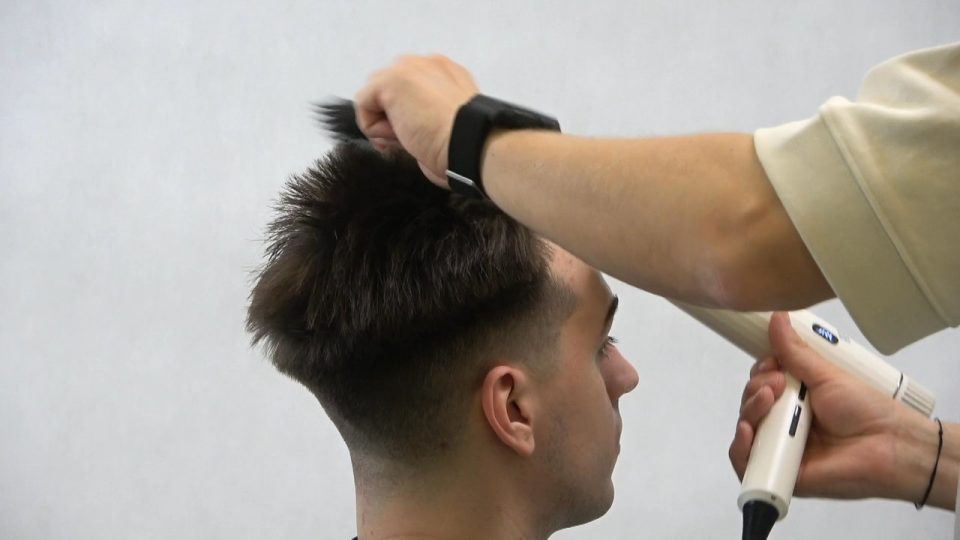
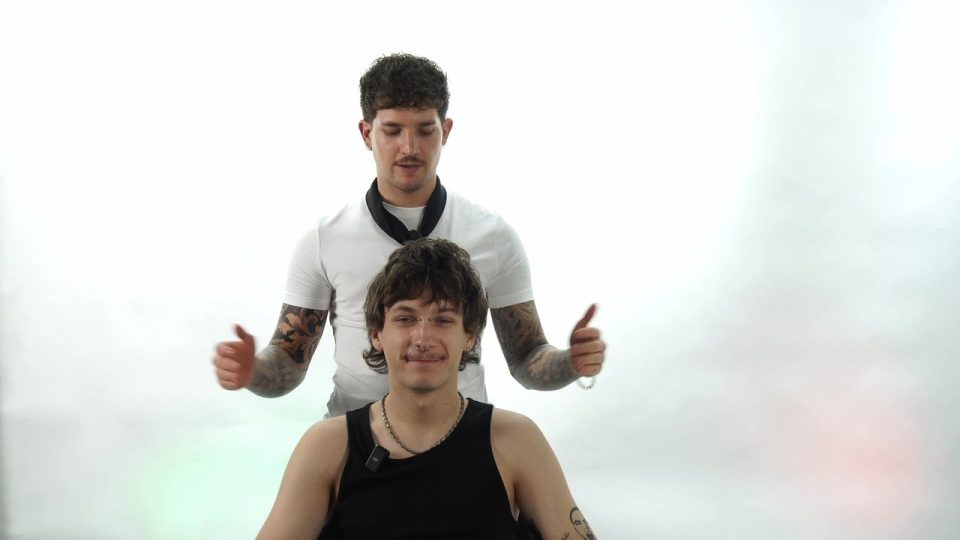
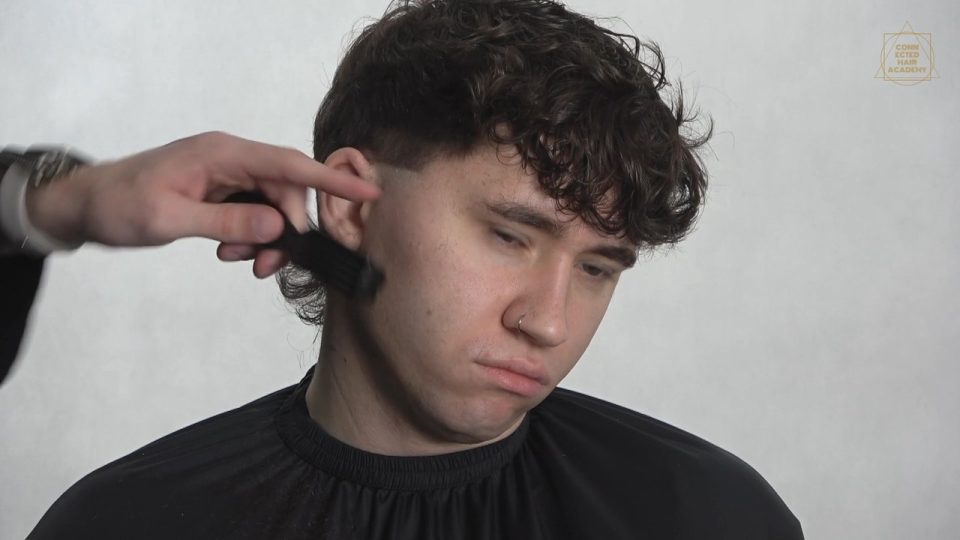
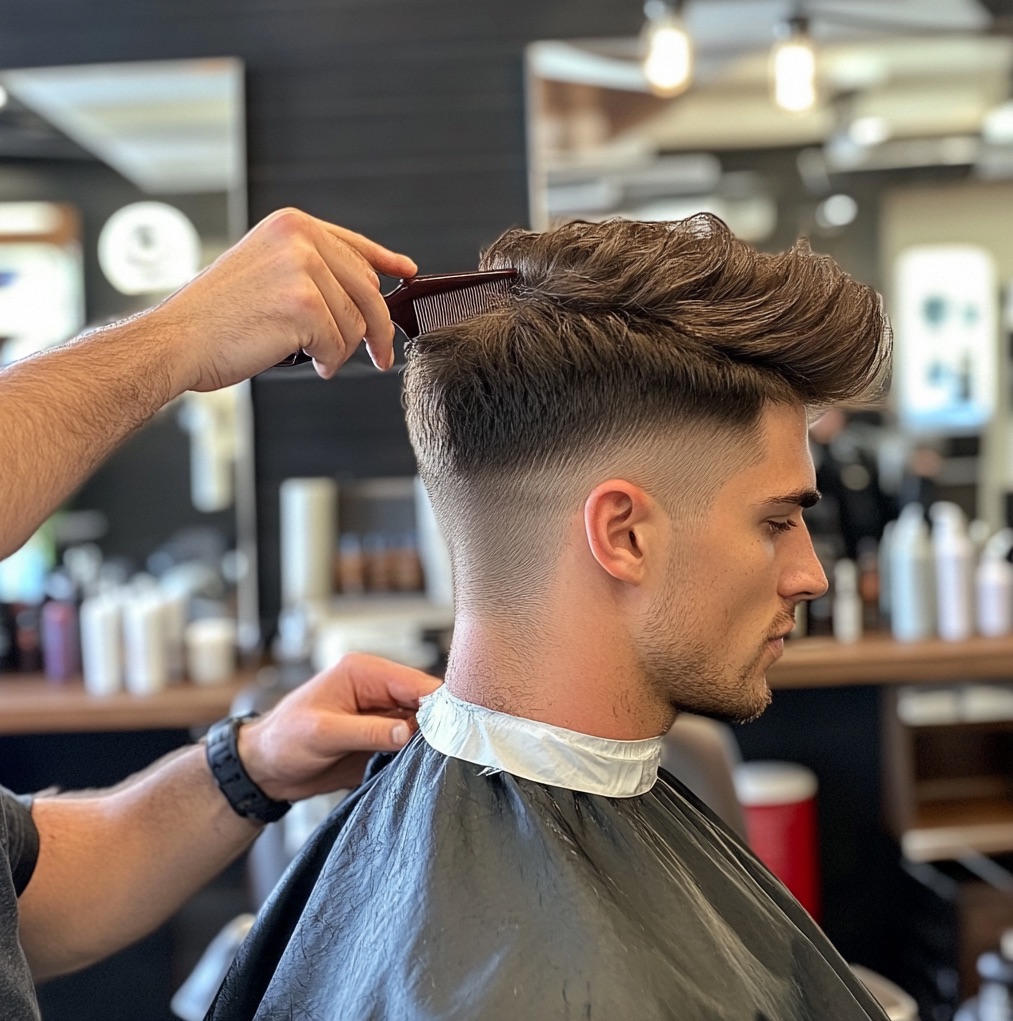
Faux Hawk to fryzura, która daje sylwetkę irokeza bez golenia boków do skóry. Cała sztuka polega na zbudowaniu czytelnego pasa dłuższych włosów na środku głowy i połączeniu go z krótszymi, cieniowanymi bokami tak, aby przejście było płynne, a forma trzymała się także bez stylizacji. Poniżej masz pełny warsztat: sekcjonowanie, kąty maszynki, blendowanie nożyczkami i grzebieniem oraz wykończenie, plus warianty i dobór do typu klienta.
What is a faux hawk?
Faux Hawk, nazywany też “Fohawk”, to złagodzona wersja irokeza. Różnica jest zasadnicza: w klasycznym irokezie boki idą do skóry, a tu zostają cieniowane, więc fryzura wybacza więcej błędów i da się ją nosić na co dzień. Forma opiera się na trójkątnym pasie dłuższych włosów biegnącym od czoła w stronę czubka, który zwęża się ku tyłowi, podczas gdy strefa skroniowa i potylica są stopniowane.
Dla fryzjera oznacza to dwie odrębne strefy pracy o różnej logice: boki prowadzisz maszynką w technice fade, górę kształtujesz nożyczkami z myślą o objętości u nasady i o tym, jak masa będzie się układać po stylizacji. Najtrudniejszy jest pas połączenia (corner), gdzie krótki bok spotyka się z dłuższą górą – to tam decyduje się, czy fryzura wygląda na świadomą, czy na zarośniętą.
Preparing for a haircut
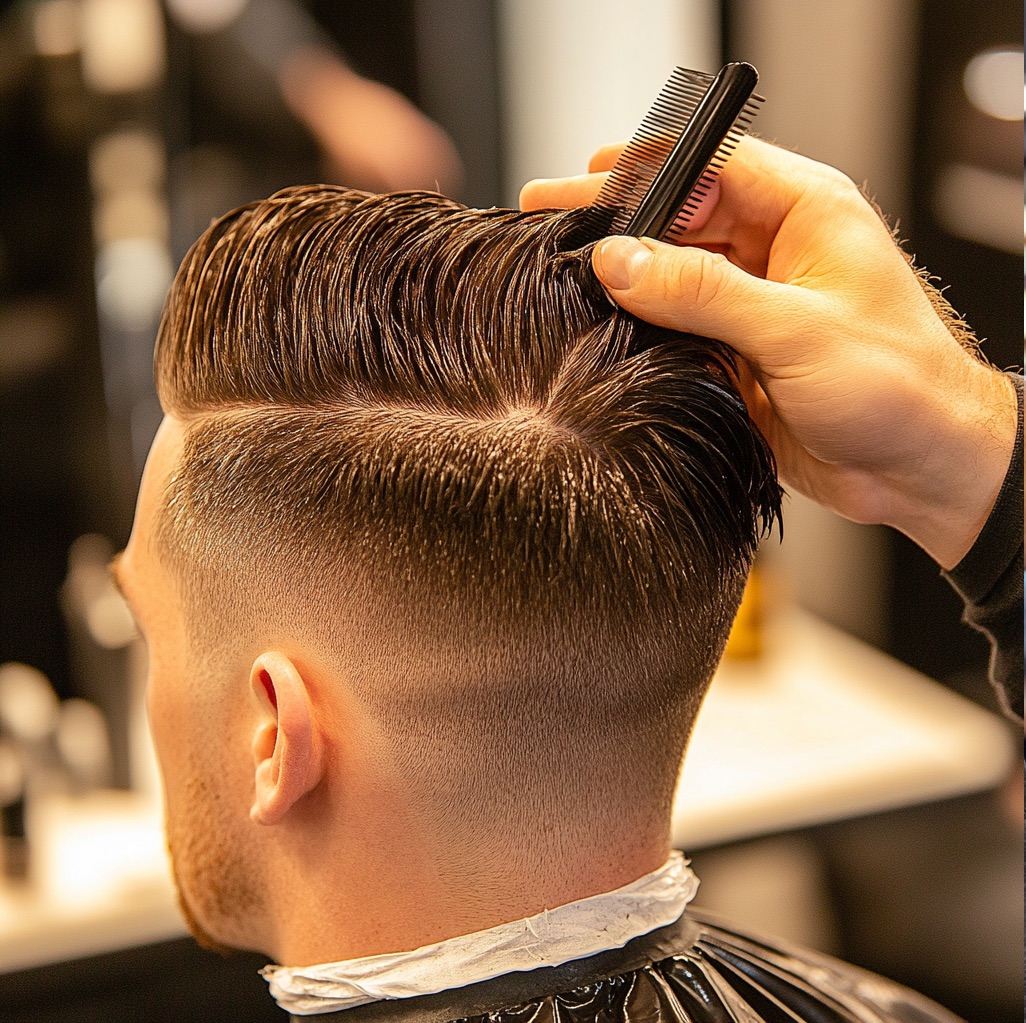
Zanim sięgniesz po maszynkę, ustal punkt wyjścia. Faux Hawk żyje z naturalnego wzoru wzrostu włosów, dlatego konsultacja decyduje o tym, jak wysoko poprowadzisz fade i ile masy zostawisz na górze.
- Umyj i wysusz włosy klienta – oceń je w stanie naturalnym, bez produktu, żeby zobaczyć realny kierunek wzrostu i grubość pasma.
- Sprawdź wiry na czubku i wzór linii włosów na skroniach: to one wyznaczają, gdzie pas będzie się układał sam, a gdzie trzeba go będzie podpierać stylizacją.
- Omów z klientem efekt końcowy – ostry kontrast (high fade) czy łagodne przejście (taper), długość pasa na górze, czy włosy mają stać na sztywno, czy raczej leżeć z teksturą.
- Przygotuj narzędzia: maszynkę z kompletem nasadek, trymer do konturów, nożyczki tnące, nożyczki degażówki, grzebień barberski i wodę w spryskiwaczu.
Krok po kroku: wykonanie Faux Hawka
- Wyznaczenie sekcji
- Oddziel górną część włosów, tworząc trójkątną (lub wąsko prostokątną) sekcję biegnącą od linii czoła do czubka głowy. Spinaj ją lub odgarniaj, żeby nie wchodziła w obszar pracy maszynki.
- Szerokość pasa rób największą nad czołem i zwężaj ku tyłowi – to ten kształt buduje sylwetkę “grzebienia”. Zbyt szeroki pas spłaszczy efekt, zbyt wąski da grzebyk zamiast Faux Hawka.
- Pilnuj symetrii: parting po lewej i prawej powinien startować w tym samym miejscu względem linii włosów. Najłatwiej kontrolować to grzebieniem od czubka w dół, kładąc go na linii skroni.
- Strzyżenie boków (fade)
- Ustal linię startu fade. Dla codziennego, uniwersalnego Faux Hawka prowadź ją na wysokości skroni (mid fade); dla mocniejszego kontrastu podnieś wyżej (high fade); dla wersji do biura zejdź niżej i zrób taper fade z płynnym przejściem.
- Najkrótszą długość zostaw przy dole (linia ucha, potylica). Prowadź maszynkę od dołu ku górze, płaszczyzną ostrza przylegającą do głowy, ruchem przeciwnym do wzrostu włosa.
- Buduj gradient od najkrótszej nasadki w dół do dłuższej u góry, a przejścia między długościami zacieraj techniką flicking (wybranie nadgarstka, “wyrzucenie” maszynki ze skóry na granicy stref). Każda widoczna pozioma linia to do zatarcia.
- Pracuj symetrycznie – po każdej operacji po jednej stronie powtarzaj ją po drugiej, zanim pójdziesz wyżej. Co kilka pociągnięć cofnij się o krok i sprawdzaj boki od przodu, na wprost twarzy.
- Strzyżenie górnej części
- Pracuj na włosach lekko wilgotnych do nadania kształtu, a ostateczną kontrolę długości rób na sucho – mokry włos jest dłuższy i łatwo ściąć za krótko.
- Wybierz pasma pionowo i ustal długość prowadzącą z tyłu pasa, a potem przenoś ją do przodu (technika travelling guide). Włosy z przodu zwykle zostawiaj nieco dłuższe – to one tworzą uniesienie i ruch z przodu fryzury.
- Trzymaj pasma pod stałym kątem odciągnięcia: 90 stopni od głowy daje równą, wyższą warstwę, mniejszy kąt zostawia więcej masy. Dla Faux Hawka korzystne jest odciąganie pasm do środka pasa, żeby skupić objętość na grzbiecie.
- Na koniec teksturyzuj końce techniką point cutting (cięcie czubkiem nożyczek pionowo w końce pasma). Rozbija to twardą linię cięcia, dodaje ruchu i sprawia, że góra nie wygląda jak lity blok.
- Połączenie górnej części z bokami
- Zdecyduj o charakterze krawędzi pasa. Disconnect to wyraźna, ostra granica między długą górą a krótkim bokiem; połączony (blended) wariant to miękkie przejście, gdzie dłuższe włosy stopniowo skracają się ku bokom.
- Dla wersji połączonej pracuj nożyczkami na grzebieniu (scissor over comb) wzdłuż całej krawędzi pasa: grzebień prowadzi włos, nożyczki zdejmują nadmiar, kąt grzebienia ustala stromiznę przejścia.
- Najwięcej uwagi poświęć narożnikom nad skroniami i nad uchem – tam najszybciej powstaje “schodek”. Schodź z grzebieniem coraz głębiej, aż dłuższe pasmo płynnie wpada w strefę fade.
- Finishing
- Trymerem dopracuj kontury: linię włosów na skroniach, wokół ucha i na karku. Trzymaj ostrze prostopadle do skóry i prowadź pewną, ciągłą linią – poprawianie w kółko poszerza i psuje kontur.
- Sprawdź symetrię na sucho, patrząc na klienta od przodu i z obu profili. Porównuj wysokość fade i punkt startu pasa po lewej i prawej stronie – oko najszybciej wyłapuje nierówność właśnie tu.
- Skoryguj ewentualne nierówności i zdmuchnij/strzepnij ścinki, zanim przejdziesz do stylizacji.
Shading and texturing techniques
O jakości Faux Hawka decyduje nie sama długość, lecz to, jak czysto pracują przejścia i ile ruchu ma góra. Trzy techniki, które warto opanować:
- Fade maszynką (boki): gradient budowany kolejnymi nasadkami, z zacieraniem granic ruchem nadgarstka. Im czyściej zatrzesz linie, tym droższy efekt, niezależnie od tego, jak wysoko zaczyna się fade.
- Point cutting (góra): pionowe wcinanie czubkiem nożyczek w końce pasm rozbija twardą linię i dodaje tekstury na grzbiecie pasa. To podstawowe narzędzie, żeby góra “stała” naturalnie, a nie układała się w płaską płytę.
- Slicing i degażówki: wyciąganie nadmiaru masy z wnętrza pasma (degażówki) lub ślizg nożyczek wzdłuż pasma (slicing) odciąża gęste włosy i daje ruch. U klientów z cienkimi włosami używaj oszczędnie – degażówki potrafią zabrać objętość, którą tu chcesz zachować.
You can learn more about advanced shading techniques in our course Modeling Volume and Shape in Men's Haircuts.
Faux Hawk styling
Dobre cięcie ułatwia stylizację, ale to suszenie buduje wysokość pasa. Kierunek pracy szczotki i nasady przesądza o tym, czy włosy staną, czy opadną na boki.
- Na wilgotne włosy nałóż produkt na objętość (mus lub spray u nasady), rozprowadzając go grzebieniem od korzeni.
- Susz włosy okrągłą szczotką, unosząc je u nasady i kierując pasma z obu boków do środka pasa – to ten ruch buduje grzbiet Faux Hawka. Strumień powietrza prowadź od skóry w stronę końców.
- Wymodeluj formę pastą lub woskiem. Matowa pasta da naturalny, teksturowany efekt; pomada nada połysk i mocniejsze zlanie pasm. Nakładaj na rozgrzane między dłońmi palce i pracuj od końców w stronę nasady.
- Utrwal lakierem z odległości, lekkim natryskiem – przesadzona ilość usztywni pas i odbierze mu ruch.
You can find detailed styling tips in our article How to style men's hair: Tips for customers.
Faux Hawk Variations
Bazowa konstrukcja zostaje ta sama, zmienia się długość pasa, wysokość fade i ilość tekstury. Dobierasz je do typu włosa i stylu życia klienta:
- Długi Faux Hawk: dłuższy pas na górze daje bardziej dramatyczną sylwetkę i wyższy grzbiet, ale wymaga codziennej stylizacji i sprawdza się przy gęstych, niezbyt rzadkich włosach.
- Teksturowany Faux Hawk: mocniej point cuttowana góra daje nowoczesny, “potargany” wygląd z dużą ilością ruchu – dobry przy włosach z naturalną falą.
- Łagodny Faux Hawk: niższy fade lub taper i mniejszy kontrast między bokami a górą. Wersja do biura, łatwa do ułożenia na płasko, gdy klient nie chce eksponować pasa.
Advice for hairdressers
- Dobieraj wysokość fade i długość pasa do kształtu twarzy i typu włosów – ta sama technika daje inny efekt na włosie prostym, falowanym i gęstym.
- Decyzję disconnect kontra blended podejmij na początku, a nie w trakcie – od tego zależy, jak prowadzisz krawędź pasa już od pierwszych pociągnięć maszynki.
- Kontroluj symetrię etapami i z przodu, na wprost twarzy klienta, a nie dopiero na koniec. Najczęstszy błąd to nierówna wysokość fade po obu stronach.
- Nie przeginaj z degażówkami na górze – to ona trzyma objętość, której Faux Hawk potrzebuje. Naucz klienta, jak suszyć pas do środka, żeby fryzura działała też w domu.
Hair care and maintenance
Faux Hawk żyje z kontrastu, a ten zaciera się, gdy boki odrastają. Ustaw klientowi realne ramy utrzymania:
- Odświeżanie fade co 2-3 tygodnie – po tym czasie boki odrastają i przejście traci czytelność, a sylwetka pasa się rozmywa.
- Dobór produktów do typu włosa: matowa pasta na teksturę, pomada na połysk i zlanie, lekki spray na objętość przy cienkich włosach.
- Ochrona przed wysoką temperaturą przy suszeniu – przegrzewanie nasady osłabia włos i odbiera mu sprężystość, na której stoi pas.
For more care tips, see our complete care guide.
The History and Evolution of the Faux Hawk
Faux Hawk wyrósł z punk rocka lat 70. i 80. jako oswojona wersja irokeza – bez golenia boków do skóry, za to z cieniowaniem, które przeniosło tę formę z subkultury do salonu.
- Lata 90.: pierwsze złagodzone wersje pojawiają się w kulturze alternatywnej.
- Wczesne lata 2000.: popularyzacja przez celebrytów, m.in. Davida Beckhama.
- Obecnie: różnorodne warianty, od subtelnych po wyraziste, często łączone z wysokim fade.
Dla fryzjera ta ewolucja ma praktyczny wniosek: ten sam szkielet formy da się przesuwać od ostrożnej, biurowej wersji po mocny, kontrastowy look, zależnie od wysokości fade i długości pasa.
Choosing a faux hawk to suit your face shape
Wysokość pasa i punkt startu fade to najprostsze dźwignie, którymi korygujesz proporcje twarzy:
- Twarz okrągła: wyższy pas i wyżej poprowadzony fade optycznie wydłużają twarz.
- Twarz kwadratowa: łagodniejsze przejścia i mniej ostra krawędź pasa zmiękczają wyraziste rysy.
- Twarz owalna: praktycznie każda wersja zadziała – tu masz najwięcej swobody w długości i wysokości.
- Twarz podłużna: niższy pas i niższy start fade, żeby nie wydłużać twarzy jeszcze bardziej.
You can find more information about choosing hairstyles to suit your face shape in our article on men's hairstyles for different face shapes.
Specialized tools for Faux Hawk
Poza standardowym zestawem warto mieć pod ręką narzędzia, które ułatwiają czyste przejścia i kontrolę tekstury:
- Nożyczki degażówki do odciążania gęstej góry bez utraty długości pasa.
- Trymer z precyzyjnym ostrzem do konturów i czystego domykania linii nad uchem oraz na karku.
- Brzytwa do wyznaczenia ostrej krawędzi pasa w wariancie disconnect (stosuj ostrożnie – daje twardą, nieodwracalną linię).
- Dobry grzebień barberski – bez niego nie zrobisz czystego scissor over comb na połączeniu góry z bokami.
Ostre, dobrze utrzymane narzędzia realnie wpływają na czystość przejść – tępe ostrze szarpie włos i zostawia poszarpaną linię cięcia.
Faux Hawk and other popular men's hairstyles
Faux Hawk dzieli pewne cechy z innymi formami opartymi na kontraście góra-boki. Różnice pomagają trafnie odczytać, czego klient naprawdę chce, gdy pokazuje zdjęcie referencyjne:
| Hairstyle | Similarities | Differences |
|---|---|---|
| Pompadour | Longer hair on top | Boki w pompadourze są zazwyczaj dłuższe, a masa zaczesana do tyłu, nie w pas |
| Undercut | Contrast between the top and sides | Faux Hawk ma charakterystyczny zwężający się “grzbiet”, undercut nie wymusza tej sylwetki |
| Quiff | Lifted hair at the front | Quiff nie zwęża się tak wyraźnie ku tyłowi i jest zaczesany do góry, nie do środka |
Color trends in Faux Hawk
Kolor potrafi podkreślić formę pasa, bo gra światłocieniem na grzbiecie i bokach:
- Cieniowanie kolorystyczne: ciemniejsze boki i jaśniejsza góra wzmacniają kontrast, który już buduje fade.
- Pasemka: subtelne rozjaśnienia na grzbiecie pasa dodają głębi i podkreślają teksturę.
- Odważne kolory: platynowy blond czy akcenty neonowe dla klientów szukających mocnego efektu.
Przed każdą wyraźniejszą zmianą koloru przeprowadź konsultację kolorystyczną i ustal stan oraz porowatość włosa.
Faux Hawk in a professional context
Tę samą fryzurę można “ściszyć” lub “podkręcić” zależnie od środowiska, w jakim funkcjonuje klient. Warto pokazać mu obie skrajności:
- Wersja subtelna: niski fade i krótszy pas, łatwy do ułożenia na płasko – do korporacji i formalnych miejsc pracy.
- Wersja wyrazista: wysoki fade, dłuższy pas, mocna tekstura – dla branż kreatywnych i mniej formalnych środowisk.
- Wersja zmienna: cięcie, które da się ułożyć i na sztywno w pas, i na bok – jedna fryzura na różne okazje.
Pokaż klientowi, jak przełączać się między wariantami samym sposobem suszenia i ilością produktu, a wróci do Ciebie częściej.
Problems and solutions
Przy wykonaniu i utrzymaniu Faux Hawka kilka rzeczy wraca regularnie. Oto jak je rozbroić:
- Problem: niewystarczająca objętość na górze.
Rozwiązanie: zostaw więcej masy w pasie (mniej degażówek), susz okrągłą szczotką do środka i u nasady, stosuj produkt zwiększający objętość; przy wyjątkowo cienkim włosie rozważ z klientem trwałą ondulację. - Problem: zbyt ostre, “schodkowe” przejście między bokami a górą.
Rozwiązanie: dopracuj krawędź pasa techniką scissor over comb, zatrzyj granicę nożyczkami i degażówkami, schodź głębiej w narożnikach nad skroniami. - Problem: klient nie radzi sobie ze stylizacją w domu.
Rozwiązanie: pokaż mu prosty schemat (mokre włosy, suszenie do środka, niewielka ilość pasty) i poleć konkretne produkty do jego typu włosa.
Summary
Faux Hawk sprowadza się do trzech rzeczy: czysty fade na bokach, dobrze zbudowana objętość w trójkątnym pasie na górze i bezszwowe połączenie tych dwóch stref. Opanuj sekcjonowanie, kontrolę kąta przy fade i scissor over comb na krawędzi pasa, a resztę – długość, wysokość fade, ilość tekstury – dopasujesz do twarzy i stylu życia klienta. Domknij całość stylizacją, która buduje pas, i krótkim instruktażem dla klienta, żeby fryzura działała też między wizytami.
Chcesz pogłębić pracę z formą i objętością w strzyżeniu męskim? Zajrzyj do naszych szkoleń online i na bloga po kolejne tutoriale i inspiracje.
Chcesz dopracować warsztat przy fotelu? Zobacz kursy fryzjerskie online dla barberów w Akademii Connected Hair.