Ten techniques that most often show up in the chair today in men's haircutting are a mix of fades, textured crops, and a return to the classics — combed with clippers and scissors. Below, each one from a craft perspective: how to section, what angle to guide the clippers at, where to blend, and how to finish, plus a tip on which client it works for.
1. Skin fade
Skin fade is a seamless transition from bare skin to full hair length. The whole challenge lies in leaving no visible starting line — neither on the skin nor at the border with the top.
How to work:
- Set the fade's starting line (usually at mid-head height or lower, depending on the design) and keep it even on both sides.
- Take the lowest section down to the skin with a bare trimmer, working against the light so you can see every hair.
- Build the transition from the bottom up, gradually lengthening: work through guards or use the clipper over comb technique, using a scooping motion to lift the clippers away from the head at the top border of each zone, so no hard line is left behind.
- Blend dry, working across the length borders, and check the result from several angles and against the light before finishing.
Tip: with a skin fade, work from the shortest length first — you can always take more off, but you can't add hair back. Go slowly, revisit the borders, and check symmetry as you go, advises Kamil Cesarski, educator at Connected Hair.
Who it's for: clients wanting a clean, modern finish with a strong contrast between the sides and the top.
We show the full step-by-step transition in the Side Part Skin Fade course.
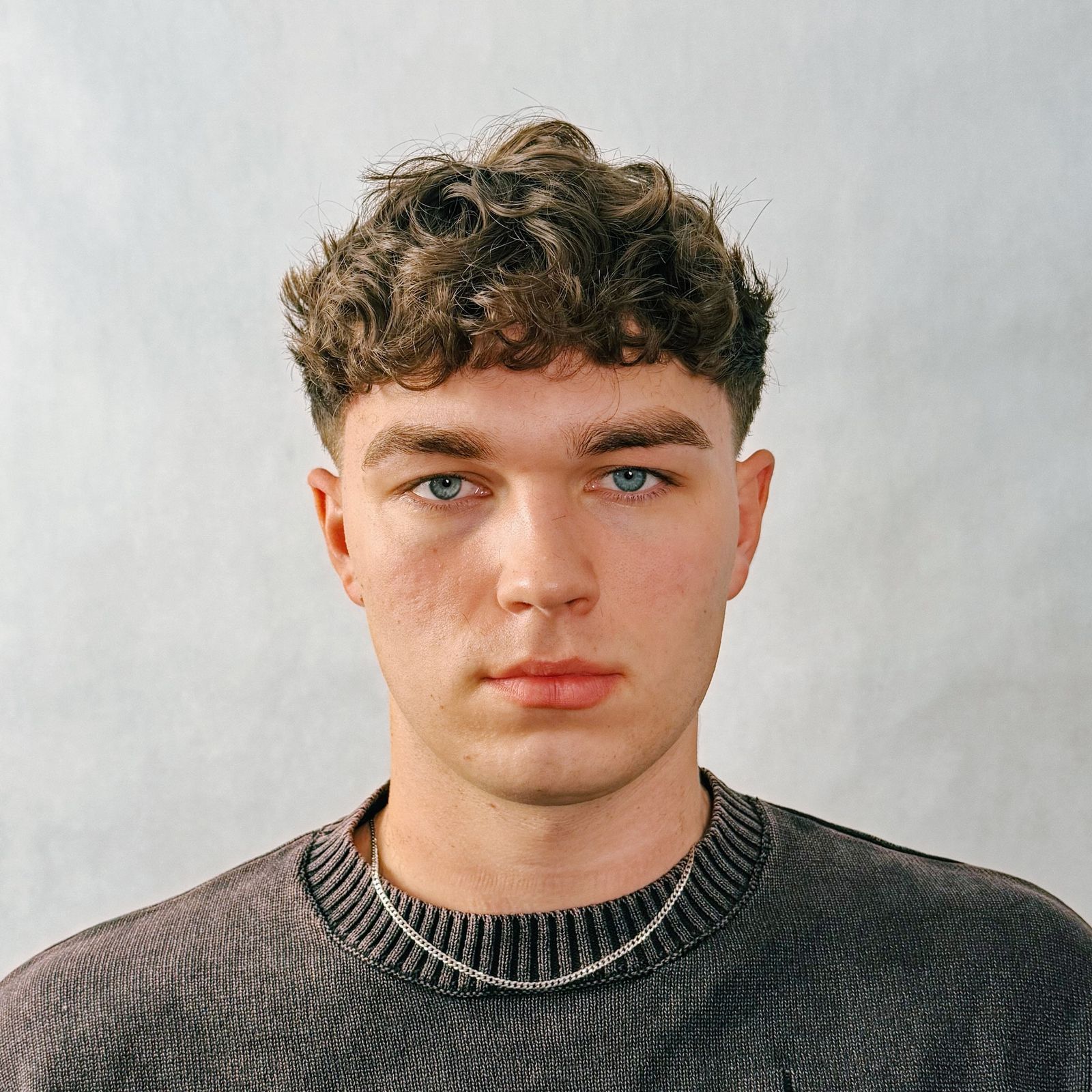
2. Textured crop
The textured crop pairs short, clean sides with a textured top and fringe. It's a forgiving haircut to wear and rewarding to style — as long as the texture is actually cut in, not just set with paste.
How to work:
- Take the sides and back down with clippers (short, with a fade or taper into the hairline), leaving the top at the target length.
- Section the top and set the base length with scissors or the scissor over comb technique.
- Build texture through point cutting (cutting into the strand with the tips of the scissors) and slicing, to break up heavy lines and add movement.
- Finish the fringe with point cutting rather than a blunt cut, so you don't end up with a stiff, straight edge.
Who it's for: straight and slightly wavy hair, clients who value easy, short styling.
We break down graduation and texturizing techniques in detail in the Hair Graduation and Texturizing Techniques course.
3. Modern mullet
The mullet is back, but in a much more controlled version than in the '80s. Today it's a game of contrast: shorter, textured sides and top, and a longer, but graduated back that doesn't look like a bolted-on tail.
How to work:
- Mark out the transition zone from the sides into the back — this is where it's decided whether the mullet will look soft or sharp.
- Keep the sides and top short and textured, gradually lengthening the back, blending the lengths without a hard jump.
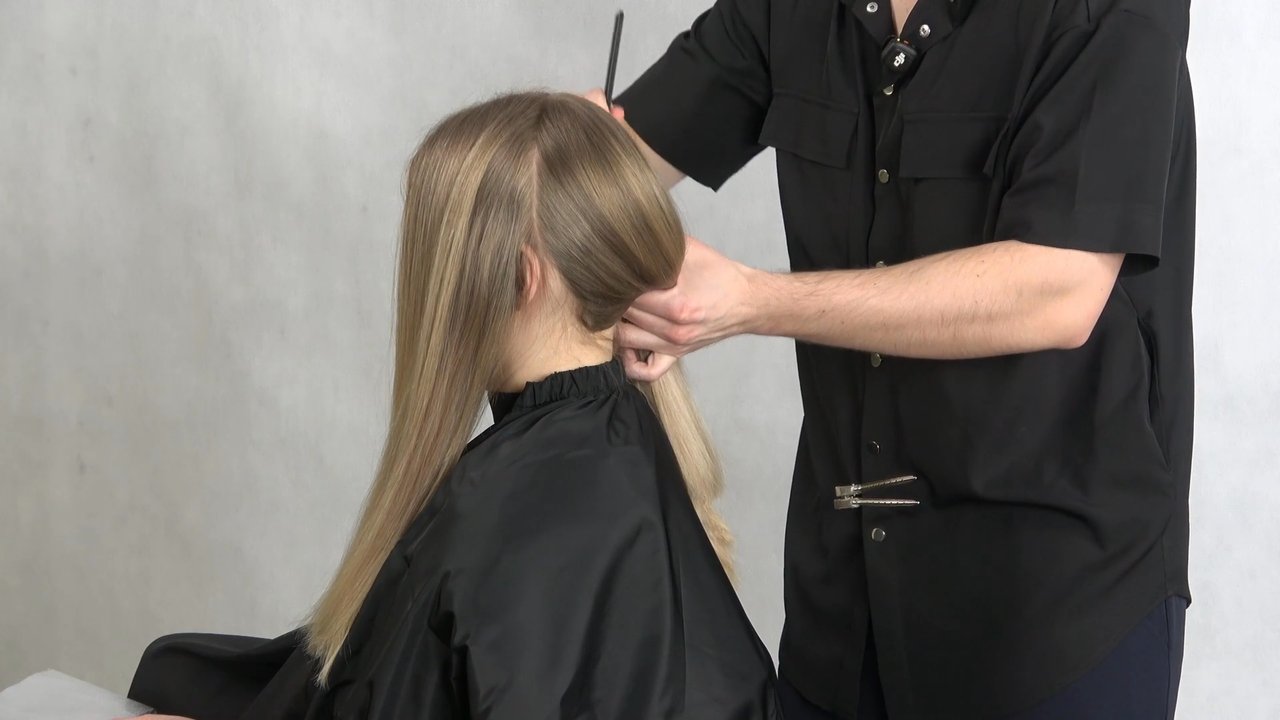
- Thin the back out from the inside (point cutting, or layering in experienced hands) so the longer hair falls lightly instead of hanging as a heavy sheet.
Tip: the modern mullet lives and dies on the balance of lengths and how well it's matched to the client's face and head shape, so design the lines on the actual head in front of you, not from a rigid template, suggests Michał Lewiński from Connected Hair.
Who it's for: clients wanting a bold, individual cut with character.
We practice blending a crop with a mullet into one cohesive shape in the Dynamic Crop Mullet Hybrid course.
4. Disconnected undercut
The disconnected undercut is a deliberate absence of blending: short sides and a longer top meet at a sharp, clear line. It's the opposite of a fade, where the whole skill lies in an invisible connection — here what matters is a clean, intentional border.
How to work:
- Mark out the dividing line (usually at temple and occipital height) and clip the top up out of the way, so you can work on a clean section of the sides.
- Take the sides down to one even length with clippers, working up to the marked border.
- Layer the top separately and let it fall over the shorter side — the edge should be sharp, but shouldn't expose bare skin unless the client wants a hard cutoff.
- Add texture to the top so the contrast between the smooth side and the moving top reads clearly.
Challenge: the hardest part is a sharp but natural-looking cutoff line. It takes precision and a good eye, especially when keeping symmetry on both sides, notes Maks Łukaszewicz, educator at Connected Hair.
Who it's for: clients looking for a bold, strongly modern style.
5. Pompadour
The pompadour is a classic built on big volume up top with the hair swept back, today more often finished with texture than slicked smooth. The whole haircut lives on volume at the root, so the cut needs to support that volume, not weigh it down.
How to work:
- Leave the top long enough to lift and comb back, with the longest section at the front.
- Shorten the sides with a smooth transition (taper or fade), so the volume on top contrasts with clean sides.
- Don't thin out the root area on top — weight at the bottom kills volume; instead texturize around mid-length and at the ends.
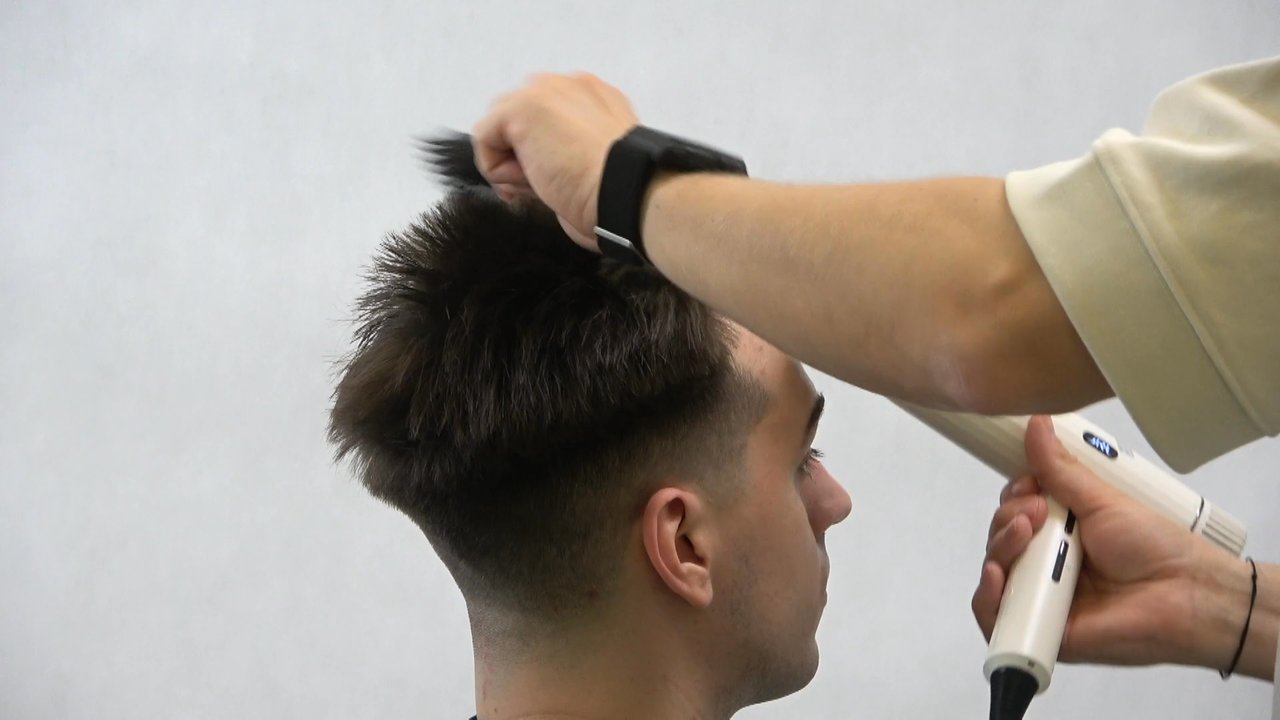
- Finish through styling: blow-dry from the root, back and up — only then can you see if the cut will hold its shape.
Fun fact: the name pompadour comes from Madame de Pompadour, mistress of King Louis XV, who popularized high, swept-up hairstyles.
Who it's for: clients with thick hair who value a classic, but polished look.
We cover building volume and shape for the pompadour in the Pompadour course.
6. Burst fade
The burst fade is a fade centered around the ear, fanning out radially, while the hair at the back of the head stays longer. It pairs very well with a mullet and a longer back, since it doesn't cut across the nape line.
How to work:
- The center point of the fade is around the ear, from where the transition fans out in an arc upward and backward.
- Guide the clippers in a scooping motion along the arc, lifting them away from the skin, so the radial transition stays soft instead of choppy.
- Leave the hair longer on the crown and at the back of the head, blending it smoothly into the lightest zone of the fade.
Technical tip: with a burst fade, the key is reading the client's natural head shape — the transition should highlight and complement its lines, not fight the growth pattern, suggests Bartosz Lącz from Connected Hair.
Who it's for: clients wanting a dynamic, out-of-the-ordinary haircut, often paired with a longer top or back.
We show the full burst fade technique in the Kamil Cesarski – Burst Fade course.
7. Textured quiff
The quiff is a longer, lifted top combed up and back, paired with shorter sides. It differs from the pompadour in having a more relaxed, textured shape at the front instead of one smooth wave.
How to work:
- Leave the top long, with the longest section at the hairline, so there's something to lift.
- Shorten the sides and back (taper or fade) with a clean transition up to the top.
- Texturize the top to build volume and movement instead of a solid mass: point cutting and thinning into the strand, controlling how much weight you take out.
Styling tip: for a clean quiff, blow-dry the hair upward and slightly back, then finish off the volume at the root with a natural-bristle brush, advises Aneta Dąbrowska, Connected Hair expert.
Who it's for: straight and slightly wavy hair, clients wanting a versatile look for everyday and special occasions alike.
8. French crop
The French crop is a minimalist haircut with a short fringe combed onto the forehead and short sides. Easy to wear, it holds up well on fine hair and early hairlines, since the fringe covers the forehead line.
How to work:
- Take the sides and back down short with clippers, with a taper or fade into the hairline.
- Keep the top short, with the fringe falling onto the forehead, and set the fringe length at a specific line.
- Finish the fringe edge with point cutting to avoid a hard, straight line and add a bit of texture.
Who it's for: clients who value minimalism and a short, low-maintenance style — it works just as well with a suit as it does day-to-day.
We break down shaping short forms and top volume in the Shaping Volume and Form in Men's Haircutting course.
9. Side part
The side part is a classic, elegant side parting, with a longer top combed to the side and shorter, graduated sides. It's often paired with a hard part — a shaved-in parting line — for a cleaner effect.
How to work:
- Find the client's natural parting line — the haircut will fall into place on its own if you work with the growth pattern instead of against it.
- Graduate the sides (taper or fade), leaving the top long enough to comb smoothly to the side.
- If the client wants it, add a hard part: cut a clean parting line with a trimmer, running it down into the transition on the side.
Historical note: the side part was popular in the 1920s and '30s; its comeback is a good example of just how cyclical trends in hairdressing can be, notes Marek Krzymiński, who works with Connected Hair.
Who it's for: clients who value a classic, elegant, business-appropriate look.
10. Textured slick back
The textured slick back is a modern take on hair swept back: instead of a smooth, wet-look sheet of hair, you get a shape with texture and movement. The difference starts at the cutting stage, not just in styling.
How to work:
- Leave the top long and working backward, with a clean transition into graduated sides.
- Build texture into the cut (point cutting and slicing) to bring in movement and depth, so the hair doesn't stick together into one flat plane.
- Shorten the sides with a taper or fade, for contrast with the longer, textured top.
Tip: the textured slick back effect is decided at the cutting stage through texturizing. Point cutting and slicing create movement and depth, so hair combed back doesn't end up looking flat, advises Jakub Ciężadlik from Connected Hair.
Who it's for: clients with thick hair who want to combine classic style with a modern, textured finish.
How to choose the right technique for a specific client
None of these techniques is universal. What decides which one will work is the consultation and a handful of factors worth going through before the first cut:
- Face and head shape: volume on top elongates a round face, while a fade and short sides emphasize the jawline; match the proportions, not just the name of the haircut.
- Hair texture and density: straight and wavy hair hold shape differently; a quiff or pompadour needs density, while a crop is forgiving on fine hair.
- Lifestyle: how many minutes a day the client will realistically spend on styling decides whether you suggest a look that needs a dryer and product, or a low-maintenance crop.
- Regrowth speed and the next visit: a skin fade and hard part need more frequent touch-ups than a taper — let the client know how the haircut will behave between visits.
Communication tip: run a thorough consultation before the first cut. Ask about preferences, lifestyle, and expectations, and establish the level of contrast and whether the client wants hard cutoffs or soft transitions. A good conversation is the foundation of a successful haircut, emphasizes Mateusz Poznański from Connected Hair.